
Winter Storm Begins: Millions Face Catastrophic Ice and Heavy Snow
Widespread Power Outages, Travel Chaos, and Life-Threatening Conditions as a Powerful Winter System Sweeps Across the United States

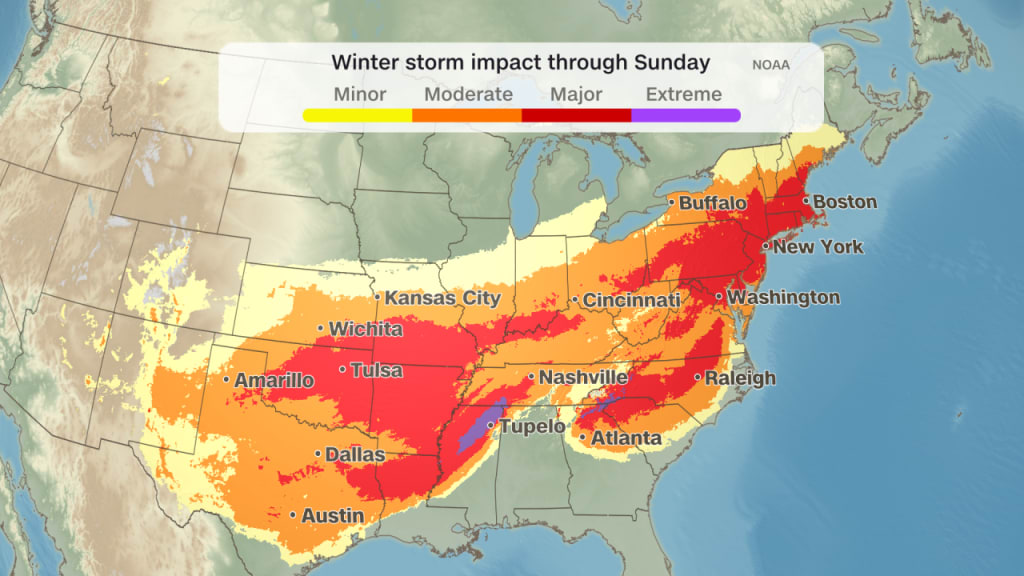
A massive winter storm has begun its relentless march across large portions of the United States, placing millions of people under severe weather alerts as catastrophic ice accumulation and heavy snowfall threaten daily life. Meteorologists warn that the storm could be one of the most disruptive of the season, combining freezing rain, sleet, and deep snow across multiple regions. From transportation shutdowns to widespread power outages, the impacts are expected to be felt for days.
As the system intensifies, emergency officials are urging residents to prepare for dangerous conditions, limit travel, and brace for prolonged disruptions. The storm’s sheer size and complexity make it especially dangerous, with rapidly changing weather patterns creating unpredictable and hazardous situations.
A Dangerous Mix of Ice and Snow
Unlike typical winter storms that bring either snow or rain, this system is producing a dangerous combination of both. Warmer air aloft, paired with freezing surface temperatures, has created ideal conditions for freezing rain. Even a thin layer of ice can coat roads, sidewalks, trees, and power lines, dramatically increasing the risk of accidents and infrastructure damage.
In areas expected to see heavy snowfall, accumulations could reach significant levels in a short period. Strong winds accompanying the storm may lead to blizzard-like conditions, reducing visibility to near zero and making travel nearly impossible. Meteorologists describe the storm as “high-impact,” meaning it poses serious threats to safety, property, and essential services.
Travel Disruptions and Road Closures
Transportation systems are among the first to feel the effects. Major highways have already reported spin-outs and multi-vehicle accidents as ice forms faster than crews can treat roadways. Airports across affected regions are canceling and delaying hundreds of flights, leaving travelers stranded during a peak winter travel period.
Public transit services are also experiencing disruptions, with buses and trains operating on reduced schedules or shutting down entirely in the hardest-hit areas. Authorities warn that even experienced winter drivers may struggle, as ice is notoriously difficult to see and control on.
Power Outages and Infrastructure Strain
One of the most serious concerns associated with ice storms is the strain placed on power infrastructure. Ice accumulation adds significant weight to power lines and tree branches, increasing the likelihood of snapping and collapse. Utility companies are preparing for widespread outages that could last for days, particularly in rural and heavily forested areas.
For households, losing electricity in subfreezing temperatures can quickly become life-threatening. Without heat, residents may be forced to rely on alternative sources such as generators or fireplaces, which carry their own risks if not used properly. Emergency shelters are being prepared in several states to accommodate those who may be displaced or left without heat.
Impact on Communities and Daily Life
Schools and government offices have announced closures as conditions deteriorate. Many businesses are also shutting down temporarily, either due to safety concerns or because employees cannot travel safely. For hourly workers, these closures can mean lost income, adding an economic burden to an already stressful situation.
Healthcare systems are on high alert as well. Hospitals anticipate an increase in emergency room visits related to slips, falls, hypothermia, and carbon monoxide poisoning. Emergency responders are urging people to stay home unless absolutely necessary to avoid overwhelming critical services.
Emergency Preparedness and Safety Warnings
Officials across affected regions are emphasizing preparedness as the storm unfolds. Residents are advised to stock up on essential supplies, including food, water, medications, flashlights, batteries, and blankets. Those who must travel are urged to carry emergency kits in their vehicles, including warm clothing, food, and communication devices.
Safety experts also warn against walking or driving on icy surfaces and stress the importance of checking on vulnerable neighbors, especially the elderly and those with medical conditions. Simple actions, such as clearing ice safely and avoiding downed power lines, can prevent serious injuries or fatalities.
A Broader Climate Pattern
While winter storms are not unusual, scientists note that extreme weather events are becoming more frequent and intense. Warmer global temperatures can paradoxically contribute to more severe winter storms by increasing atmospheric moisture, which then falls as heavy snow or freezing rain when temperatures drop.
This storm serves as another reminder of the growing need for resilient infrastructure, improved emergency planning, and public awareness as weather patterns continue to evolve. Communities that invest in preparedness and communication are often better equipped to withstand and recover from such events.
What Comes Next
Forecasts suggest that while the storm will gradually move out of some areas, lingering cold temperatures could prolong hazardous conditions. Refreezing overnight may turn slush into solid ice, extending the danger even after precipitation stops.
For millions of Americans, the coming days will require patience, caution, and cooperation. As the winter storm continues to unfold, staying informed and prioritizing safety may be the most critical steps in weathering what could be one of the season’s most severe cold-weather events.
About the Creator
Asad Ali
I'm Asad Ali, a passionate blogger with 3 years of experience creating engaging and informative content across various niches. I specialize in crafting SEO-friendly articles that drive traffic and deliver value to readers.
Old Red Cedar
Western red cedar, over 1000 years old, you grew for 200 years and towered over others, silently observing sights in the forest that are no more, your secrets buried within your spirit. The bark covering your tree trunk, said to be about 23 feet around, was hollow when men discovered you. Inside the hollow trunk, a fire somehow began; you cannot tell us when, how, or why, and there is no record of it. The fire caused your death. Slowly, you died, from the inside out. Such a sad loss for an old soul of the forest, with centuries of knowledge in its cells. Houses, watercraft, shingles, bowls, bows and arrows, and paper that men used to write what they knew of your history could have been made from your body, branches, and bark. Truly, fire was a better death for you than a logger’s saw.
By Andrea Corwin 4 days ago in Earth
Denmark Bristles at Idea of Giving Up Any Sovereignty in Greenland
Greenland has once again found itself at the center of international attention. The vast Arctic territory, rich in minerals and strategically located, is more than just a dot on the map — it’s a symbol of sovereignty, self-determination, and geopolitical significance. Recently, comments from the United States suggesting closer access to Greenland sparked strong reactions from Denmark, which firmly stated that it will not give up any sovereignty over the island.
By Muhammad Hassanabout 22 hours ago in Earth




Comments
There are no comments for this story
Be the first to respond and start the conversation.