
WHAT IS CLIMATE CHANGE?
Widespread improvements in the quality of life of many of the world’s populations have gone hand-in-hand with increased demands on natural resources.


What is climate change?
The planet is struggling to keep up. Increases in the average global temperature, and the frequency of extreme weather events are transforming ecosystems around the world and threatening entire species of plants and animals. Forests are drying up because there is less rainfall and thus more fires, and the glaciers of both the North and South Poles are shrinking. The consequences of climate change affect all of us, but to react and adapt to these challenges, we must first understand them.
CLIMATE, WEATHER, AND NATURAL DISASTERS:
Climate is not the same as weather, but the two phenomena are closely related. While weather refers to short-term conditions that can change quickly, climate determines the long-term character of a given place, for instance, whether it is temperate or tropical. The relationship between weather and climate is crucial: the former is subordinate to the latter. Climate determines temperatures, weather diversity, the traits of winters, rainfall totals, as well as the nature of meteorological phenomena such as the severity of storms. It is due to this delicate relationship that we are facing both temperature rises and more frequent weather extremes and natural disasters as a result of climate change.
PLANET EARTH:
Solar energy in the form of radiation reaches the earth, where two thirds of it is absorbed by the planet’s surface. The rest is reflected back into the atmosphere where greenhouse gases operate. These gases reflect the energy back to earth where it again converts to heat – this process keeps the planet habitable.This phenomenon is called the greenhouse effect. Naturally, with the increasing amount of greenhouse gases in the atmosphere, this effect intensifies, leading to global temperature rise. Excessive temperature rise due to human activity is called global warming.
BURNING FOSSIL FUELS:
For millions of years, the concentration of greenhouse gases in the atmosphere fluctuated only slightly; natural processes removed as many greenhouse gases from the atmosphere as were released. Problems emerged as we began to extract and burn fossil fuels on a large scale, thus releasing unprecedented amounts of CO2 into the atmosphere. The concentration of CO2 has increased by almost 50 percent since the Industrial Revolution.
EMISSIONS BY SECTOR:
The largest emitter of greenhouse gas is the energy sector. Other significant sources of greenhouse gases include transportation, industry (especially construction and mining), and agriculture.
Different human activities produce different greenhouse gases. For instance, agriculture produces methane most notably, while the burning of fossil fuels releases carbon dioxide especially.
WHO ARE THE BIGGEST POLLUTERS?
Europe and the United States are mostly responsible for the current state of the atmosphere, having released more than 90 percent of the emissions that had accumulated in the atmosphere by the end of the 20th century. In recent decades, however, the rest of the world has begun to catch up. This is particularly true in the case of China, which is experiencing an unprecedented economic boom.
WHERE DO EMISSIONS GET OUTSOURCED?
CO₂ emissions are usually measured in terms of their production on the territory of individual states. However, this calculation does not give us a complete picture of who is truly responsible for their creation. International companies often employ cheap labor in developing countries where they process raw materials, with the resulting emissions being attributed to the place of assembly, though the products are produced for markets in richer countries, such as Europe or the USA - these countries thus "import" emissions created elsewhere. Typical "exporters" of emissions are China and Russia, while the USA, Western and Northern Europe, as well as a number of African countries are typical “importers” of emissions.
About the Creator
kathy rich
Welcome to a realm of boundless insights and creative inspiration. Whether you're looking for engaging storytelling, or information, I'm here to be your ultimate source of information. With a vast array of topics at my virtual fingertips.
Keep reading
More stories from kathy rich and writers in Earth and other communities.
Echoes of Love and Nature: A Tale of Two Hearts Saving the Jungle
**Title: In the heart of a lush, untouched jungle, where the symphony of wildlife intertwined with the rustling of leaves, two souls embarked on a journey that would forever bind them to the enchanting wilderness around them. Maya, a spirited conservationist with a deep love for nature, and Leo, a compassionate biologist with a fervent desire to protect ecosystems, found themselves on a path that led not only to the preservation of the jungle but also to the discovery of an enduring love.
By kathy rich3 years ago in Earth
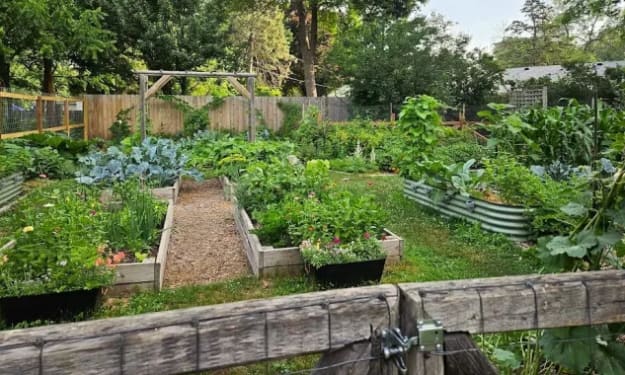
Planning a Vegetable Garden Layout: Sun, Space, and Succession
You've decided to grow your own food. You've cleared a space, bought seeds, and imagined baskets overflowing with tomatoes and zucchini. Then reality intervenes. The tomatoes shade the basil. The zucchini engulfs the carrots. By midsummer, you have more lettuce than you can eat, followed by a gap of nothing until frost.
By Emma Wallace2 days ago in Earth
The BAFTA Awards
By now, in a stunning departure from recent years, most of the world is aware of what happened at the BAFTA film awards. Social Media Headlines will tell you the bare bones: that John Davidson, a Tourette's Syndrome advocate, shouted a racial slur at two Actors of Colour, Michael B Jordan and Delroy Lindo.
By Natasja Rose4 days ago in Psyche



Comments
There are no comments for this story
Be the first to respond and start the conversation.