
Planning a Vegetable Garden Layout: Sun, Space, and Succession
How to design a productive edible garden that yields continuously from spring through fall.

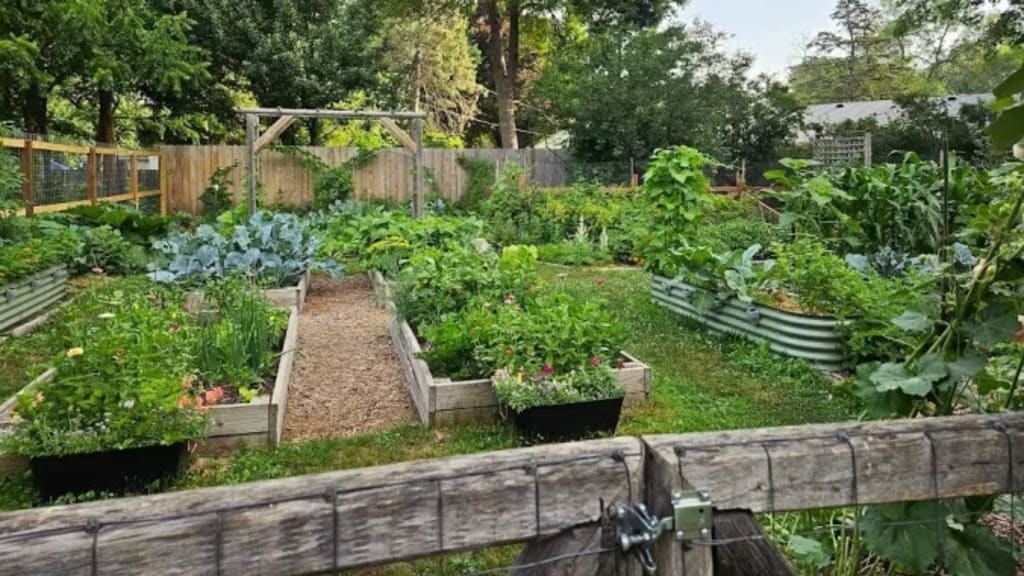
You've decided to grow your own food. You've cleared a space, bought seeds, and imagined baskets overflowing with tomatoes and zucchini. Then reality intervenes. The tomatoes shade the basil. The zucchini engulfs the carrots. By midsummer, you have more lettuce than you can eat, followed by a gap of nothing until frost.
These frustrations stem not from poor gardening but from poor planning. A well-designed vegetable garden considers three essential elements: sunlight, spacing, and succession planting. Master these, and you'll harvest more food from less space with less effort.
☀️ Sun: The Non-Negotiable Foundation
Vegetables are sun worshippers. Most edible crops need 6-8 hours of direct sunlight daily to produce well. Less light means smaller harvests, slower growth, and increased disease susceptibility.
Mapping Your Light
Before planting, observe your space throughout a growing day:
- Full sun (6+ hours): Ideal for tomatoes, peppers, eggplant, squash, cucumbers, beans, and corn.
- Partial sun (4-6 hours): Suitable for leafy greens (lettuce, spinach, kale), root crops (beets, carrots, potatoes), and herbs like parsley and cilantro.
- Shade (less than 4 hours): Very limited options. Try shade-tolerant greens like spinach, Swiss chard, or lettuce, but accept modest harvests.
The Sun Rule
Place tall crops on the north side of your garden so they don't shade shorter neighbors. This single principle solves most light-related conflicts. Imagine rows running east-west: tallest plants (corn, trellised tomatoes, pole beans) at the north end, medium plants (peppers, bush tomatoes) in the middle, shortest plants (lettuce, carrots, radishes) at the south end.
📏 Space: Designing for Growth and Access
Garden Bed Basics
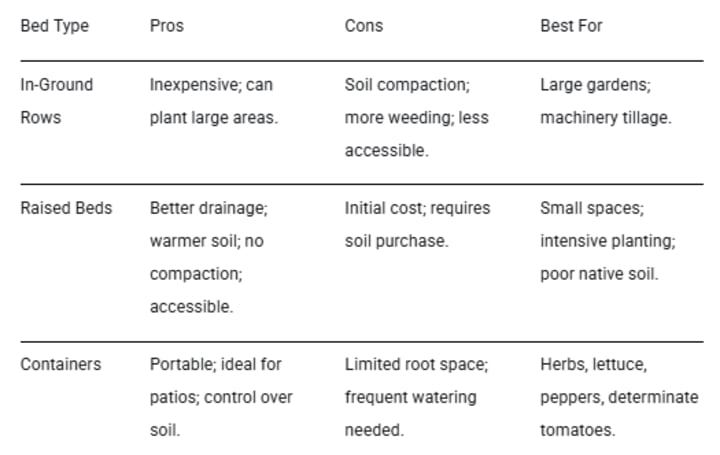
The 4x8 Raised Bed Standard
For intensive gardening, 4 feet wide by 8 feet long is the gold standard. You can reach the center from both sides without stepping in the bed (which compacts soil). Length can vary to fit your space.
Spacing Wisdom
Seed packets provide spacing recommendations, but you have options:
- Traditional spacing: Follow packet instructions for maximum individual plant size.
- Intensive spacing: Plant closer together in well-prepared soil. Leaves create a living mulch that suppresses weeds and retains moisture. This works best for leafy greens and root crops.
The thumb rule: Space plants so their mature leaves barely touch. This maximizes production while maintaining airflow.
🔄 Succession: The Secret to Continuous Harvest
Succession planting is the art of scheduling so something is always ready to harvest. Three strategies keep your garden producing:
1. Staggered Planting
Plant small amounts of quick-maturing crops every 2-3 weeks rather than all at once. This works beautifully for:
- Lettuce: Plant 3-4 feet every two weeks for continuous salads.
- Radishes: Ready in 25 days; replant through summer.
- Beans: Bush beans produce for 2-3 weeks; replant for ongoing harvest.
2. Season Extension
Replace cool-season crops with warm-season crops as weather permits:
- Early spring: Peas, lettuce, spinach, radishes, carrots.
- Late spring: Transplant tomatoes, peppers, eggplant after last frost.
- Early summer: Plant beans, cucumbers, squash.
- Late summer: Plant fall crops—kale, broccoli, turnips, more lettuce.
- Fall: Extend with cold frames or row covers for winter harvests.
3. Interplanting
Grow fast-maturing crops between slower ones. While you wait for tomatoes to size up, radishes and lettuce can occupy the space between them. By the time tomatoes need the room, the quick crops are harvested.
🌿 When You're Not Sure What's Growing
Even the best-planned garden surprises you. Volunteers appear—a tomato from last year's compost, a mystery squash from shared seeds. Weeds emerge that you can't identify. Before you pull anything, know what you're dealing with. A reliable plant identification app can instantly tell you whether that seedling is a valuable crop or an invasive weed, saving you from accidentally removing desirable plants and helping you understand what's growing in your carefully planned space.
🌟 The Rewards of Planning
A well-planned garden doesn't just produce more food. It produces less stress. You're not overwhelmed by fifty pounds of zucchini at once. You're not staring at empty space in August wishing you'd planted fall crops. You're not fighting shading issues or struggling to reach your plants.
Instead, you step outside each morning and find exactly what's ready to harvest—a few tomatoes, some beans, enough lettuce for dinner. The garden works with you, not against you. And that is the ultimate reward of thoughtful design.
About the Creator
Emma Wallace
Director of Research and Development at AI Plant Finder (Author)
Emma Wallace is an esteemed researcher and developer with a background in botany and data analytics.
Keep reading
More stories from Emma Wallace and writers in Earth and other communities.
Easy-Care Houseplants for Busy People: Plants That Thrive on Neglect
You want plants in your home. You love the idea of greenery softening corners, purifying the air, and bringing life to your space. But your life is full—work, family, travel, social obligations. You worry that plants will become one more thing to fail at, one more guilty reminder of good intentions unmet.
By Emma Wallacea day ago in Earth




Comments (1)
Lovely!🙂♥️🌻