
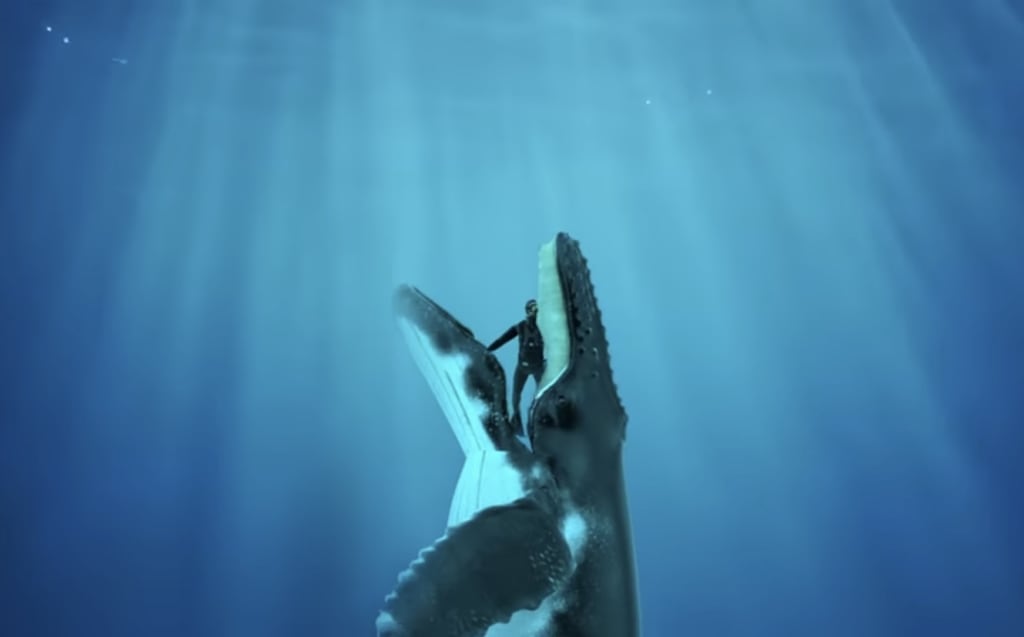
Whales are fascinating marine mammals known for their large size, streamlined bodies, and unique adaptations for life in the ocean. Here are some key characteristics of whales:
1. **Size**: Whales are among the largest animals on Earth, with some species reaching lengths of over 100 feet and weighing up to 200 tons. The blue whale, for example, is the largest animal ever known to have existed.
2. **Blubber**: Whales have a thick layer of blubber under their skin, which helps them stay warm in cold ocean waters and provides energy reserves.
3. **Baleen or Teeth**: Whales are classified into two main groups based on their feeding mechanisms. Baleen whales have baleen plates in their mouths that they use to filter small fish and plankton from the water. Toothed whales, like sperm whales and killer whales, have teeth for hunting and catching prey.
4. **Migration**: Many whale species undertake long migrations between their feeding and breeding grounds. They travel thousands of miles each year, following food sources and seasonal patterns.
5. **Communication**: Whales are known for their complex communication systems, which involve vocalizations such as songs, clicks, and whistles. These sounds are used for navigation, social interaction, and mating.
6. **Social Behavior**: Whales are often social animals and can be found in groups or pods. They exhibit various social behaviors, such as hunting cooperatively, caring for their young, and even playing.
7. **Breathing**: Whales are mammals and need to breathe air to survive. They have blowholes on the top of their heads that they use to breathe at the surface of the water.
These are just a few of the many fascinating characteristics of whales that make them such incredible creatures of the ocean.
When considering the possibility of a human being swallowed by a whale, it's crucial to understand the anatomy and behavior of both humans and whales. Whales, as massive marine mammals, have unique digestive systems adapted to process their prey, which often includes small fish and plankton. The stomach of a whale is not designed to accommodate a human, and the digestive juices and processes within the stomach are optimized for breaking down the whale's typical prey.
If a human were somehow swallowed by a whale, the immediate challenges would be the lack of air and the high pressure within the whale's stomach. Without a source of oxygen, a person would quickly suffocate in such an environment. Additionally, the pressure inside the whale's stomach would be significantly different from the atmospheric pressure humans require to breathe normally, further complicating survival chances.
Moreover, the digestive processes of a whale's stomach are incredibly powerful. The acidic environment and enzymes present in the stomach are meant to break down and digest the whale's food efficiently. These conditions would pose a significant threat to a human, as the stomach acids could cause severe chemical burns and damage to the body.
While there have been rare instances of large marine animals, such as sharks, spitting out humans after mistakenly biting them, surviving being swallowed by a whale remains highly improbable due to the hostile conditions within the whale's digestive system. The likelihood of a human surviving such an ordeal is incredibly low, given the inhospitable environment and the challenges posed by the whale's anatomy and physiology.
In conclusion, while the idea of being swallowed by a whale may capture the imagination, the reality is that it is an incredibly dangerous and unlikely scenario for a human to survive. The unique adaptations of whales for life in the ocean, including their digestive processes and anatomy, make it highly improbable for a person to endure being swallowed by a whale.
While whales are large marine mammals and are not typically preyed upon by other animals, there are a few creatures that have been known to feed on whale carcasses. Some scavengers, such as sharks and smaller fish, may feed on a dead whale's remains. Additionally, certain species of deep-sea organisms, like bone-eating worms, may consume the bones of a whale after it has died and sunk to the ocean floor. However, it is important to note that actively hunting and consuming a live whale is not a common behavior among other animals in the ocean.
About the Creator
Keep reading
More stories from Amina Afta and writers in Earth and other communities.
We’re not ready
Yellowstone National Park and its super volcano; it's such a mind-blowing topic! The underground magma chambers at Yellowstone are massive, and the fact that the park is perched atop such a colossal volcano adds to its mystique. The seismic activity and land movements we see are all part of the natural volcanic processes at play.
By Amina Afta about a year ago in Earth
Without Democracy, Donald Trump’s Venezuelan Oil Quest Will Fail
Donald Trump’s renewed interest in Venezuelan oil may seem, on the surface, like a hard-nosed geopolitical calculation. Venezuela holds the world’s largest proven oil reserves, and amid global energy uncertainty, access to those resources is undeniably tempting. But history, economics, and politics all point to the same conclusion: without democratic reform in Venezuela, any attempt by a Trump-led US administration to secure reliable Venezuelan oil will ultimately fail.
By Aarif Lashari5 days ago in Earth
Pretty Privilege vs. Pretty Punishment
In today’s image-driven world, beauty is often described as a superpower. Attractive people are believed to get more opportunities, more attention, and more advantages in life. This phenomenon is commonly called pretty privilege. But there is another side of this story that is discussed far less often — pretty punishment.
By Aarif Lashariabout 5 hours ago in Earth
So You Decided To Become a Nurse Practitioner:
So you decided to become an "Advanced Practice" nurse. Congratulations!... is what I would say if this was a good idea. Grad school? In this economy? What were you thinking? Likely it was something along the lines of either 1) “I've seen these other chucklefucks do it— Why can't I?” or even 2) “I've got a nice career, I should shake it up. I miss feeling like I have no clue what I'm doing.”
By Sandor Szabo3 days ago in Fiction




Comments (1)
Well detailed analysis