
Without Democracy, Donald Trump’s Venezuelan Oil Quest Will Fail
Introduction: Oil, Power, and a Political Dead End
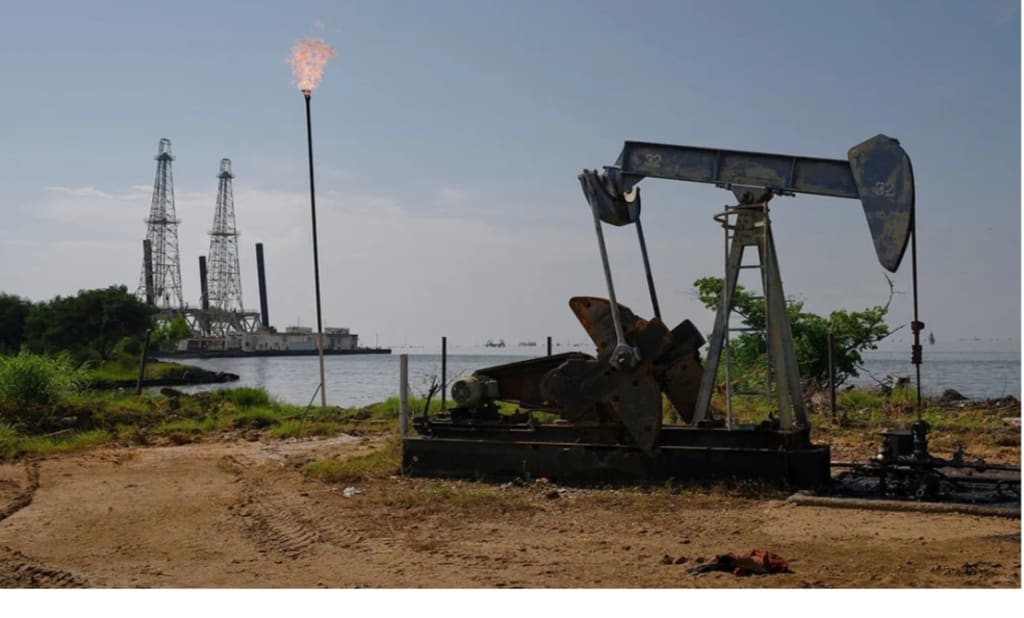
Donald Trump’s renewed interest in Venezuelan oil may seem, on the surface, like a hard-nosed geopolitical calculation. Venezuela holds the world’s largest proven oil reserves, and amid global energy uncertainty, access to those resources is undeniably tempting. But history, economics, and politics all point to the same conclusion: without democratic reform in Venezuela, any attempt by a Trump-led US administration to secure reliable Venezuelan oil will ultimately fail.
Oil cannot flow sustainably from a state crippled by authoritarianism, institutional collapse, and deep mistrust between government and society. Energy deals require stability, legitimacy, and functioning governance—none of which Venezuela can offer without democracy.
Venezuela’s Oil Wealth and Its Long Decline
Venezuela was once an energy powerhouse. Its state-owned oil company, PDVSA, produced more than three million barrels per day in the late 1990s, funding social programs and anchoring the national economy. Today, production has collapsed to a fraction of that level.
The reasons are not geological but political. Years of corruption, mismanagement, sanctions, and authoritarian consolidation under Hugo Chávez and Nicolás Maduro hollowed out PDVSA. Skilled workers fled, infrastructure decayed, and investment dried up. Oil fields still exist, but the institutions needed to extract and export oil efficiently do not.
Any US effort to revive Venezuelan oil without addressing these root causes is likely to repeat past failures.
Trump’s Transactional Approach to Foreign Policy
Donald Trump’s foreign policy has often emphasized deals over democracy. During his presidency, he showed little interest in democratic norms abroad if economic or strategic gains were possible. His administration imposed harsh sanctions on Venezuela while simultaneously hinting at negotiations that could reopen oil flows under favorable terms.
This transactional approach may appeal to energy markets in the short term, but it ignores a critical reality: authoritarian regimes offer unreliable partnerships. Without transparency, rule of law, and accountability, contracts are fragile, enforcement is arbitrary, and political risk remains extreme.
Oil companies and governments alike require predictability—something Venezuela cannot provide under its current system.
Why Authoritarian Stability Is an Illusion
Supporters of engaging with the Maduro government argue that authoritarian control can provide stability. In Venezuela’s case, the opposite has proven true. Repression has not produced order; it has fueled economic collapse, mass migration, and recurring unrest.
More than seven million Venezuelans have fled the country, draining the workforce and destabilizing the region. Electricity blackouts, fuel shortages, and infrastructure failures are common in an oil-rich nation—an irony that underscores systemic dysfunction.
Without democratic legitimacy, the government lacks public trust, making long-term stability impossible. Any oil agreement reached under these conditions would be vulnerable to internal resistance, elite infighting, and sudden policy reversals.
Sanctions, Legitimacy, and the Limits of Deals
US sanctions on Venezuela are deeply intertwined with questions of democracy and human rights. While Trump favored “maximum pressure,” he also signaled that sanctions could be lifted in exchange for political concessions.
The problem is that partial or symbolic concessions do not rebuild institutions. Even if sanctions were eased to allow oil exports, the absence of democratic reform would keep Venezuela isolated from global finance, technology, and expertise.
Oil production at scale requires billions in investment, advanced equipment, and skilled labor—all of which depend on international confidence. No amount of deal-making can substitute for legitimacy in the eyes of markets and institutions.
The Role of Democracy in Energy Security
Democracy is not just a moral ideal; it is a practical foundation for energy security. Democratic systems provide clearer property rights, independent courts, and regulatory transparency. They reduce corruption risks and make long-term planning possible.
Countries that successfully attract sustained energy investment—such as Norway or Canada—do so not because of resource abundance alone, but because of strong institutions. Venezuela has the oil, but not the governance.
Without democratic reform, any surge in production would likely be short-lived, benefiting a narrow elite while leaving structural problems untouched.
Lessons From Past Engagements
The US and other countries have tried engagement before. Periods of high oil prices temporarily masked Venezuela’s dysfunction, but underlying problems always resurfaced. Even China and Russia, often cited as partners willing to deal with authoritarian regimes, have scaled back involvement due to losses and unpaid debts.
These experiences show that ideology matters less than capacity. Authoritarian Venezuela simply cannot deliver consistent oil output without rebuilding institutions—and institutions cannot be rebuilt without political openness.
Regional and Global Consequences
A failed Venezuelan oil strategy would have ripple effects. Continued instability would fuel migration across Latin America and toward the US border. It would also leave global oil markets exposed to shocks, undermining the very energy security Trump seeks.
Moreover, bypassing democracy would damage US credibility. Supporting or legitimizing authoritarian rule for oil would contradict stated American values and weaken alliances with democratic partners in the region.
What a Viable Strategy Would Require
If the US genuinely wants Venezuelan oil to return to global markets, the path is clear but politically difficult. It would require coordinated international pressure tied explicitly to democratic benchmarks: free elections, independent institutions, and human rights protections.
Sanctions relief would need to be gradual and conditional, linked to verifiable reforms rather than promises. This approach would be slower, but far more sustainable.
Anything less would amount to propping up a failing system in exchange for unreliable gains.
The Limits of Personal Diplomacy
Trump has often emphasized his personal negotiating skills, suggesting he could succeed where others failed. But Venezuela’s crisis is not a personality problem—it is a structural one.
No leader, however assertive, can negotiate functioning institutions into existence. Without democracy, agreements rest on shifting power balances rather than durable rules.
Personal diplomacy may produce headlines, but it cannot rebuild a broken state.
Conclusion: Oil Needs Democracy to Flow
Venezuela’s oil riches remain locked beneath the weight of authoritarian collapse. Donald Trump’s pursuit of those resources, absent a commitment to democratic reform, is unlikely to succeed. Deals without democracy may offer short-term optics, but they cannot deliver long-term energy security.
In Venezuela, oil, governance, and legitimacy are inseparable. Until democracy returns, any quest for Venezuelan oil—no matter how aggressively pursued—will remain a dead end.
About the Creator
Keep reading
More stories from Aarif Lashari and writers in Earth and other communities.
Top Australian Writers’ Festival Cancelled After Palestinian Author Barred
One of Australia’s most respected literary festivals has been cancelled following a fierce backlash over the decision to bar a Palestinian author from participating. What began as a programming dispute quickly escalated into a national debate about free speech, cultural inclusion, and political pressure in the arts. The cancellation has sent shockwaves through Australia’s literary community, raising urgent questions about whose voices are allowed on public platforms and at what cost.
By Aarif Lashari3 days ago in Earth
Tea of Silence
The snow had covered the hills for days, turning the land into a quiet white world where sound seemed afraid to exist. On the highest of these hills, beneath a dry, leafless tree, a young man sat alone. The tree had long ago lost its strength, its branches thin and broken, but it still stood, as if refusing to disappear. The young man chose this place often, not because it was comfortable, but because it was honest.
By Bilal Mohammadi7 days ago in Earth
Microbiota, microbiome or microflora: how to speak correctly and why it is for health.
You've probably heard the phrase, "We are what we eat." But modern science says more precisely: we are also those who live in us. Until 2016, it was believed that there are many times more bacteria in our body than our own cells. The latest calculations by mathematicians show that we divide the body with our microorganisms by about 50/50: about 30 trillion of our cells versus 38 trillion bacterial ones.
By Yaroslav Gorohov2 days ago in Earth



Comments
There are no comments for this story
Be the first to respond and start the conversation.