
WHAT HAPPENS IF URANUS COLLIDES WITH EARTH
Sequential changes happen when uranus collides with earth.
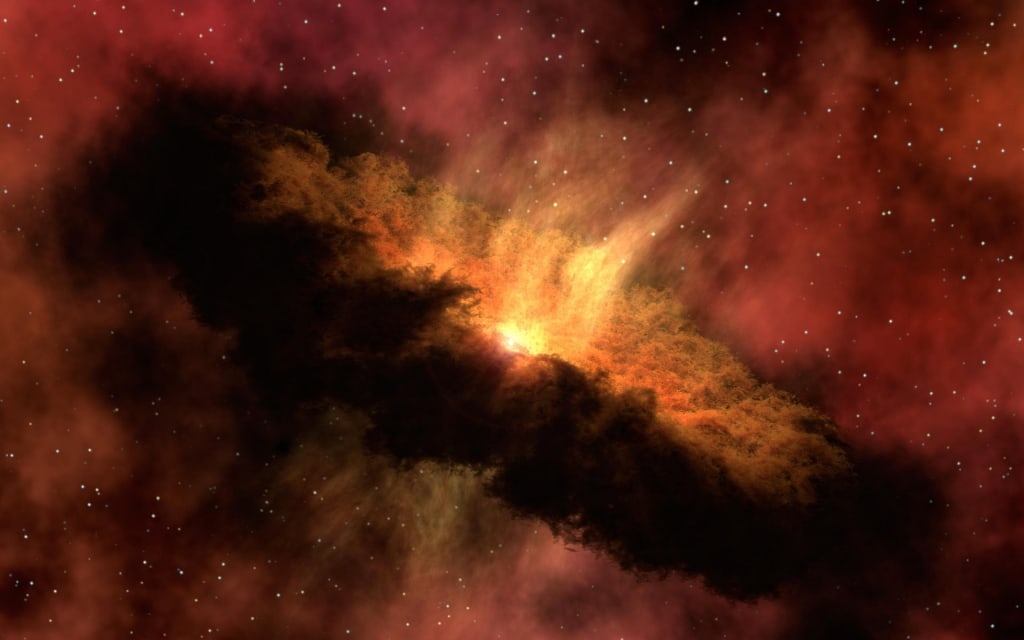
It has been a period of thirty days since the appearance of Uranus in the sky. Initially, it appeared as though our moon had found a celestial partner. However, it soon became apparent that a much larger object was headed towards us. The cause of Uranus' instability and the potential impact of this epic collision on the ice giant are of great concern. Additionally, a horrific stench has been detected. This is a hypothetical scenario, and we shall explore what would happen if Uranus collided with Earth.
Let us rewind to thirty days ago when Uranus was quietly residing on the outskirts of our solar system, approximately three billion kilometers away from us. Suddenly, it began to move closer, causing astronomers to sound the alarm. According to their calculations, it would take Uranus thirteen years to reach the collision point. Although time would be short, we would have a slight chance to evacuate Earth. However, the cold blue giant had other plans. This would not be a standard planetary drill, as planets do not just leave their orbits without reason. Nevertheless, Uranus did, and it would be hurtling through the solar system at a speed of around 1,000 kilometers per second. Due to this unexpectedly fast speed, we would have only thirty days left on this planet.
Uranus would shine like a bright blue star in the sky, appearing bigger and brighter each day. Our sky would look stunning, not only because of the ice giant shining down on us but also due to the many shooting stars. However, these would not be stars at all. To reach Earth's orbit, Uranus would have to pass through an asteroid belt between Jupiter and Mars, disrupting the stable orbits of many asteroids and throwing some of them towards us. These asteroids could be as large as 240 kilometers in diameter, several times larger than the one responsible for wiping out the dinosaurs 65 million years ago. We would have nowhere to go, and we would be left to witness the end of times unfold before our eyes.
As the first asteroids appeared as shooting stars, Uranus would look about the same size as the moon, but it would be growing rapidly as it moved closer. Meanwhile, Uranus' gravitational pull, which is about fifteen times greater than that of Earth, would start to affect our planet massively. Volcanoes would erupt uncontrollably, and tremendous earthquakes would destroy the Earth from the inside. Furthermore, the stench emanating from Uranus, which smells like farts due to its upper atmosphere being mostly composed of hydrogen sulfide, would render us unconscious from even one whiff of it. Imagine an entire planet of rotten eggs engulfing the Earth. The thought of it is nauseating.
Uranus would not come alone; it would bring all of its twenty-seven moons along for the ride, and those moons would be hitting the Earth from all sides. As a fart-filled finale, Uranus would compress what was left of our atmosphere, and the rapidly rising temperatures would ignite it. Just like that, our beautiful blue planet would fall in line and start circling the ice giant, eventually becoming one of its many moons.
However, Uranus would not get away with this assault so easily. The last time it collided with another planetary object twice the size of Earth, it tipped over. Uranus is the only planet in our neighborhood that spins on its side. This impact featuring our earthly home could help tilt it back to how it once was. Nevertheless, for the Earth, that would be the end. If, by some unexplained mystery, life on Earth's stinking leftovers emerged once again, we would see the blue of Uranus on the horizon, looking just as cool as if the Earth was one of Jupiter's moons.
About the Creator
Keep reading
More stories from Akhil Raju and writers in Earth and other communities.
THE MOST DEADLIEST LAKE ON EARTH
Have you ever heard of Medusa, the snake-haired Greek monster who turns people to stone with a single glance? While she may be a myth, there exists an area so deadly that it could actually turn one to stone - the infamous Lake Natron. What makes Lake Natron water so dangerous? What kind of creatures live there, and could one survive if they fell in? These are the questions we will explore in this article.
By Akhil Raju2 years ago in Earth
We Outpaced the Soil
We learned how to move faster than the ground beneath us. At first, it felt like progress. Roads unrolled like promises, machines hummed with the confidence of certainty, and cities rose as if the earth itself had agreed to carry our weight. We measured time in minutes saved, distances conquered, yields multiplied. We learned to outpace the seasons, to outsmart rain, to hurry seeds into obedience. We learned to treat the soil like a resource instead of a relationship.
By Jhon smith4 days ago in Earth



Comments
There are no comments for this story
Be the first to respond and start the conversation.