
THE MOST DEADLIEST LAKE ON EARTH
What happen if you jump into lake natron

Have you ever heard of Medusa, the snake-haired Greek monster who turns people to stone with a single glance? While she may be a myth, there exists an area so deadly that it could actually turn one to stone - the infamous Lake Natron. What makes Lake Natron water so dangerous? What kind of creatures live there, and could one survive if they fell in? These are the questions we will explore in this article.
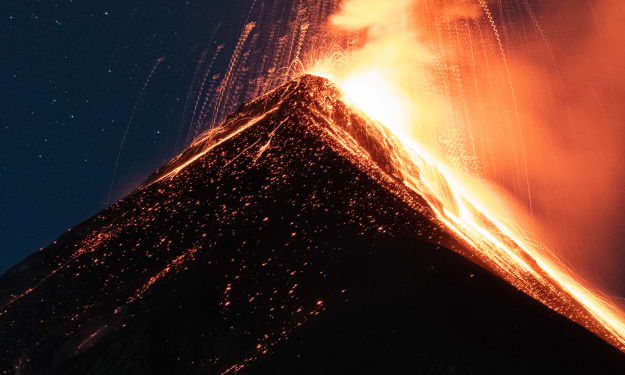
Before we take the plunge, it is important to understand what Lake Natron is made of. Much like the Dead Sea, this Tanzanian lake does not run off into any oceans or rivers, allowing it to soak up all the salty desert rain. However, what makes it especially lethal is its close proximity to the active volcano, Ol Doinyo Lengai. The volcano spews a rare kind of lava rich in sodium and potassium carbonate, called natural carbonatite or Natron for short, which releases into the water. This mix of sodium carbonate and sodium bicarbonate were key ingredients once used in Egyptian mummification, creating the perfect preservative in lake form. The whole chemical composition is extremely alkaline, with pH levels of 10.5, close to that of ammonia. This gives the lake its rosy hue. Any birds who happen to take a dive and do not make it out become calcified in a hardened stone-like husk.
In 2013, wildlife photographer Nick Brandt was one of the first to document this phenomenon. He discovered several stone birds and other unlucky animals in the dry season when the water had receded. He theorized that since the lake is so mirror-like and reflective, the birds must have flown right into it as if it was a big glass door. Despite so many birds dying in Lake Natron, there is a particular species flourishing. Turns out, the lake's toxic waters provide a safe haven from predators, making it the perfect flamingo flocking grounds.
Flamingos can handle the lake's toxicity because of their tough skin and scaly legs, which prevent birds from drinking the fresh water from nearby springs or geysers at the edges of the lake. If they are desperate enough, they can even filter saltwater with special glands in their nasal cavities. Their strong stomachs allow them to feed on the toxic algae found throughout the lake, making Lake Natron the perfect spot to raise and protect their young.
However, for humans, taking a dip in Lake Natron is not advisable. Depending on the time of year, the water can be as hot as 60 degrees Celsius, which is hot enough to cause third-degree burns in five seconds or less. Additionally, the lake's shallowness is chock full of sharp, salty structures, making it dangerous to do any fancy dives or cannonballs. While one would not be turned to stone instantly, if they happen to drown and stay submerged, their entire body would harden and be preserved. If found hundreds of years later, they might still have their hair and organs intact, like mummification. Natron's super high alkalinity stops the decomposition process, which means one would be safe from vultures or any other hungry scavengers looking for a snack.
In 2007, a group of wildlife videographers plunged into Lake Natron's toxicity when their helicopter crashed. The pilot suffered a broken leg, and another passenger had a broken hip. Incredibly, one of the passengers managed to struggle to shore and alerted some of the Masai tribespeople nearby. They quickly built stretchers and carried the injured to land in the nick of time.
In conclusion, while Lake Natron may be a sanctuary for some animals, it is not a safe place for humans to swim. It is important to understand the dangers of such environments and to exercise caution when exploring them.Getting to know all these are you still ready to go
About the Creator
Keep reading
More stories from Akhil Raju and writers in Earth and other communities.
WHAT HAPPENS IF WE THROW GARBAGE INTO VOLCANO
Did you know that volcanoes are one of the most powerful forces of nature? Unfortunately, if you were to fall into one, your body would quickly disappear without a trace. But have you ever wondered why we don't use volcanoes to get rid of our garbage? With Americans alone generating about 254 million tons of trash per year, it might seem like the perfect solution. However, volcanoes are actually much more dangerous and unstable than they appear, and not to mention difficult to access. So let's stick to traditional methods of waste disposal for now.
By Akhil Raju2 years ago in Earth
65% of Workers Are Interested in ‘Microshifting’ Their Schedules as an Alternative to the Strict 9-to-5
The traditional 9-to-5 workday has long been considered the standard, but recent research suggests that employees are seeking more flexibility than ever before. A striking 65% of workers report interest in ‘microshifting’ their schedules, a concept that allows them to adjust their work hours in smaller increments rather than sticking to a rigid daily routine. For many, this is more than just a scheduling preference — it’s a way to reclaim control over their time, reduce stress, and boost productivity.
By Muhammad Hassan3 days ago in Earth
How Much Do You Need in an ISA for a Passive Income That Beats the State Pension?
For many people in the UK, the State Pension is expected to form the backbone of retirement income. But with rising living costs and growing uncertainty about the future, more savers are asking a crucial question: Can I build a passive income that beats the State Pension — and how much would I need in an ISA to do it?
By Aarif Lashari4 days ago in Earth



Comments
There are no comments for this story
Be the first to respond and start the conversation.