
China Sets a New Benchmark: 22.13-Kilometer Highway Tunnel Breaks World Record
Engineering marvels continue to redefine what’s possible as China opens the world’s longest highway tunnel, showcasing innovation, ambition, and strategic infrastructure development

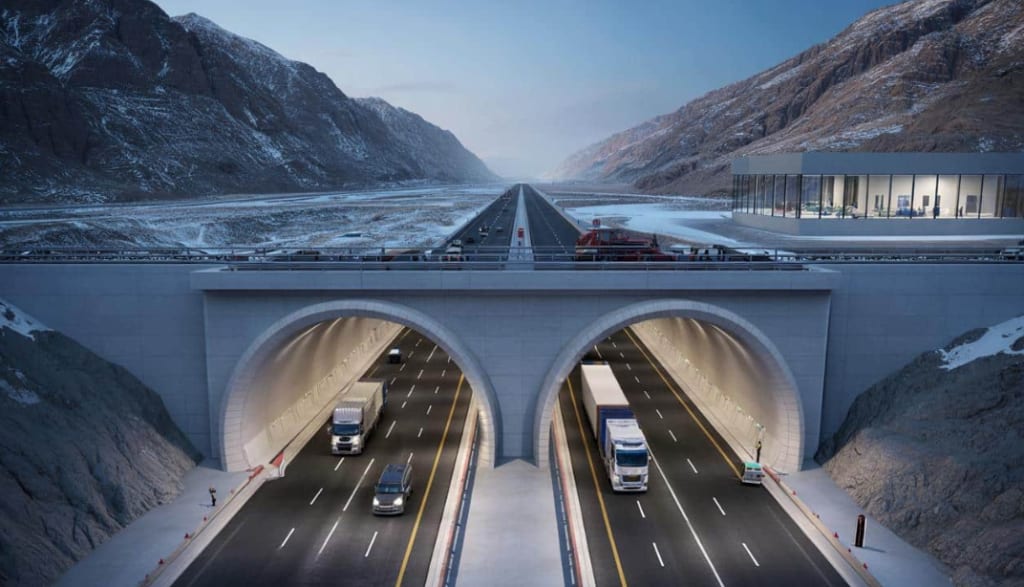
China has once again captured global attention by pushing the limits of civil engineering with the completion of a 22.13-kilometer highway tunnel. This extraordinary feat has not only set a new world record but also highlights China’s relentless drive to expand and modernize its transportation network. The tunnel, which threads through challenging mountainous terrain, promises to revolutionize travel efficiency, boost regional connectivity, and further cement China’s reputation as a global leader in mega infrastructure projects.
A Record-Breaking Tunnel
The newly completed highway tunnel surpasses the previous record-holder, reflecting the scale and ambition typical of China’s infrastructure endeavors. Stretching over 22 kilometers, the tunnel demonstrates a level of technical mastery rarely seen elsewhere. Engineers had to navigate complex geological formations, including sections of soft rock and high water pressure zones, which required sophisticated tunnel-boring machinery and advanced construction techniques.
The tunnel’s construction involved state-of-the-art technologies such as tunnel boring machines (TBMs) capable of operating under high-pressure environments, real-time monitoring systems for geological shifts, and reinforced lining structures to ensure long-term durability. Such innovation is crucial in projects of this magnitude, as even minor errors can have significant consequences over such an extended distance.
Strategic Significance
Beyond its engineering marvel, the tunnel holds immense strategic importance for China’s domestic infrastructure network. It connects two key regions that were previously separated by mountainous terrain, dramatically reducing travel times and transportation costs. This is expected to stimulate economic activity, promote regional tourism, and enhance logistics efficiency.
The tunnel is part of China’s broader highway expansion initiative, which seeks to link urban centers, rural towns, and industrial hubs more seamlessly. By reducing travel distances and improving road safety, projects like this not only enhance convenience but also contribute to environmental benefits, as vehicles spend less time idling on long detours or congested mountain roads.
Overcoming Engineering Challenges
Constructing a tunnel of such unprecedented length is no small feat. Engineers had to contend with natural obstacles including unstable rock formations, underground water, and seismic considerations. The project reportedly took several years of meticulous planning, surveying, and execution, underscoring the high level of precision required.
One of the most notable achievements of the tunnel’s construction is the use of advanced TBMs that can bore through varying rock types while simultaneously installing protective linings. In addition, modern ventilation systems and emergency access tunnels were integrated to ensure safety for travelers in all conditions.
This is not the first time China has made headlines for tunnel construction. Previous projects include the world’s longest undersea tunnel and several high-altitude tunnels traversing challenging Himalayan ranges. However, this 22.13-kilometer highway tunnel sets a new benchmark, not only in length but also in construction efficiency and safety standards.
Economic and Social Impact
The completion of the tunnel is expected to have far-reaching economic and social implications. Shorter travel times mean faster movement of goods and people, which is critical for both domestic trade and tourism. Local businesses are likely to see increased activity as more visitors gain easier access to previously remote areas.
Furthermore, the tunnel enhances the overall safety and reliability of transportation in regions prone to landslides, snow, and other environmental hazards. By providing a sheltered route through rugged terrain, the tunnel reduces the risk of accidents and ensures a more consistent travel schedule for commuters and freight transporters alike.
From a broader perspective, infrastructure projects of this scale demonstrate China’s capacity to plan and execute complex undertakings while leveraging advanced technology. These projects also serve as a blueprint for other countries seeking to modernize their transportation networks in challenging geographies.
Global Recognition and Technological Leadership
China’s latest tunnel achievement has drawn praise from international engineering circles. Experts note that the project exemplifies not just ambition, but also meticulous engineering, project management, and risk mitigation. It is being studied as a case example for other countries facing similar topographical challenges.
The use of cutting-edge construction technology, including AI-assisted planning, automated excavation machinery, and enhanced monitoring systems, positions China at the forefront of infrastructure innovation. As global competition intensifies in construction and civil engineering, achievements like this reinforce China’s status as a leader capable of delivering projects that few nations could attempt.
Looking Ahead
With the 22.13-kilometer highway tunnel now operational, China’s transportation landscape has reached a new level of sophistication. Travelers can expect faster, safer, and more reliable journeys, while local economies stand to gain from improved connectivity. The tunnel is not only a symbol of human ingenuity but also a reminder of the transformative power of infrastructure when executed at scale.
China’s focus on infrastructure is likely to continue, with future projects possibly including longer tunnels, high-speed rail expansions, and advanced road systems designed to tackle both urban congestion and rural isolation. For other nations observing these developments, the tunnel serves as both inspiration and a benchmark for the possibilities of modern engineering.
Conclusion
The world’s longest highway tunnel is more than just a numerical record; it is a testament to human creativity, precision, and perseverance. China has once again demonstrated that, when it comes to large-scale infrastructure projects, it is willing and capable of rewriting what we thought was possible. This 22.13-kilometer marvel is not just a tunnel—it is a symbol of progress, connectivity, and ambition, paving the way for a future where geographic barriers are no longer insurmountable.
By blending innovative engineering with strategic planning, China’s new tunnel marks a pivotal milestone in global infrastructure development and sets the stage for even more ambitious projects in the years to come.
About the Creator
Muhammad Hassan
Muhammad Hassan | Content writer with 2 years of experience crafting engaging articles on world news, current affairs, and trending topics. I simplify complex stories to keep readers informed and connected.
Keep reading
More stories from Muhammad Hassan and writers in Earth and other communities.
Trump Signs Order to Limit Wall Street Investors in Single-Family Housing
In a move signaling renewed focus on housing affordability, former President Donald Trump has signed an executive order intended to limit Wall Street investors’ ability to buy single-family homes. The announcement comes amid growing public concern over the role of large investment firms in driving up home prices and reducing access to affordable housing for everyday Americans. Advocates say the order could help restore balance to the housing market, while critics question whether the measure will be effective or face legal challenges.
By Muhammad Hassan2 months ago in Earth


Comments
There are no comments for this story
Be the first to respond and start the conversation.