
Is the Ukraine–Russia War Pushing the World Toward World War III?
Why a regional conflict now carries global consequences

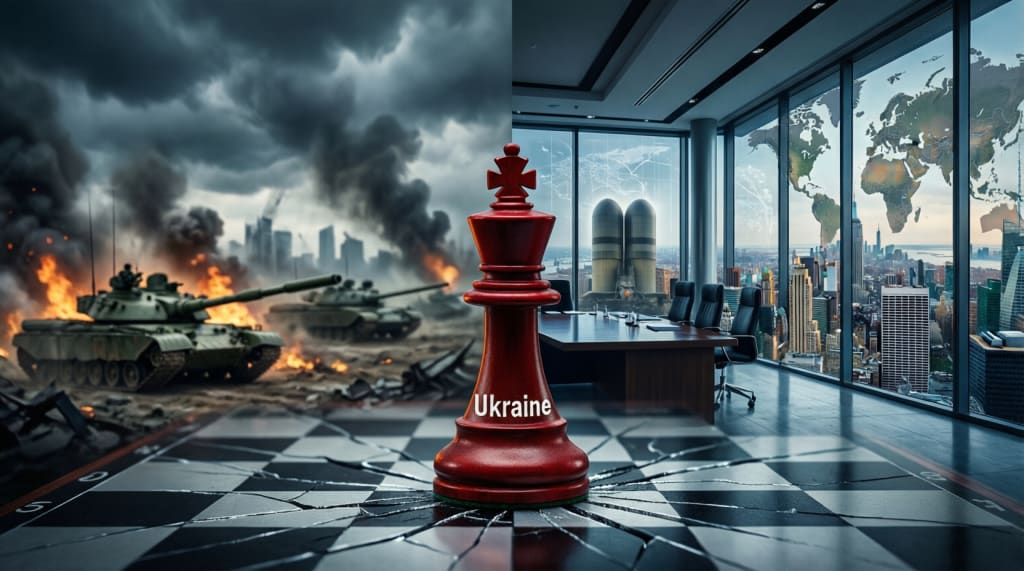
Is the Ukraine–Russia War Pushing the World Toward World War III?
The war between Ukraine and Russia began as a regional conflict, but over time it has grown into something much larger. While it is not officially World War III, many experts, analysts, and ordinary citizens are asking the same question: is the world moving dangerously close to a global war?
The concern does not come from the battlefield alone. It comes from the number of powerful countries involved indirectly, the scale of military aid, and the growing tension between major global powers. The Ukraine–Russia war has become a test of international alliances, global security systems, and the limits of modern warfare.
At its core, the conflict is between Russia and Ukraine. But the involvement of NATO countries, especially the United States and European nations, has changed the nature of the war. Western countries are providing Ukraine with advanced weapons, intelligence support, financial aid, and training. Russia, in response, views this support as a direct threat to its security.
This situation has created a dangerous balance. NATO says it is not fighting Russia directly, but Russia argues that the level of involvement already crosses that line. When nuclear-armed states stand on opposite sides of a conflict, even without direct combat, the risk of escalation increases.
One of the biggest fears is miscalculation. History shows that world wars often start not by intention, but by mistakes, misunderstandings, or sudden events that spiral out of control. A missile landing in the wrong place, a misread military move, or an aggressive response could trigger a wider confrontation.
The war has also reshaped global politics. Countries are choosing sides, strengthening alliances, and increasing military spending. Europe is rearming at a pace not seen in decades. NATO has expanded, adding new members who feel threatened by Russia’s actions. Meanwhile, Russia is strengthening ties with countries that oppose Western influence.
Economic warfare has become another battlefield. Sanctions against Russia are among the harshest in modern history. Energy markets, food supplies, and global trade routes have been disrupted. These economic effects are felt far beyond Eastern Europe, impacting inflation, energy prices, and food security worldwide.
This global impact is one reason the war feels larger than a regional conflict. When a single war affects millions of people across continents, it begins to resemble the early stages of global confrontation. However, impact alone does not define a world war.
A true world war involves direct military conflict between multiple major powers across different regions. So far, global powers have avoided direct combat with each other. This restraint is deliberate. Leaders understand that a direct clash between nuclear-armed nations could lead to catastrophic consequences.
Nuclear weapons remain the strongest deterrent against full-scale world war. Ironically, they are also the greatest danger. While they discourage direct conflict, repeated nuclear threats and rhetoric increase fear and instability. The more such weapons are mentioned, the thinner the line between warning and action becomes.
Public opinion also plays a role. In many countries, people are growing anxious about the future. Media coverage, political speeches, and social media amplify fears of global war. While fear does not equal reality, it can influence political decisions and public pressure on governments.
Despite these risks, there are still strong forces preventing World War III. Diplomacy continues behind the scenes. Military leaders communicate to avoid accidental escalation. Even rival powers understand that total war would be devastating for everyone.
The Ukraine–Russia war has not become World War III, but it has changed how the world views conflict. It has shown how quickly local wars can become global crises in a connected world. It has also exposed weaknesses in international systems designed to prevent such escalation.
The future depends on choices made now. Continued dialogue, restraint, and diplomacy are essential. Escalation is not inevitable, but neither is peace guaranteed. The world stands at a crossroads where caution matters more than ever.
The Ukraine–Russia war is a warning—not that World War III has begun, but that the conditions for wider conflict exist if global leaders fail to manage them responsibly.
About the Creator
Wings of Time
I'm Wings of Time—a storyteller from Swat, Pakistan. I write immersive, researched tales of war, aviation, and history that bring the past roaring back to life
Keep reading
More stories from Wings of Time and writers in Earth and other communities.
Avalanches Kill Five Off-Piste Skiers in the Austrian Alps
The Austrian Alps are often portrayed as a winter paradise — a place of pristine white slopes, thrilling descents, and breathtaking mountain views. Every year, thousands of skiers and snowboarders travel from across the world to experience Austria’s famous alpine resorts. But over the weekend, that dream turned into a nightmare when five off-piste skiers lost their lives in two separate avalanche incidents, once again reminding the world that nature can be as unforgiving as it is beautiful. The deadly avalanches struck the Salzburg region, one of Austria’s most popular winter sports areas, despite clear warnings about dangerous snow conditions. As rescue teams worked tirelessly in freezing temperatures, the tragedy raised serious questions about off-piste skiing, risk awareness, and the limits of human control in extreme environments. What Happened in the Austrian Alps? According to Austrian authorities, the fatal incidents occurred on Saturday in two different locations within the Salzburg Alps. The first and deadliest avalanche struck a group of off-piste skiers in the Gastein Valley. A large mass of snow broke loose on a steep slope, sweeping through the area and burying multiple people. Four skiers were killed, while two others were injured, one of them critically. One person in the group managed to escape without injuries. Roughly 90 minutes earlier, a separate avalanche occurred near Bad Hofgastein, another well-known alpine destination. In that incident, a female skier was buried under snow at an altitude of around 2,200 meters. Despite rapid rescue efforts, she did not survive, bringing the death toll to five. Emergency services responded immediately, deploying multiple rescue helicopters, mountain rescue teams, search dogs, and medical personnel. However, avalanches move with terrifying speed, often leaving rescuers with only minutes to locate victims before survival chances drop dramatically. Avalanche Warnings Were Already in Place One of the most troubling aspects of this tragedy is that avalanche warnings had already been issued across much of the Austrian Alps. In the days leading up to the weekend, heavy snowfall combined with shifting temperatures created unstable snow layers. Avalanche experts warned that conditions were particularly dangerous, especially in ungroomed and off-piste areas. Some regions were placed under high avalanche risk levels, signaling that even experienced skiers could trigger deadly slides. Local mountain rescue officials later emphasized that the danger was well known. They described the incident as a painful reminder that avalanche bulletins are not theoretical — they exist to save lives. The Risk of Off-Piste Skiing Off-piste skiing, sometimes called backcountry skiing, has grown increasingly popular in recent years. Many skiers are drawn to untouched snow, quieter slopes, and the thrill of adventure beyond resort boundaries. But unlike marked ski runs, off-piste terrain is not controlled or secured against avalanches. Ski resorts routinely use explosives and monitoring systems to reduce avalanche risk on official slopes. Outside those boundaries, however, skiers are fully exposed to natural conditions. Snowpack stability can change suddenly due to wind, temperature shifts, or the weight of a single skier. Even with modern equipment like avalanche beacons and airbags, survival is never guaranteed. Once a person is buried, compacted snow can harden quickly, making self-rescue nearly impossible. A Pattern of Tragedy Across the Alps Sadly, this is not an isolated incident. Avalanche fatalities occur every winter across Europe’s mountain regions, and this season has already seen multiple deadly events. Earlier in the week, a 13-year-old boy was killed in an avalanche at another Austrian resort. In separate incidents, skiers have died in Tyrol, Switzerland, and France, all during periods of elevated avalanche risk. Austria alone records an average of around 20 avalanche-related deaths each year, depending on snow conditions and winter tourism levels. Experts warn that climate change may further complicate the issue by creating more unpredictable weather patterns and unstable snowpacks. Rescue Efforts and Emotional Toll Mountain rescue teams are highly trained and deeply committed, but avalanches remain one of the most challenging emergencies they face. In the Salzburg incidents, rescuers worked under intense pressure, racing against time and extreme weather. Beyond the physical danger, such events take an enormous emotional toll on rescuers, local communities, and families of the victims. Alpine towns rely heavily on tourism, and tragedies like this cast a long shadow over what should be a joyful winter season. Authorities have expressed condolences while also urging visitors to reflect seriously on the risks involved in off-piste activities. What Can Be Learned from This Tragedy? While no lesson can undo the loss of five lives, experts consistently highlight several key points: Respect avalanche warnings and bulletins These alerts are based on scientific analysis and real-time data, not guesswork. Understand that experience does not equal immunity Even skilled skiers can misjudge conditions. Stick to groomed slopes during high-risk periods Official ski runs are actively monitored and controlled. Avoid peer pressure and “powder fever” The desire for untouched snow can cloud judgment. Ultimately, the mountains will always involve risk — but informed decisions can mean the difference between life and death. A Sobering Reminder from the Mountains The Austrian Alps remain one of the world’s most spectacular winter destinations. Yet, as this heartbreaking weekend shows, they demand humility and respect. Nature does not negotiate, and it does not forgive recklessness. As investigations continue and families mourn their loved ones, the tragedy serves as a sobering reminder: adventure should never come at the cost of ignoring clear danger. For skiers and snowboarders everywhere, the message is painfully clear — no descent is worth a life.
By Muhammad Hassan5 days ago in Earth
UK Exposed to ‘Serious Harm’ by Failure to Tackle AI Risks, MPs Warn
The United Kingdom is facing growing warnings from Parliament that its approach to regulating artificial intelligence (AI) could leave citizens and the financial system exposed to serious harm. A recent report by the House of Commons Treasury Select Committee criticizes the government for a “wait-and-see” attitude toward AI risks, especially in financial services.
By Aarif Lashari3 days ago in Earth


Comments
There are no comments for this story
Be the first to respond and start the conversation.