
UAE: The Rising Star of the Middle East
How the United Arab Emirates became a global hub for innovation, luxury, and cultural harmony.

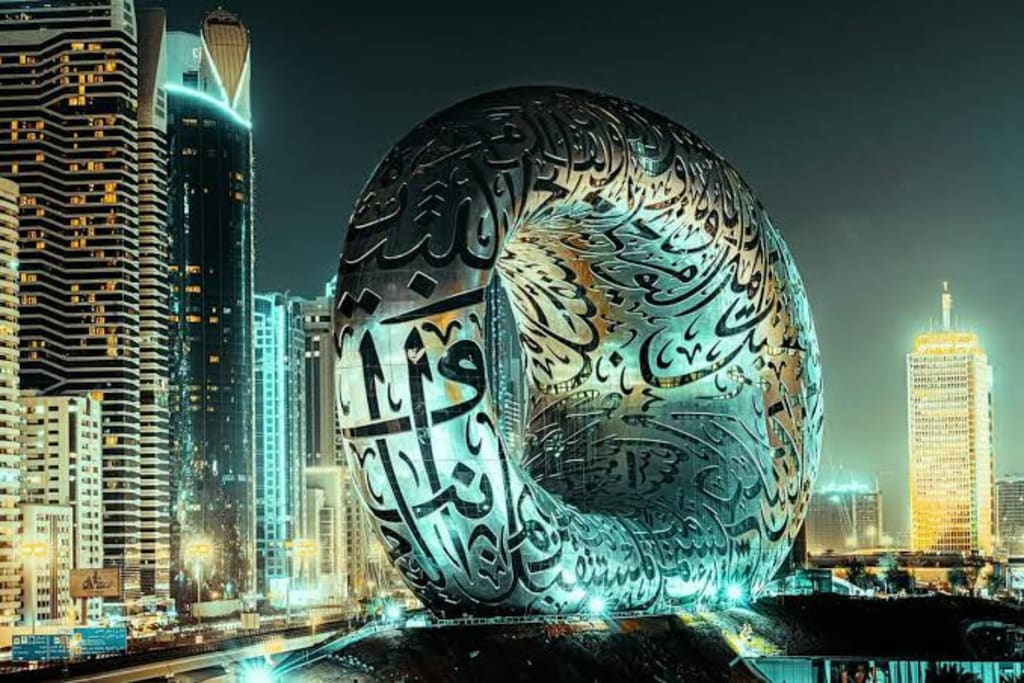
The United Arab Emirates (UAE) stands today as one of the most remarkable success stories in the modern world. In just a few decades, it has transformed from a desert landscape dotted with fishing villages into a global center for business, technology, tourism, and culture. With its futuristic skyline, multicultural society, and strong national identity, the UAE shows what vision, leadership, and unity can achieve.
From Desert Sands to Modern Cities
Before oil was discovered, life in the UAE was simple and traditional. People relied on pearl diving, fishing, and trade to survive. The area was known for its harsh desert environment and tight-knit tribal communities. Everything changed in the mid-20th century when vast oil reserves were found in Abu Dhabi.
In 1971, seven emirates — Abu Dhabi, Dubai, Sharjah, Ajman, Fujairah, Umm Al Quwain, and later Ras Al Khaimah — united under the leadership of Sheikh Zayed bin Sultan Al Nahyan, forming the United Arab Emirates. Sheikh Zayed’s vision was not only to use oil wealth for modernization but also to invest in education, health, and infrastructure for future generations.
That vision has paid off. Today, the UAE is one of the most advanced and stable countries in the Arab world, admired for its innovation, architecture, and global influence.
The Economic Transformation
While oil was the foundation of the UAE’s early development, the country’s success story goes far beyond petroleum. Over the past few decades, the UAE has diversified its economy, investing heavily in tourism, technology, renewable energy, and finance.
Dubai, in particular, has become a global business hub. With world-class infrastructure, tax-free zones, and easy access to markets in Europe, Asia, and Africa, Dubai attracts millions of investors and entrepreneurs. Its skyline, dominated by the Burj Khalifa, the tallest building in the world, symbolizes ambition and achievement.
Meanwhile, Abu Dhabi, the political capital, focuses on sustainable development and cultural growth. Projects like Masdar City, one of the world’s first eco-friendly cities, show the UAE’s commitment to a greener future. The Abu Dhabi Louvre also highlights the country’s investment in global art and heritage.
A Cultural Crossroads
The UAE is home to more than 200 nationalities, making it one of the most diverse countries in the world. Emiratis live side by side with expatriates from India, the Philippines, the UK, Pakistan, and countless other nations. This cultural mix has created a society where tradition and modernity coexist beautifully.
Despite rapid modernization, the UAE has preserved its cultural roots. Emirati traditions like majlis gatherings, falconry, camel racing, and Arabic coffee ceremonies are still cherished. The country’s leadership has made great efforts to promote national identity through events like National Day, Flag Day, and UAE Heritage Week.
Religious tolerance is another cornerstone of Emirati society. The UAE officially recognizes multiple faiths and even built the Abrahamic Family House in Abu Dhabi — a complex that includes a mosque, church, and synagogue — as a symbol of peaceful coexistence.
Innovation and Future Vision
The UAE isn’t just building for today — it’s planning for the future. Through its Vision 2031 strategy, the nation aims to become one of the world’s best countries in education, technology, and sustainability.
In 2021, the UAE made history when it launched the Hope Probe, becoming the first Arab nation to send a mission to Mars. This achievement highlighted the country’s growing investment in science and space exploration.
The UAE also continues to lead in renewable energy, hosting the International Renewable Energy Agency (IRENA) and investing in solar power through projects like the Mohammed bin Rashid Al Maktoum Solar Park — one of the largest in the world.
At the same time, the government encourages digital transformation and artificial intelligence (AI) innovation. Dubai has introduced robot police officers, self-driving taxis, and plans for a “smart city” where technology simplifies everyday life.
Tourism and Lifestyle
Tourism is another major success story. Millions of visitors flock to the UAE each year to experience luxury, adventure, and culture. From the Burj Al Arab, the world’s only “7-star hotel,” to the man-made islands like Palm Jumeirah, the country has redefined global tourism.
For those seeking culture and history, destinations like Al Fahidi Historical District in Dubai or Qasr Al Hosn in Abu Dhabi offer a glimpse into the UAE’s past. Adventure seekers can go dune bashing in the desert, skydiving over the Palm, or diving off the Fujairah coast.
Events like Expo 2020 Dubai (held in 2021 due to the pandemic) showcased the UAE’s global vision and hospitality. The country has also become a major venue for sports, hosting international events like Formula 1, UFC, and golf championships.
Challenges and Adaptations
Like any growing nation, the UAE faces challenges. The fast pace of development can sometimes put pressure on the environment, infrastructure, and social systems. The government, however, is aware of these issues and continues to introduce policies for sustainability, worker welfare, and innovation.
Climate change and water scarcity are also major concerns, but the UAE is investing in desalination plants, water recycling, and green energy to tackle them head-on.
A Symbol of Unity and Progress
At its core, the UAE’s success is built on unity — the very principle that brought the seven emirates together in 1971. The national motto, “Together for the Future,” reflects a spirit of cooperation and optimism.
The leadership continues to inspire this unity through visionary governance and humanitarian efforts. The UAE is one of the world’s largest donors of foreign aid, providing support to countries in need, regardless of religion or politics.
Conclusion
The United Arab Emirates is more than a nation — it’s a symbol of what vision, determination, and unity can accomplish. From its glittering skyscrapers to its ancient traditions, the UAE stands at the crossroads of the past and the future.
In less than a century, it has gone from sand dunes to skyscrapers, from tribal communities to global influence. And as it looks ahead to the next fifty years, one thing is certain: the UAE’s journey is far from over — it’s just getting started.
---
Community on Vocal Media:
This article belongs to the Earth community, which features content about global cultures, travel destinations, and international development stories.
About the Creator
Fiaz Ahmed
I am Fiaz Ahmed. I am a passionate writer. I love covering trending topics and breaking news. With a sharp eye for what’s happening around the world, and crafts timely and engaging stories that keep readers informed and updated.
Keep reading
More stories from Fiaz Ahmed and writers in Earth and other communities.
Elizabeth Line: London’s Modern Transport Revolution
A New Era for the Capital When the Elizabeth Line officially opened in 2022, it wasn’t just another addition to London’s transport system—it was a historic transformation. Named after Queen Elizabeth II, the line represents one of the most ambitious infrastructure projects in modern British history. Stretching more than 60 miles from Reading and Heathrow in the west to Shenfield and Abbey Wood in the east, it has become a lifeline for millions of commuters, connecting distant parts of the city with remarkable speed and comfort.
By Fiaz Ahmed 3 months ago in Earth
Microbiota, microbiome or microflora: how to speak correctly and why it is for health.
You've probably heard the phrase, "We are what we eat." But modern science says more precisely: we are also those who live in us. Until 2016, it was believed that there are many times more bacteria in our body than our own cells. The latest calculations by mathematicians show that we divide the body with our microorganisms by about 50/50: about 30 trillion of our cells versus 38 trillion bacterial ones.
By Yaroslav Gorohov4 days ago in Earth
Chinese EVs Closing In on America After Canadian Tariffs Deal
The electric vehicle race is no longer just about climate goals or consumer choice — it has become a geopolitical contest. And in early 2026, a subtle but powerful move by Canada may have tilted the board. By agreeing to sharply reduce tariffs on Chinese electric vehicles, Canada has opened a door that the United States has worked hard to keep shut. While Chinese EVs are still largely barred from the American market, they are now edging closer than ever — not by crossing the border directly, but by entering through Canada. This development raises a pressing question: Are Chinese EVs closing in on America, and what does that mean for the future of North American auto markets? The Deal That Changed the Game Canada’s new agreement with China allows up to 49,000 Chinese-made electric vehicles per year to enter the Canadian market at a tariff rate of just over 6%, a dramatic drop from the previous 100% tariff that effectively blocked them. On paper, the quota seems small. In reality, it carries enormous symbolic and strategic weight. For years, both Canada and the United States aligned closely on keeping Chinese EVs out, citing concerns over unfair subsidies, national security, and the protection of domestic auto industries. This new deal marks a clear shift — and a divergence from U.S. policy. Canada didn’t make the decision in isolation. The EV tariff reduction was part of a broader trade reset with China, tied to agricultural exports such as canola and efforts to stabilize a strained economic relationship. Why Chinese EVs Matter So Much China is the undisputed leader of the global electric vehicle industry. Its manufacturers produce EVs at scale, often at prices Western automakers struggle to match. Brands like BYD, Nio, and Xpeng have already expanded aggressively into Europe, Southeast Asia, and parts of the Middle East. North America has remained one of the final fortified markets — until now. Chinese EVs are appealing not just because they’re cheaper, but because they’ve rapidly improved in quality, range, and technology. For consumers priced out of North American and European EV models, Chinese vehicles offer something rare: affordability without sacrificing features. Canada’s decision gives Chinese automakers their first legitimate foothold in North America — and footholds tend to grow. Why the U.S. Is Nervous The United States still enforces a 100% tariff on Chinese EV imports, making them effectively unsellable in the American market. But Canada’s move has triggered concern in Washington. U.S. officials argue that Chinese EVs entering Canada could indirectly pressure American markets, influence supply chains, and weaken Washington’s leverage in future trade negotiations. There’s also a political dimension. Both major U.S. parties have framed Chinese dominance in EVs as a strategic threat — not just to auto jobs, but to technological leadership. Modern EVs collect vast amounts of data, and lawmakers have raised concerns about cybersecurity and foreign data access. While Chinese EVs aren’t rolling onto American roads yet, their presence just across the border changes the conversation. Canada’s Risk — and Opportunity Inside Canada, the reaction has been mixed. Automotive hubs like Ontario worry that opening the market could undermine domestic manufacturing and strain relations with the U.S., Canada’s largest trading partner. Some leaders have called the deal “lopsided,” warning it could cost jobs if American retaliation follows. Others see opportunity. A more competitive EV market could lower prices for Canadian consumers and accelerate EV adoption. It may also attract Chinese investment into Canada itself — including factories, battery plants, and supply chain partnerships. If Chinese automakers choose to build in Canada rather than simply export to it, the country could position itself as a bridge between Chinese EV innovation and North American demand. That balancing act — between economic opportunity and political risk — defines Canada’s strategy. Are Chinese EVs Really ‘Closing In’ on America? For now, the answer is: not directly — but strategically, yes. Chinese EVs sold in Canada won’t automatically flood the U.S. market. Regulations, trade rules, and tariffs still stand in the way. But proximity matters. Supply chains overlap. Consumer awareness spreads. Manufacturing footprints expand. There’s also the possibility of a workaround: Chinese companies could eventually build EVs in North America to bypass tariffs altogether. This idea has already been floated — but it faces fierce resistance from U.S. lawmakers and unions. Still, history shows that once a global industry leader gains regional access, momentum often follows. What This Means for Consumers For Canadian buyers, the impact could be immediate: more choice and lower prices in an EV market that has long been criticized for being expensive and limited. For American consumers, the effect will be indirect — at least at first. But increased competition could eventually pressure U.S. automakers to reduce prices, improve features, and accelerate innovation. The larger question is whether North America wants competition or insulation — and how long insulation can realistically last in a globalized EV economy. The Bigger Picture: A Global EV Power Shift Canada’s tariff deal reflects a broader reality: China’s dominance in electric vehicles is reshaping global trade, whether governments like it or not. Europe is already grappling with an influx of Chinese EVs. Emerging markets are embracing them. And now, North America has its first real crack in the wall. This isn’t just about cars. It’s about who controls the future of clean transportation, supply chains, and industrial policy. Final Thoughts Chinese EVs aren’t driving down American highways yet — but after Canada’s tariff deal, they’re closer than ever. This move doesn’t spell immediate disruption, but it does signal a shift. One country has decided that economic pragmatism outweighs political alignment. And in doing so, Canada may have opened the door to a new phase of EV competition in North America. Whether that door swings wider — or slams shut — will depend on how the U.S., automakers, and consumers respond. One thing is certain: the EV race just entered a new chapter.
By Muhammad Hassan2 days ago in Earth

Comments
There are no comments for this story
Be the first to respond and start the conversation.