
Microbiota, microbiome or microflora: how to speak correctly and why it is for health.
About health

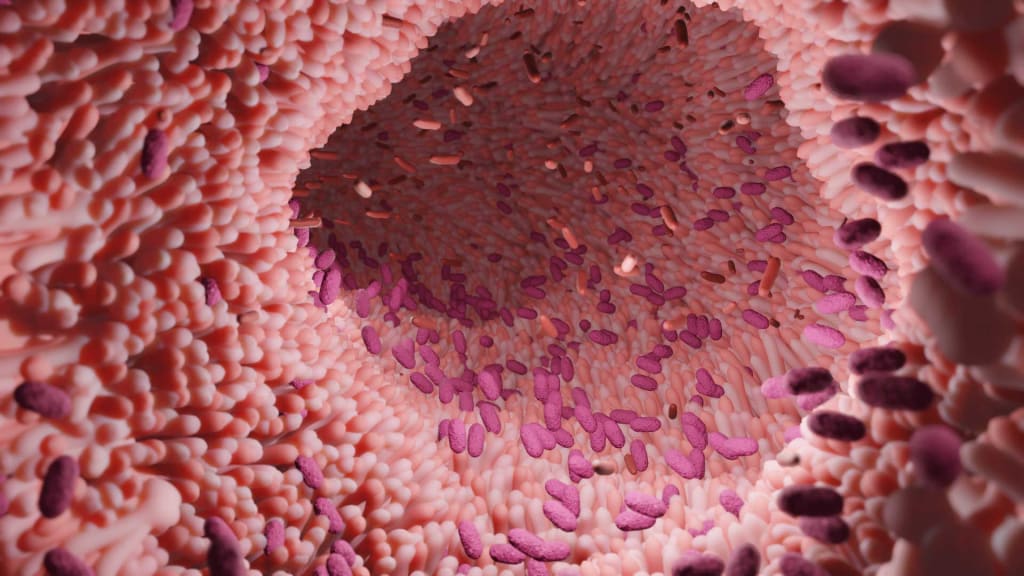
You've probably heard the phrase, "We are what we eat." But modern science says more precisely: we are also those who live in us. Until 2016, it was believed that there are many times more bacteria in our body than our own cells. The latest calculations by mathematicians show that we divide the body with our microorganisms by about 50/50: about 30 trillion of our cells versus 38 trillion bacterial ones.
But what is the correct name for these "roommates"? Microflora? Microbiota? Or maybe the microbiome? Let's figure it out - after all, the approach to your health depends on the correct understanding of the terms.

1. Microflora: why we move away from this word?
You have probably heard the term "microflora" most often. It is sometimes used even by doctors out of habit. However, from a scientific point of view, it is somewhat obsolete. "Flora" refers us to the world of plants, and bacteria are a completely different kingdom. Therefore, in modern evidence-based medicine and in the practice of Ediens, we use more precise concepts: microbiota and microbiome.
2. Microbiota: living "workers" of your body
When we talk about the microbiota, we refer to the set of living microorganisms that inhabit specific areas of our body: intestines, skin, oral mucosa, vagina, etc..
The main signs of the microbiota:
• These are living organisms that can be isolated from your body.
• They can be "cultivated", that is, grown in the laboratory on a nutrient medium.
• They can be identified (find out their "name") using biochemical methods or mass spectrometry (MALDI test).

Why do we investigate the microbiota?
To create personalised drugs — pharmabiotics. If we can isolate your live beneficial bacteria, we can create your personal "bank" (autoprobiotics) and use them to restore health in the future. This is the most valuable currency of your body, because your own bacteria always take root better than someone else's.
3. The Microbiome: The Genetic Universe Inside You
The microbiome is a much broader concept. It is the set of all the genes of microorganisms that live in us.
If the microbiota is a list of "who lives", then the microbiome shows "what they can do". This is the full genetic potential that affects the:
- Immune, endocrine and lymphatic systems
- Brain function (the well-known gut-brain axis»)
- Metabolism and synthesis of vitamins
- Digestion
- Skin - and elasticity
- Sexual health
- Oral mucosal health
- The presence or absence of allergies
Why do we explore the microbiome?
Including for the selection of your individual meal plan. Just knowing the names of bacteria is not enough. To make an individual nutrition plan, we need to analyse the genes of bacteria and understand what metabolites (substances) they produce, that is, understand their functions. It is on the basis of genetic analysis of the microbiome and complex mathematical algorithms (and not simple AI) that we at Ediens develop personalised recommendations for products that will be the medicine just for you.
Bottom line: what is the difference in practice?
Imagine that your body is a big company.
• The microbiota is a list of employees who have come to work. We know them by sight and can interact with them (for example, give a premium in the form of a pharmbiotic).
• The microbiome is the collection of all of their skills, instructions, and tools. Knowing this, we can rebuild processes in the company (change nutrition) so that it works efficiently.
Understanding this difference allows us to approach your health from the perspective of 4P medicine: personalised, preventative (preventing diseases), predictably and with your active participation.
About the Creator
Yaroslav Gorohov
Programmer. Live in Germany. Married, have 3 children. Developer of MurMur Voice to Text and other software. Love poetry and songs, have been playing guitar sometimes. Studied at Kiev Polytechnical University. Family is above all else.
Keep reading
More stories from Yaroslav Gorohov and writers in Earth and other communities.
Contemporary Ukrainian Romance for Guitar
Introduction The Ukrainian romance for guitar occupies a singular space in the world of classical and folk music — a genre born at the crossroads of Slavic lyricism, Ottoman modal inflection, and Central European Romanticism. Long associated with intimate salon performance and the aching poetry of Taras Shevchenko, Lesia Ukrainka, and Ivan Franko, the romance has in recent decades undergone a remarkable transformation. Contemporary Ukrainian guitarists, composers, and arrangers are reshaping this tradition with fresh harmonic language, new performance techniques, and a determined urgency driven, in part, by the cultural weight of national identity in a time of conflict.
By Yaroslav Gorohov12 days ago in History



Comments
There are no comments for this story
Be the first to respond and start the conversation.