
Typhoon Kalmaegi Hits Vietnam After Killing at Least 114 in the Philippines
A deadly storm leaves a trail of destruction across Southeast Asia, raising urgent questions about disaster readiness and climate change.

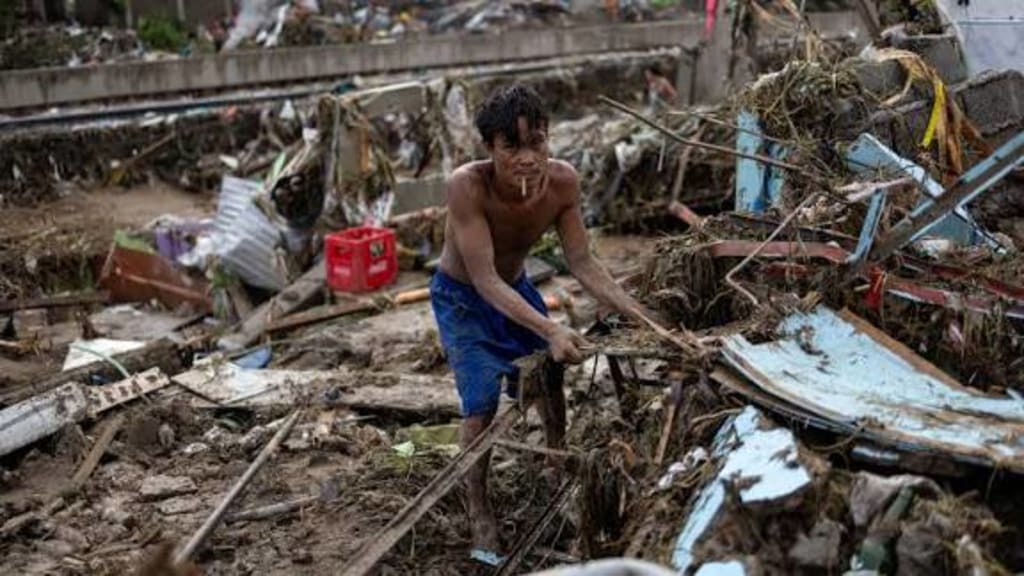
Typhoon Kalmaegi, one of the most powerful tropical storms of the year, has struck Vietnam, just days after devastating the Philippines, where it killed at least 114 people and displaced thousands. The storm, packing winds of more than 140 kilometers per hour (87 mph), brought heavy rainfall, flooding, and landslides as it tore through coastal provinces on Vietnam’s eastern shore.
Authorities in both countries are now struggling to respond to the widespread destruction left in Kalmaegi’s wake, as communities face food shortages, destroyed infrastructure, and mass evacuations.
---
A Deadly Path Through the Philippines
Kalmaegi made landfall first in the northern Philippines, where it unleashed torrential rains and strong winds across Luzon Island. According to the National Disaster Risk Reduction and Management Council (NDRRMC), entire villages were submerged, while hundreds of homes were swept away by floods and landslides. Power lines collapsed, roads were blocked, and communication networks in several provinces were cut off.
Rescue operations have been ongoing, with military helicopters and boats deployed to reach remote areas. At least 114 people have been confirmed dead, though officials fear the number may rise as search teams access more isolated regions. Thousands of families have been forced into evacuation centers, where conditions remain dire.
President Ferdinand Marcos Jr. has called for an emergency relief plan and international aid. “The scale of this tragedy demands unity and immediate action,” he said during a press briefing.
---
Vietnam Braces for Impact — and Suffers Heavy Losses
As the storm moved westward, Vietnamese authorities evacuated more than 150,000 people from coastal and low-lying regions in preparation for Kalmaegi’s arrival. Despite these efforts, the typhoon caused severe flooding in Quang Ninh, Hai Phong, and Thanh Hoa provinces. Early reports indicate dozens of injuries and at least 15 confirmed deaths, though numbers are still being verified.
Vietnam’s disaster management office said that over 20,000 homes were damaged, and large areas of farmland were destroyed, threatening the country’s food supply. Fishing boats were smashed against the coast, and transportation routes were paralyzed by fallen trees and floodwaters.
Prime Minister Pham Minh Chinh visited the affected areas, pledging government support for recovery. “Vietnam has faced many storms before, but the increasing intensity of these typhoons shows that our climate is changing — and we must adapt,” he said.
---
Climate Change: The Growing Storm Behind the Storm
Experts have linked Typhoon Kalmaegi’s severity to the ongoing effects of climate change, noting that warmer ocean temperatures are fueling more powerful and unpredictable tropical systems in the Pacific.
Dr. Nguyen Lan Huong, a climate scientist at Hanoi University, explained, “These storms are no longer seasonal — they’re becoming stronger, wetter, and harder to predict. Southeast Asia, especially island and coastal nations, will continue to face growing risks.”
The Philippines, one of the world’s most disaster-prone countries, experiences around 20 tropical cyclones every year. With fragile infrastructure and limited resources, it often struggles to recover before the next storm arrives. Meanwhile, Vietnam, with its long coastline, faces increasing challenges in protecting its rural communities and agricultural zones.
---
The Human Toll and the Road to Recovery
In both countries, the human stories emerging from the disaster are heartbreaking. In the Philippine province of Isabela, a mother of three, Maria Santos, described how her family escaped floodwaters by clinging to banana trees. “We lost everything — our home, our animals, even our crops. But we are alive, and that is what matters,” she said tearfully.
In Vietnam, volunteers and rescue teams have been working around the clock to deliver food, medicine, and clean water to survivors. The Red Cross and several international relief organizations have already mobilized emergency aid, but access remains difficult in mountainous and flooded regions.
Authorities fear outbreaks of waterborne diseases and shortages of basic supplies could worsen the crisis in the coming weeks.
---
A Call for Regional Cooperation
The devastation caused by Typhoon Kalmaegi underscores the urgent need for stronger regional disaster preparedness and cooperation across Southeast Asia. Experts are calling for better early warning systems, shared emergency resources, and improved urban planning to reduce risks in flood-prone areas.
ASEAN (the Association of Southeast Asian Nations) has pledged to strengthen coordination in disaster response, but local governments still face challenges in funding, infrastructure, and enforcement.
“We can’t stop typhoons from forming,” said Dr. Huong, “but we can prevent them from becoming human catastrophes.”
---
Looking Ahead
As Vietnam begins its cleanup operation and the Philippines continues its recovery, the memories of Typhoon Kalmaegi will likely linger for years. Beyond the staggering loss of life and property, the storm serves as another painful reminder of the human cost of environmental neglect and the growing urgency of addressing climate resilience.
For millions affected by the storm, rebuilding their homes, communities, and livelihoods will take months, if not years. Yet amid the destruction, stories of courage and solidarity continue to emerge — proof that even in the face of nature’s fury, the spirit of resilience endures.
About the Creator
Fiaz Ahmed
I am Fiaz Ahmed. I am a passionate writer. I love covering trending topics and breaking news. With a sharp eye for what’s happening around the world, and crafts timely and engaging stories that keep readers informed and updated.
Keep reading
More stories from Fiaz Ahmed and writers in Earth and other communities.
William Smith: The Pioneering Geologist Who Shaped the Way We Understand Earth's History
In the world of geology, few names stand as tall as William Smith. Often referred to as the "Father of English Geology," Smith’s work in the late 18th and early 19th centuries transformed how we understand the Earth’s layers and history. While his name may not be as widely known as some other historical figures, his contributions laid the groundwork for modern geology, helping scientists make sense of the complex world beneath our feet.
By Fiaz Ahmed 2 months ago in Earth
Severe Geomagnetic Storm Could Bring Northern Lights Across Much of the U.S.
On Monday evening, skywatchers from the Pacific Northwest to the Midwest got ready for something out of the ordinary: a celestial display that typically occurs at high northern latitudes. Americans who provide forecasts as a powerful cloud of charged particles from the sun accelerates toward the Earth's magnetic field, the National Oceanic and Atmospheric Administration (NOAA) has issued a "G4 (Severe) geomagnetic storm watch."
By Raviha Imranabout 5 hours ago in Earth
Greenland News
Greenland News Greenland has increasingly drawn global attention in recent years due to its political developments, environmental changes, and growing strategic importance. As the world looks more closely at the Arctic region, news from Greenland reflects a unique mix of local priorities and international interest. From climate-related challenges to economic opportunities and governance issues, Greenland continues to shape its own path while remaining closely connected to global affairs.
By America today a day ago in Earth



Comments
There are no comments for this story
Be the first to respond and start the conversation.