
William Smith: The Pioneering Geologist Who Shaped the Way We Understand Earth's History
How one man’s passion for rocks and fossils changed the world of science forever.

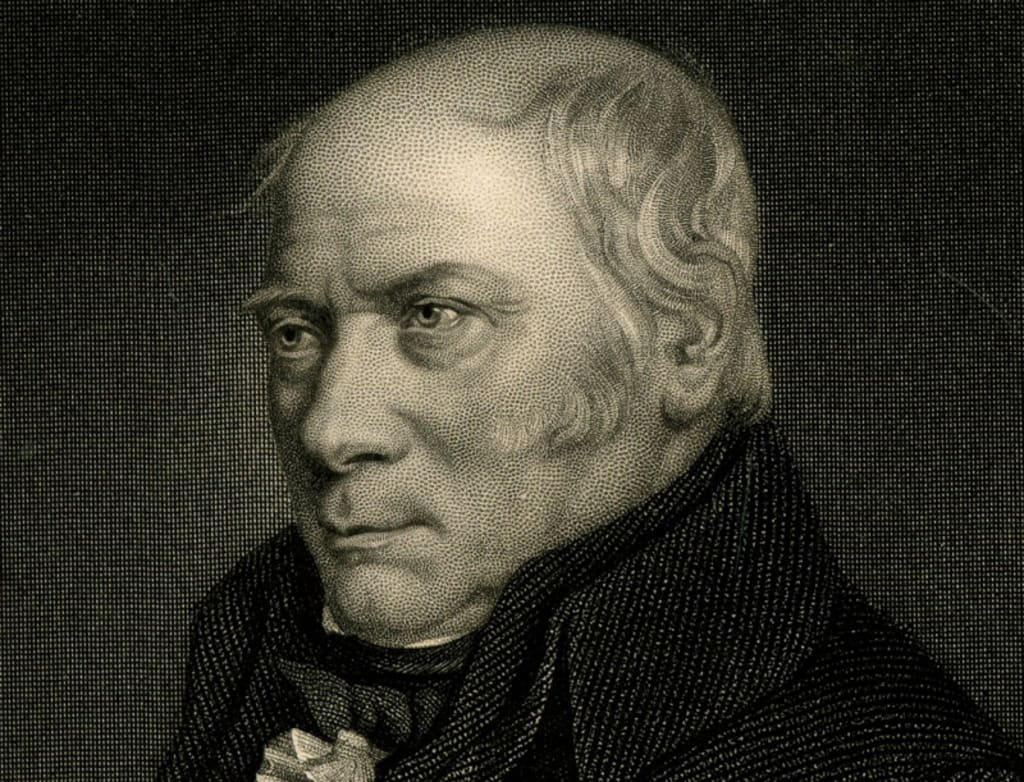
In the world of geology, few names stand as tall as William Smith. Often referred to as the "Father of English Geology," Smith’s work in the late 18th and early 19th centuries transformed how we understand the Earth’s layers and history. While his name may not be as widely known as some other historical figures, his contributions laid the groundwork for modern geology, helping scientists make sense of the complex world beneath our feet.
So who was William Smith, and why is his work still so influential today? Let’s dive into the life of this groundbreaking geologist and explore his legacy that continues to shape the science of the Earth.
---
A Humble Beginning: The Life of William Smith
William Smith was born on March 23, 1769, in the small village of Stoke Poges in Buckinghamshire, England. Unlike many prominent scientists, Smith did not come from an academic background. His early life was marked by a variety of odd jobs, including working as a surveyor. However, his true passion was always the natural world.
At a young age, Smith developed an interest in rocks, fossils, and the Earth’s structure. His curiosity was sparked while working as a surveyor in Somerset, where he began to notice that certain layers of rock seemed to appear in the same order across vast distances. He also discovered that these layers contained distinctive fossils, which led him to realize that the Earth’s history could be read like a book—each layer telling a story of the past.
---
The Birth of Stratigraphy
Smith’s greatest contribution to geology was his development of the principle of stratigraphy—the study of rock layers (or strata) and their sequence. He noticed that different layers of rock contained unique sets of fossils, and the presence of specific fossils could be used to date the rock layers. This idea would revolutionize how scientists understood the Earth’s age and the process of fossilization.
In 1799, after years of study and observation, Smith began to create the first geological map of England. This map, which he completed in 1815, was groundbreaking in its accuracy and detail. For the first time, it showed how the Earth’s surface could be divided into different layers, or strata, each corresponding to a specific period in time. The map also illustrated how these strata stretched across regions, helping scientists understand the Earth's history on a much broader scale.
Smith’s map was revolutionary, not just because it depicted rock layers, but because it showed the relationship between geology and fossil records, helping geologists better understand the sequence of life on Earth.
---
The Concept of Fossils as Time Markers
One of Smith’s most important discoveries was that fossils could be used as time markers. He realized that different species of plants and animals had lived during different periods in Earth’s history, and their fossils were embedded in specific rock layers. By studying the fossils found in each layer, Smith was able to establish a relative timeline of Earth’s history.
This discovery formed the basis for what we now know as the Geological Time Scale, which divides Earth’s 4.5 billion-year history into different periods based on the rock layers and fossils found within them. Smith’s work paved the way for future scientists to determine the age of rocks and fossils, and his discoveries continue to influence the field of paleontology today.
---
Challenges and Triumphs
While William Smith’s scientific achievements were groundbreaking, his life was not without its struggles. Despite his revolutionary work, Smith faced significant challenges throughout his career. For one, his education had been largely self-taught, and he had no formal degree in geology. In a time when academic credentials were highly valued, Smith’s lack of formal education made it difficult for him to gain recognition from the scientific community.
Moreover, Smith’s work was often overshadowed by his contemporaries, and he faced financial difficulties. Despite these struggles, he continued to work tirelessly on his geological map and other research. Eventually, his persistence paid off. Smith was recognized by leading geologists of his time, and in 1831, he was appointed as the first official Geologist of England. He was also elected as a member of the Royal Society, one of the highest honors a scientist could receive.
---
Legacy of William Smith
William Smith passed away on August 28, 1839, but his legacy lived on through his groundbreaking work. His geological map is considered one of the most significant achievements in the history of science, and his principles of stratigraphy have become fundamental in geology.
Today, geologists still use Smith’s map as a reference for studying the Earth’s layers and understanding the history of life on our planet. The idea that fossils can serve as markers of time continues to be central to the study of both geology and paleontology.
Smith’s work also had a lasting impact on industrial applications. His understanding of rock layers was essential for the coal mining industry, which relied on accurate maps to locate deposits. The principles of stratigraphy that he developed are still used in industries ranging from oil exploration to environmental science.
---
A Lasting Influence on Science and Education
William Smith’s contributions to the field of geology and his methods of studying the Earth’s history are still taught in schools and universities around the world. His work has influenced not just geologists but also paleontologists, archaeologists, and environmental scientists.
Perhaps Smith’s greatest achievement was showing the world that the Earth is not a static, unchanging object. Instead, it is a dynamic, evolving system with a rich history that can be uncovered through the careful study of rocks, fossils, and natural processes.
---
Conclusion
William Smith’s life and work are a testament to the power of curiosity, observation, and persistence. Despite facing personal and professional challenges, he remained dedicated to his passion for understanding the Earth and its history. Today, William Smith’s legacy continues to inspire scientists around the world, reminding us that the answers to life’s greatest mysteries can often be found beneath our feet.
From his geological map to the development of the concept of stratigraphy, William Smith changed the way we think about our planet and its past. In doing so, he reshaped the field of geology and helped pave the way for future discoveries in the study of Earth’s history.
About the Creator
Fiaz Ahmed
I am Fiaz Ahmed. I am a passionate writer. I love covering trending topics and breaking news. With a sharp eye for what’s happening around the world, and crafts timely and engaging stories that keep readers informed and updated.
Keep reading
More stories from Fiaz Ahmed and writers in Earth and other communities.
At Least 26 Dead as Typhoon Wreaks Havoc in the Philippines
A powerful typhoon has struck the Philippines, leaving at least 26 people dead and many more missing, as torrential rains, violent winds, and landslides tore through several provinces. The storm, one of the most destructive to hit the country this year, has caused widespread devastation — flattening homes, flooding entire villages, and forcing thousands to flee to evacuation centers.
By Fiaz Ahmed 4 months ago in Earth
The Day the Forest Spoke
A Walk Into the Unknown It began as an ordinary hike, a chance to escape the chaos of the city and immerse myself in the green stillness of the old Redwood Forest at the edge of my town. The sun filtered through the towering trees in long golden beams, the leaves rustling faintly with a whisper of wind, and for a moment, I felt at peace — detached from deadlines, notifications, and the endless noise of human life. I hadn’t planned for anything extraordinary, just a few hours of solitude surrounded by the ancient giants that had stood for centuries, quietly observing the world.
By The Curious Writer4 days ago in Earth



Comments
There are no comments for this story
Be the first to respond and start the conversation.