
The Remarkable World of Lizards: Exploring Biology, Ecology, Behavior, and Conservation
Exploring the World of Lizards: From Biology to Conservation
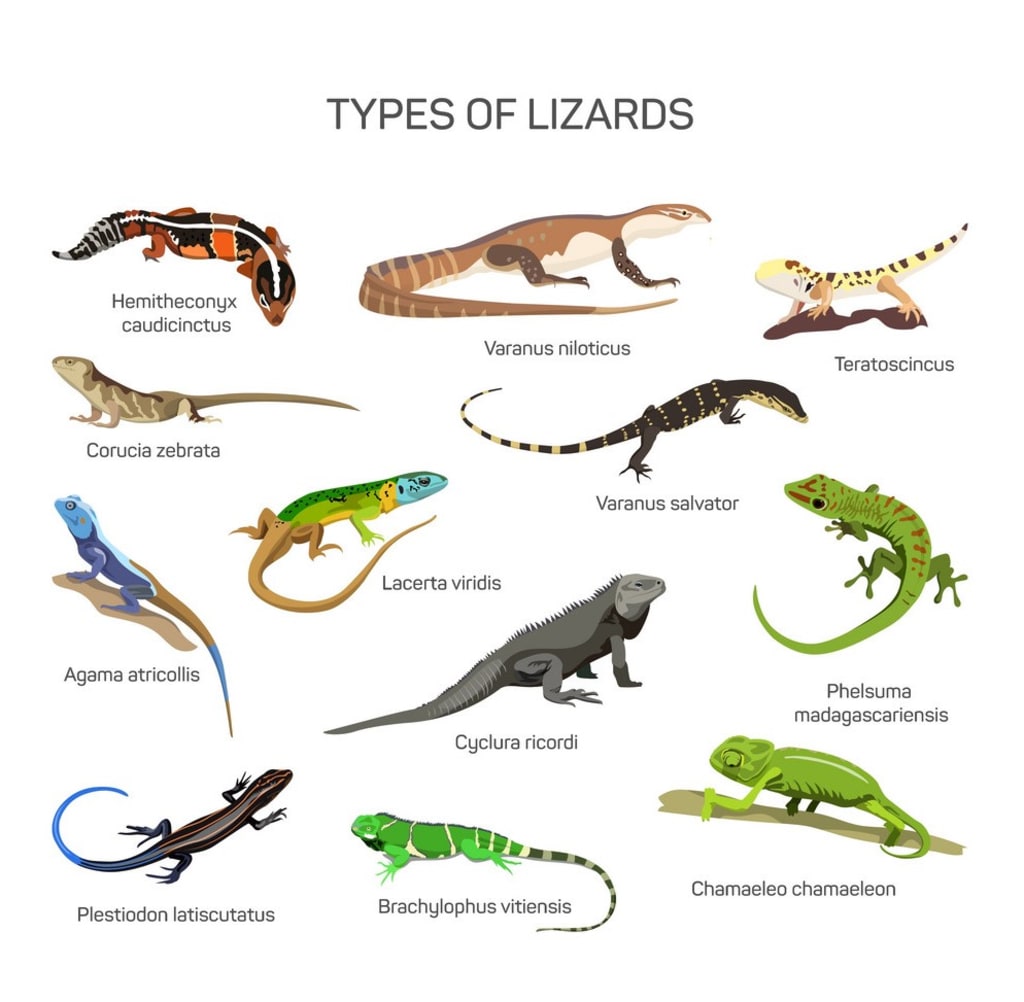
Lizards are a diverse group of reptiles belonging to the order Squamata, which also includes snakes and amphisbaenians (worm lizards). With over 6,000 species, lizards are found in every continent except Antarctica. They are known for their scaly skin, sharp claws, and ability to regenerate lost tails. Lizards occupy a wide range of ecological niches, from desert-dwelling sand lizards to arboreal chameleons. In this article, we will explore the biology, ecology, behavior, and conservation of lizards.
Biology
Lizards come in a variety of shapes and sizes. The smallest lizard, the dwarf gecko, is only a few centimeters long, while the largest lizard, the Komodo dragon, can grow up to three meters in length. Most lizards have four legs, although some, like the legless worm lizards, have lost their limbs over evolutionary time. Lizards are ectothermic, which means they rely on external sources of heat to regulate their body temperature. They are also oviparous, laying eggs that are externally fertilized.
Lizards have a number of adaptations that allow them to thrive in their environments. One of the most obvious adaptations is their scaly skin, which helps protect them from predators and prevent water loss. The scales of some lizards are so thick and rigid that they can deflect the strikes of predators like snakes and birds of prey. Lizards also have a third eye, known as the parietal eye, on the top of their head, which can detect changes in light and help them avoid danger.
Ecology
Lizards are found in a wide variety of habitats, from deserts and grasslands to rainforests and swamps. Different species have adapted to these different environments in a variety of ways. For example, desert-dwelling lizards like the Gila monster and the horned lizard have evolved thick, scaly skin and the ability to store water in their bodies, allowing them to survive in the harsh, arid conditions of the desert.
Some lizards are arboreal, living in trees and other elevated habitats. These lizards, like the chameleon and the anole, have developed long, slender limbs and prehensile tails to help them climb and grip onto branches. Some lizards, like the basilisk or "Jesus Christ" lizard, are even able to run across water on their hind legs, using their tails as rudders.
Behavior
Lizards exhibit a wide variety of behaviors, from courtship displays to territorial defense. Many lizards, like the chameleon, are able to change color to blend in with their surroundings or communicate with other lizards. Some lizards, like the iguana, are able to inflate their bodies to appear larger and intimidate predators.
One of the most well-known behaviors of lizards is their ability to regenerate lost tails. When a lizard loses its tail, it is able to grow a new one in its place. The new tail is often shorter and less complex than the original tail, but it still allows the lizard to perform many of the same functions. The ability to regenerate tails is thought to have evolved as a defense mechanism, allowing lizards to distract predators and escape with minimal injury.
Conservation
Many species of lizards are threatened or endangered due to habitat loss, climate change, and other human activities. For example, the Saint Lucia racer, a species of snake found on the Caribbean island of Saint Lucia, is threatened by habitat loss and introduced predators like rats and mongoose. The San Francisco garter snake, found in the wetlands around San Francisco Bay, is threatened by habitat loss and pollution.
Conservation efforts for lizards often focus on habitat restoration and protection
About the Creator
Keep reading
More stories from Kamal Mourya and writers in Earth and other communities.
Slithering Through History: A Comprehensive Look at the Fascinating World of Snakes
Snakes are fascinating creatures that have been around for millions of years. They are a diverse group of reptiles that vary greatly in size, color, and behavior. There are over 3,000 species of snakes, and they can be found on every continent except for Antarctica. In this article, we will explore the world of snakes, including their anatomy, behavior, habitats, and conservation efforts.
By Kamal Mourya3 years ago in Earth
The Ritual of Winter Challenge Winners
As the chill of winter settles in, communities everywhere have been buzzing with anticipation for the results of the Ritual of Winter Challenge, an event that has become a highlight of the season for enthusiasts of all ages. From artists and writers to athletes and innovators, participants from across the country compete in a variety of categories, showing off not just talent, but ingenuity, perseverance, and a commitment to pushing boundaries. This year’s winners offer a glimpse into the creative and competitive spirit that makes this challenge such a standout experience.
By Muhammad Hassan2 days ago in Earth
Locked Exits, Panic, and Desperate Calls: Survivors Recount Mall Fire Horror
A tragic fire at a busy shopping mall has left the public in shock as survivors recount the harrowing moments when flames and smoke consumed the building. Eyewitness accounts describe locked exits, panicked crowds, and desperate calls for help, painting a chilling picture of the chaos inside.
By Muhammad Hassan4 days ago in Earth



Comments
There are no comments for this story
Be the first to respond and start the conversation.