
Trump, 79, Revives Greenland Fantasy With Absurd AI Post
How a Viral Image Rekindled Debate Over Arctic Ambitions


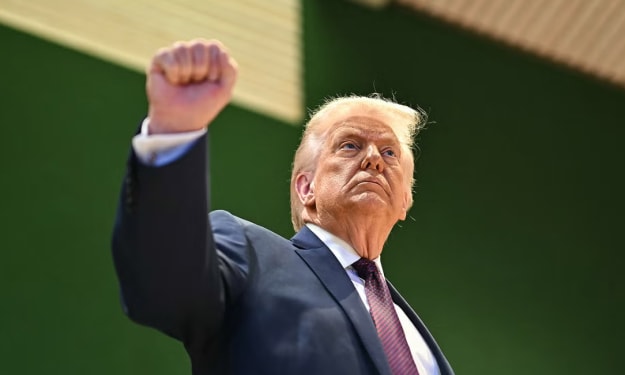
In early 2026, a seemingly strange social media post reignited a discussion that many had hoped was behind us: Donald Trump, now 79, posted an AI-generated image referencing Greenland. The image went viral, sparking laughter, criticism, and a flurry of international commentary. While the post appeared absurd on the surface, it also highlighted deeper issues about political messaging, digital media, and the ongoing fascination some U.S. leaders have with Greenland.
The AI-generated post showed Trump marching toward Greenland, holding an American flag, accompanied by a penguin — an animal that, scientifically speaking, has no connection to Greenland. The bizarre imagery immediately caught the public’s attention. Many observers viewed the penguin as a humorous metaphor for the mismatch between the symbolic post and geopolitical reality. Critics questioned whether the post was a serious attempt at commentary, an intentional meme, or a sign of how AI is being used in modern political communication.
The Social Media Storm
The post, captioned “Embrace the penguin”, appeared on the official White House X account. Within hours, it became the subject of viral memes, news reports, and expert analyses. Internet users were quick to point out the geographic error — penguins live in the Southern Hemisphere, nowhere near Greenland.
While the comedic aspect dominated social media, analysts noted that the post reflected a long-standing pattern of Trump using bold or unconventional messaging to capture public attention. The use of AI-generated imagery represents a new layer in this strategy, blending political content with internet culture. Many critics argued that this approach, while attention-grabbing, risks confusing the public and undermining the credibility of official communication.
Trump and Greenland: A Longstanding Obsession
Trump’s fascination with Greenland is not new. In 2019, he proposed that the United States could purchase Greenland from Denmark, an idea that was widely ridiculed and rejected by Danish leaders. Despite the public backlash, the notion persisted in Trump’s rhetoric and continued to appear in informal discussions about U.S. strategic priorities.
Greenland holds significant geopolitical value: it is rich in minerals, occupies a strategic Arctic location, and is home to vast natural resources. For Trump, the island has long symbolized a geopolitical prize — a potential point of influence for the U.S. in the Arctic region. The AI post, absurd as it was, reignited global attention to these strategic questions, reminding the world that some leaders still see Greenland as a focal point of American ambition.
AI and Politics: A Strange Combination
The viral AI image is part of a broader trend of using artificial intelligence to create content for political messaging. AI allows leaders and communicators to produce highly visual, shareable content at scale. However, it also introduces challenges:
Accuracy: AI can generate visually striking content that may be factually incorrect, as with the penguin in Greenland.
Interpretation: Viewers may misinterpret AI-generated imagery, assuming it represents reality or policy intent.
Credibility: Official use of memes and AI art can blur the line between serious communication and entertainment, potentially undermining authority.
In Trump’s case, the AI post highlighted both the power and pitfalls of digital media in politics. It reached millions of people worldwide, but the absurdity of the imagery also drew ridicule and raised questions about the seriousness of the message.
The International Response
European leaders and diplomats responded cautiously, recognizing the post as part humorous, part symbolic. Danish officials, who oversee Greenland’s defense and foreign policy, reiterated that the island is not for sale. Some analysts suggested that while Trump’s AI post is unlikely to affect formal negotiations, it does shape public perception and keeps Greenland in the spotlight as a topic of U.S. interest.
The global reaction underscores the influence of social media on diplomacy. In an era where viral content spreads instantly, even symbolic or absurd posts can have real-world implications, influencing discussions, media coverage, and public opinion.
Why the Penguins Matter
While the image of Trump marching alongside a penguin seems nonsensical, many commentators see it as a metaphor for the disconnect between digital imagery and practical geopolitics. Penguins, being out of place in Greenland, symbolize the absurdity of claiming influence over a sovereign region through symbolic gestures.
The penguin also illustrates how modern politics blends serious issues with entertainment and internet culture. Leaders are increasingly aware of the viral potential of online content, and AI-generated visuals provide a new way to capture attention — for better or worse.
The Role of AI in Political Communication
Trump’s AI post demonstrates both the potential and limits of artificial intelligence in politics:
Engagement: AI-generated visuals can capture attention and create shareable moments.
Creativity: AI allows for imaginative ways to communicate ideas, blending humor and symbolism.
Risk: Misrepresentation or absurdity can undermine credibility and invite international criticism.
As AI tools become more common in politics, officials will need to carefully weigh creativity against clarity, ensuring that symbolic content does not overshadow substantive policy discussions.
What This Means for the Future
The Greenland AI post is more than a viral meme; it reflects trends in modern political messaging:
Leaders increasingly use AI and digital media to communicate directly with the public.
Absurd or humorous content can attract attention, but may blur the line between entertainment and diplomacy.
Symbolic posts can reignite interest in longstanding geopolitical debates, even when they seem playful.
For observers, the post offers a lens into how social media, AI, and politics intersect — a mix of strategy, humor, and unintended consequences that will likely shape political communication for years to come.
Final Thoughts
Donald Trump’s AI-generated Greenland post is absurd, humorous, and viral — but it also underscores the enduring fascination some political figures have with strategic regions like Greenland. Beyond the comedy, it illustrates the power of AI in shaping political narratives, the challenges of modern digital diplomacy, and the importance of understanding how viral content influences public perception.
Whether one laughs at the penguin or ponders the implications, the post reminds the world that politics today is as much about perception and digital storytelling as it is about policy. In Trump’s case, a single AI-generated image can revive decades-old geopolitical fantasies, spark global discussion, and turn a playful meme into a moment of serious reflection.
About the Creator
Muhammad Hassan
Muhammad Hassan | Content writer with 2 years of experience crafting engaging articles on world news, current affairs, and trending topics. I simplify complex stories to keep readers informed and connected.
Keep reading
More stories from Muhammad Hassan and writers in Earth and other communities.
Our European Allies Just Exposed Trump’s Core Weakness—and Also America’s
Recent developments in Europe have cast a spotlight on both Donald Trump’s leadership weaknesses and broader American vulnerabilities in international relations. Allies across the continent have been taking steps that indirectly highlight limitations in U.S. policy, leaving Trump supporters, critics, and global observers questioning whether the United States is adequately positioned to lead on the world stage.
By Muhammad Hassanabout 3 hours ago in Earth
Philippines Orphan Drugs Market: Rare Disease Treatment, Access & Healthcare Policy
Philippines Orphan Drugs Market Overview The Philippines orphan drugs market is developing gradually as the country strengthens its healthcare infrastructure and improves access to treatment for rare diseases. The Philippines orphan drugs market size reached USD 1.07 Billion in 2024. Looking forward, the market is expected to reach USD 2.36 Billion by 2033, exhibiting a growth rate (CAGR) of 8.26% during 2025-2033. Although relatively small in absolute size, the market plays an important role in addressing unmet medical needs and supporting long-term healthcare sustainability.
By Manisha Dixit2 days ago in Earth
Mexico Language Service Market Size to Reach US$ 2.54 Million by 2033, Driven by Global Trade and Digital Expansion
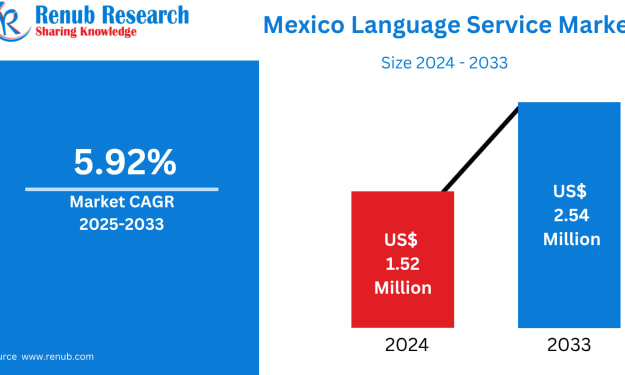
Mexico Language Service Market Overview The Mexico Language Service Market is undergoing steady and transformative growth, fueled by the country’s expanding international trade, rapid digitalization, and rising need for multilingual communication across industries. According to Renub Research, the market was valued at US$ 1.52 million in 2024 and is expected to reach US$ 2.54 million by 2033, growing at a CAGR of 5.92% from 2025 to 2033.
By jaiklin Fanandishabout 22 hours ago in Earth
Autonomy Is The Real Privilege
Good morning, freedom-seekers! Today we’re gonna be looking at autonomy. A strange word, I know; one many would probably look at blankly and run away from on sight. We’re gonna figure out what it actually means, consider how it’s achieved, and decipher just how deeply most of us are tangled up in dependence without realising it.
By That ‘Freedom’ Guy4 days ago in Humans


Comments
There are no comments for this story
Be the first to respond and start the conversation.