


Strong air columns that spin and extend from the ground to the clouds are known as tornadoes. While the majority are rather mild, the few that develop into significant events are incredibly destructive and devastating.
Six of the seven continents have tornadoes. With an average of around 33 tornadoes recorded per year, the United Kingdom is the nation with the highest number of tornadoes relative to its geographical area. However, with over 1,000 recorded tornadoes each year, the United States is the nation with both the highest total and highest intensity of tornadoes.
No matter where they happen, tornadoes are divided into two categories: supercell tornadoes, which originate inside supercells, the strongest kind of thunderstorms, and non-supercell tornadoes, which are smaller and weaker and arise within storms that are not supercells. Regarding how tornadoes develop, there are a lot of hypotheses. The existence of both high- and low-pressure air in a certain place is a crucial similarity between them. Wind is produced when air particles from a high-pressure location flow toward a low pressure area. Warm low-pressure and cold high-pressure air combine to form non-supercell tornadoes, such landspouts and waterspouts, usually close to ground level. Wind picks up as air particles travel horizontally from the region of high pressure to the area of low pressure. Various wind speeds, directions, and altitudes start to blow in a cyclical manner. Tornadoes that are not supercells become an upright spinning vortex. Supercell tornadoes, however, need somewhat different conditions to form. Warm low-pressure air is drawn upward by violent supercell storms, leaving behind chilly high-pressure air close to the ground. Wind that blows vertically is produced by air particles trying to balance the two levels of air pressure. The wind picks in speed and begins to blow in a cyclical pattern, rolling a windpipe along the ground. In both situations, the last component needed to produce a tornado is an upward wind current known as an updraft. Updrafts in developing non-supercell tornadoes extend their vertical vortices until they touch the clouds. An updraft pushes the wind pipe that is rolling upward until it stands upright, becoming a supercell tornado. Next, it draws condensation into the whirling vortex from the heavens.
Whether supercell or not, the vortices are formally categorized as tornadoes the moment they join the clouds and the ground. An enhanced version of the Fujita Scale is used to rate all tornadoes. Tornadoes are rated from EF0 through EF5 on the Enhanced Fujita, or EF, Scale. The damage a tornado creates, and the wind speed estimations provided by Doppler radar are only two of the many variables that go into determining the grade. EF0 tornadoes have winds between 65 and 85 miles per hour, making them the weakest kind. The most powerful tornadoes, EF5s, with winds of more than 200 mph.
Oklahoma City, Oklahoma, had one of the worst tornadoes ever recorded in 1999. The EF5 tornado, which originated from a supercell thunderstorm, reached wind speeds of more than 300 mph. It caused over 600 injuries, 36 deaths, and $1 billion in damages. Although it is impossible to stop tornadoes, precautions are being made to keep towns safe. In high-risk locations, meteorologists keep a careful eye on storm fronts and attempt to predict potential tornadic occurrences. In the process, they prevent harm to communities and save many lives—even from one of nature's most powerful forces.
Tornado Safety Tips:
Gather water, food, medicines, batteries, lanterns, and important documents before tornadoes.
When a tornado approaches, seek cover inside, ideally in a basement or first-floor hallway.
Avoid windows and hide beneath heavy furniture.
Automobiles and mobile houses provide little tornado protection.
Outsiders should lay down in a dip or other low terrain to wait out the storm.
About the Creator
Rasa A.
I am a finance graduate student. In addition, I enjoy discovering the most fascinating things in the world, including science, earth, the natural environment, countries, people, and cultures. And my passion for poetry is intense.
Global Markets on Alert as Europe Suspends Approval of US Trade Deal
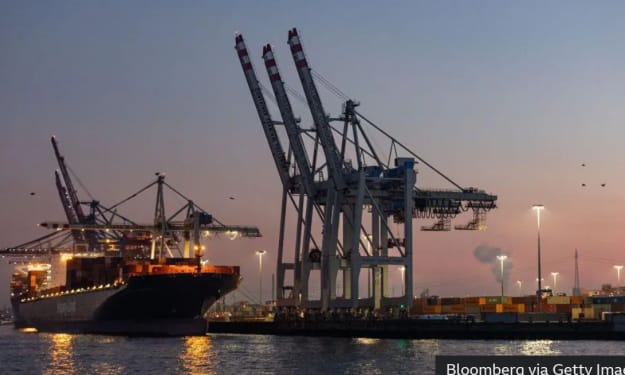
Global financial markets are on high alert following Europe’s announcement that it will suspend approval of a major US trade deal, a decision that has sent shockwaves across stock exchanges, currency markets, and investment forums worldwide. The move comes amid growing concerns over trade imbalances, regulatory disputes, and geopolitical tensions between the United States and European Union. Economists warn that the suspension could create ripple effects across global supply chains, impacting everything from manufacturing and energy to technology and agriculture. The Trade Deal in Question The US-EU trade agreement, intended to streamline tariffs, boost investment, and harmonize regulations between the two economic powerhouses, had been widely anticipated as a game-changer for transatlantic commerce. Negotiations had taken years, with both sides seeking to protect sensitive industries while opening markets for goods and services. However, Europe’s decision to halt the deal reflects mounting concerns over the potential impact on domestic industries and regulatory standards. EU officials cited the need for further review of compliance with environmental, labor, and consumer protection regulations before giving the agreement a green light. While not a full cancellation, the suspension introduces uncertainty and highlights the fragility of international trade negotiations in the current geopolitical climate. Immediate Market Reactions Financial markets reacted swiftly. Stock indices in Europe, the US, and Asia experienced volatility as investors recalibrated expectations for corporate earnings, trade flows, and economic growth. Commodity markets, particularly oil and agricultural products, also saw price fluctuations as supply chain uncertainties increased. The US dollar strengthened slightly against major currencies, reflecting investor demand for perceived “safe-haven” assets amid uncertainty. Meanwhile, European stock markets experienced moderate declines, particularly in sectors most dependent on transatlantic trade, such as automotive, aerospace, and industrial machinery. Investment analysts caution that this volatility may persist as both sides negotiate next steps. Market participants are monitoring political statements, regulatory filings, and industry responses closely to gauge the potential timing and scope of any eventual agreement. Broader Economic Implications Beyond immediate market movements, the suspension of the trade deal could have broader consequences for global economic growth. Reduced trade flows between the US and EU may affect multinational companies that rely on predictable tariffs and harmonized regulations. Sectors such as technology, pharmaceuticals, and energy could face delays in approvals, increased costs, or regulatory conflicts. Emerging markets may also feel the impact indirectly. Many countries are linked to transatlantic supply chains, exporting components, raw materials, or services to Europe or the United States. Any slowdown in EU-US trade could ripple through global production networks, affecting economic growth and employment in distant regions. Political Dimensions The suspension is not purely economic; it also has significant political implications. EU leaders are facing domestic pressures to safeguard industries, protect workers, and maintain environmental and safety standards. At the same time, US officials are emphasizing the strategic benefits of transatlantic cooperation and the risks of prolonged uncertainty. This tension underscores the broader challenge of balancing national interests with the benefits of globalization. Trade agreements are rarely purely transactional; they carry social, political, and environmental stakes. Europe’s decision to pause approval reflects a cautious approach in a time of global volatility, including ongoing geopolitical conflicts, energy security concerns, and fluctuating financial markets. Expert Analysis Economists and trade experts suggest that while the suspension introduces short-term uncertainty, it does not necessarily mean the collapse of the US-EU trade agreement. “This is a temporary pause,” says Dr. Elena Fischer, an international trade analyst. “Europe wants to ensure that the deal aligns with regulatory and sustainability standards. Once concerns are addressed, there is a strong likelihood that negotiations will resume and the agreement will eventually move forward.” Others, however, warn that delays could embolden protectionist tendencies and encourage other nations to reconsider or renegotiate trade agreements. The current global environment—marked by rising inflation, energy price volatility, and ongoing geopolitical tensions—makes international cooperation more complex than ever. Industry Responses Businesses on both sides of the Atlantic are closely watching the developments. Large multinational corporations have expressed concern about the potential for regulatory divergence, increased compliance costs, and disrupted supply chains. Some industries, such as automotive manufacturers and tech companies, rely heavily on synchronized regulations and predictable tariffs to maintain profitability. Trade associations are urging governments to provide clarity and timelines to prevent prolonged uncertainty. Investors, meanwhile, are adjusting portfolios to hedge against potential volatility, emphasizing sectors that may be less affected by transatlantic trade fluctuations. Potential Next Steps The path forward likely involves further negotiation, regulatory review, and stakeholder consultations. European officials have indicated that they are committed to maintaining high environmental and labor standards, while US negotiators are advocating for rapid approval to support economic growth and stability. Observers expect a period of careful diplomacy, with both sides balancing domestic pressures against broader economic and strategic interests. While the market may continue to experience volatility, experts suggest that clarity will eventually emerge, either in the form of a revised deal or a timeline for approval. Conclusion The suspension of the US-EU trade deal serves as a stark reminder of the delicate balance in global economic relations. Markets respond instantly to news and sentiment, while underlying economic, political, and regulatory considerations unfold more slowly. Investors, businesses, and policymakers must navigate these uncertainties carefully, weighing risks and opportunities in an interconnected world. As Europe pauses to ensure compliance and protect domestic interests, the global community watches closely. The resolution of this trade issue will not only shape transatlantic commerce but could influence global trade norms, investor confidence, and economic growth for years to come. For now, the message is clear: in an era of complex international relationships, vigilance and strategic foresight are paramount for global markets.
By Muhammad Hassan2 days ago in Earth
Turning Waste into Worth: Plastic Pyrolysis in the Circular Economy
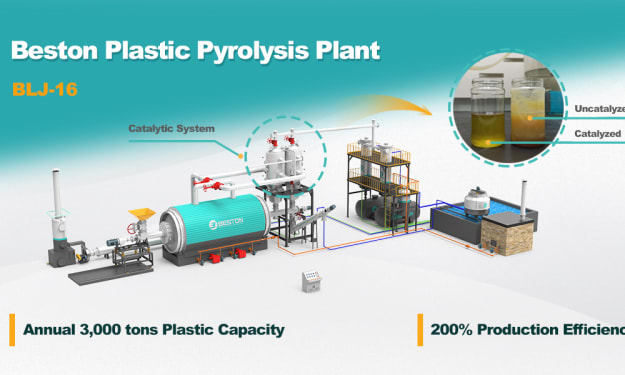
Plastic pollution has become one of the defining environmental challenges of our time. From overflowing landfills to microplastics in oceans, the traditional “take–make–dispose” model is no longer sustainable. In response, the concept of the circular economy has gained global attention, aiming to keep materials in use for as long as possible while reducing waste. Among the emerging technologies supporting this transition, plastic pyrolysis stands out as a promising solution.
By Bestonpyrolysisabout 7 hours ago in Earth


Comments