
Global Markets on Alert as Europe Suspends Approval of US Trade Deal
Rising tensions between Washington and Brussels spark uncertainty in financial markets, raising questions about global trade, investment, and economic growth.


Global financial markets are on high alert following Europe’s announcement that it will suspend approval of a major US trade deal, a decision that has sent shockwaves across stock exchanges, currency markets, and investment forums worldwide. The move comes amid growing concerns over trade imbalances, regulatory disputes, and geopolitical tensions between the United States and European Union. Economists warn that the suspension could create ripple effects across global supply chains, impacting everything from manufacturing and energy to technology and agriculture.
The Trade Deal in Question
The US-EU trade agreement, intended to streamline tariffs, boost investment, and harmonize regulations between the two economic powerhouses, had been widely anticipated as a game-changer for transatlantic commerce. Negotiations had taken years, with both sides seeking to protect sensitive industries while opening markets for goods and services.
However, Europe’s decision to halt the deal reflects mounting concerns over the potential impact on domestic industries and regulatory standards. EU officials cited the need for further review of compliance with environmental, labor, and consumer protection regulations before giving the agreement a green light. While not a full cancellation, the suspension introduces uncertainty and highlights the fragility of international trade negotiations in the current geopolitical climate.
Immediate Market Reactions
Financial markets reacted swiftly. Stock indices in Europe, the US, and Asia experienced volatility as investors recalibrated expectations for corporate earnings, trade flows, and economic growth. Commodity markets, particularly oil and agricultural products, also saw price fluctuations as supply chain uncertainties increased.
The US dollar strengthened slightly against major currencies, reflecting investor demand for perceived “safe-haven” assets amid uncertainty. Meanwhile, European stock markets experienced moderate declines, particularly in sectors most dependent on transatlantic trade, such as automotive, aerospace, and industrial machinery.
Investment analysts caution that this volatility may persist as both sides negotiate next steps. Market participants are monitoring political statements, regulatory filings, and industry responses closely to gauge the potential timing and scope of any eventual agreement.
Broader Economic Implications
Beyond immediate market movements, the suspension of the trade deal could have broader consequences for global economic growth. Reduced trade flows between the US and EU may affect multinational companies that rely on predictable tariffs and harmonized regulations. Sectors such as technology, pharmaceuticals, and energy could face delays in approvals, increased costs, or regulatory conflicts.
Emerging markets may also feel the impact indirectly. Many countries are linked to transatlantic supply chains, exporting components, raw materials, or services to Europe or the United States. Any slowdown in EU-US trade could ripple through global production networks, affecting economic growth and employment in distant regions.
Political Dimensions
The suspension is not purely economic; it also has significant political implications. EU leaders are facing domestic pressures to safeguard industries, protect workers, and maintain environmental and safety standards. At the same time, US officials are emphasizing the strategic benefits of transatlantic cooperation and the risks of prolonged uncertainty.
This tension underscores the broader challenge of balancing national interests with the benefits of globalization. Trade agreements are rarely purely transactional; they carry social, political, and environmental stakes. Europe’s decision to pause approval reflects a cautious approach in a time of global volatility, including ongoing geopolitical conflicts, energy security concerns, and fluctuating financial markets.
Expert Analysis
Economists and trade experts suggest that while the suspension introduces short-term uncertainty, it does not necessarily mean the collapse of the US-EU trade agreement. “This is a temporary pause,” says Dr. Elena Fischer, an international trade analyst. “Europe wants to ensure that the deal aligns with regulatory and sustainability standards. Once concerns are addressed, there is a strong likelihood that negotiations will resume and the agreement will eventually move forward.”
Others, however, warn that delays could embolden protectionist tendencies and encourage other nations to reconsider or renegotiate trade agreements. The current global environment—marked by rising inflation, energy price volatility, and ongoing geopolitical tensions—makes international cooperation more complex than ever.
Industry Responses
Businesses on both sides of the Atlantic are closely watching the developments. Large multinational corporations have expressed concern about the potential for regulatory divergence, increased compliance costs, and disrupted supply chains. Some industries, such as automotive manufacturers and tech companies, rely heavily on synchronized regulations and predictable tariffs to maintain profitability.
Trade associations are urging governments to provide clarity and timelines to prevent prolonged uncertainty. Investors, meanwhile, are adjusting portfolios to hedge against potential volatility, emphasizing sectors that may be less affected by transatlantic trade fluctuations.
Potential Next Steps
The path forward likely involves further negotiation, regulatory review, and stakeholder consultations. European officials have indicated that they are committed to maintaining high environmental and labor standards, while US negotiators are advocating for rapid approval to support economic growth and stability.
Observers expect a period of careful diplomacy, with both sides balancing domestic pressures against broader economic and strategic interests. While the market may continue to experience volatility, experts suggest that clarity will eventually emerge, either in the form of a revised deal or a timeline for approval.
Conclusion
The suspension of the US-EU trade deal serves as a stark reminder of the delicate balance in global economic relations. Markets respond instantly to news and sentiment, while underlying economic, political, and regulatory considerations unfold more slowly. Investors, businesses, and policymakers must navigate these uncertainties carefully, weighing risks and opportunities in an interconnected world.
As Europe pauses to ensure compliance and protect domestic interests, the global community watches closely. The resolution of this trade issue will not only shape transatlantic commerce but could influence global trade norms, investor confidence, and economic growth for years to come. For now, the message is clear: in an era of complex international relationships, vigilance and strategic foresight are paramount for global markets.
About the Creator
Muhammad Hassan
Muhammad Hassan | Content writer with 2 years of experience crafting engaging articles on world news, current affairs, and trending topics. I simplify complex stories to keep readers informed and connected.
Keep reading
More stories from Muhammad Hassan and writers in Earth and other communities.
China Sets a New Benchmark: 22.13-Kilometer Highway Tunnel Breaks World Record
China has once again captured global attention by pushing the limits of civil engineering with the completion of a 22.13-kilometer highway tunnel. This extraordinary feat has not only set a new world record but also highlights China’s relentless drive to expand and modernize its transportation network. The tunnel, which threads through challenging mountainous terrain, promises to revolutionize travel efficiency, boost regional connectivity, and further cement China’s reputation as a global leader in mega infrastructure projects.
By Muhammad Hassanabout 5 hours ago in Earth
Tiny Lion Cubs Struggle To Keep Up With Mom
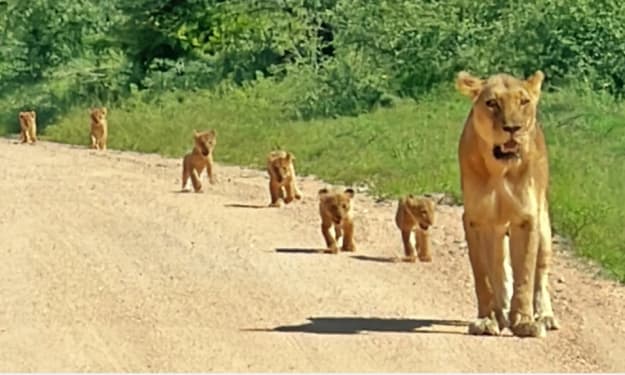
In the heart of the African savannah, life is a constant lesson for young animals. Few scenes are as endearing — or as heartwarming — as tiny lion cubs trying to keep pace with their mother. These little bundles of fur face a world full of challenges, from learning to hunt to avoiding dangers, all while depending on the guidance and protection of their experienced mom. Watching cubs wobble and tumble as they attempt to keep up with their mother reminds us that growing up, even in the wild, is a journey full of struggle, determination, and adorable missteps. The Early Days of Lion Cubs Lion cubs are born blind and helpless, usually in litters of two to six. For the first few weeks, they rely entirely on their mother for warmth, food, and safety. Even after opening their eyes and beginning to explore, the cubs are far from independent. The first months are crucial. Cubs learn social cues, hunting basics, and survival skills simply by watching their mother and the pride. But as anyone who has observed them knows, there’s often a huge gap between observation and action. Tiny cubs often struggle to match their mother’s pace, especially when she moves through long stretches of savannah or leads the family on patrols. A Mother’s Role in the Wild For a lioness, raising cubs is a full-time commitment. She hunts, defends her territory, and teaches her young, all while staying alert to predators such as hyenas, leopards, and even rival lions. The cubs, meanwhile, attempt to mimic her every move — often with clumsy yet charming results. A mother lion’s patience is remarkable; she frequently slows down, nudges them along, or stops to ensure no cub is left behind. These moments, while stressful for the tiny cubs, are vital learning opportunities. Struggling to Keep Up: Why It’s So Hard There are several reasons why tiny lion cubs have trouble keeping pace with their mother: Short Legs, Big Steps: Lion cubs’ legs are tiny and their coordination is limited, making it difficult to cover the same distance as an adult lioness. Curiosity: Cubs are naturally curious. A single butterfly or rustling bush can distract them, leaving mom to pause repeatedly. Energy Levels: Young lions tire quickly. Even with frequent naps, the cubs’ stamina is far lower than their mother’s. Learning Through Play: Play is not just fun; it teaches hunting, balance, and social skills. Running off to pounce on a sibling or chase an insect is all part of their education. Despite these challenges, the cubs’ determination to keep up demonstrates their resilience and growing understanding of the wild world. Lessons in Teamwork and Survival Every cub struggling to keep up is also learning crucial survival skills. The journey across the savannah is more than a test of speed — it’s a lesson in: Coordination: Cubs learn how to move efficiently across different terrains. Patience: They begin to understand the rhythms of adult life and the pace required for survival. Social Skills: Staying with the group teaches cubs how to interact with siblings and the pride, which is essential for their future roles. Observation: By following their mother, cubs study hunting techniques, territorial behavior, and predator awareness. Even the moments when cubs stumble or lag behind are essential for their development. These experiences prepare them for independence, which comes sooner than many might expect. The Cutest Moments in the Wild Anyone who has watched tiny lion cubs knows that their struggles are often irresistibly cute. Video clips from wildlife reserves frequently show cubs toddling along, tumbling over each other, or getting distracted mid-step. Observers often comment that these little stumbles reveal personality, determination, and playfulness, making them one of nature’s most heartwarming spectacles. While their mother is serious and focused, the cubs inject a sense of humor and lightness into life on the savannah. Why This Matters The struggles of lion cubs aren’t just adorable — they’re vital for understanding wildlife behavior. Conservationists and animal behaviorists use these moments to study growth patterns, social structures, and survival strategies in lion populations. These observations also highlight the importance of preserving natural habitats. Cubs must learn in a safe environment to survive; habitat loss, poaching, and climate change make these early struggles even more dangerous. Protecting the African savannah ensures that future generations of lions can experience the same lessons and playful tumbles. The Road to Independence Within a year, these tiny cubs will be more agile, faster, and more confident. By the time they reach two to three years old, males may begin to leave the pride, while females often stay and become caretakers themselves. Every misstep, tumble, and lagging moment is part of the journey toward strength, coordination, and independence. Watching them now gives us a glimpse of the challenges they will overcome, and the survival skills they will carry for life. A Celebration of Motherhood Ultimately, these scenes remind us of the incredible bond between mother and cubs. Her patience, vigilance, and teaching are the foundations of their future. The cubs’ struggles highlight the trials of growing up, while their determination showcases the resilience and beauty of wildlife. For those observing, it’s a powerful lesson in care, guidance, and perseverance, not just in lions but in the natural world as a whole. Final Thoughts Watching tiny lion cubs try to keep up with their mother is both entertaining and enlightening. It’s a story of growth, struggle, and resilience — a reminder that even the fiercest creatures start small, learning step by step. These little lions capture hearts while teaching life lessons: patience, determination, teamwork, and the importance of guidance. As they tumble and waddle across the savannah, they show us that growth is a process, one adorable misstep at a time. For wildlife enthusiasts, animal lovers, and anyone enchanted by nature, these tiny cubs are proof that even in the wild, love, care, and persistence are universal truths.
By Aarif Lashari2 days ago in Earth
Microbiota, microbiome or microflora: how to speak correctly and why it is for health.
You've probably heard the phrase, "We are what we eat." But modern science says more precisely: we are also those who live in us. Until 2016, it was believed that there are many times more bacteria in our body than our own cells. The latest calculations by mathematicians show that we divide the body with our microorganisms by about 50/50: about 30 trillion of our cells versus 38 trillion bacterial ones.
By Yaroslav Gorohov6 days ago in Earth



Comments
There are no comments for this story
Be the first to respond and start the conversation.