
"Top 5 Poorest Countries in the World in 2025"
"A Look at Global Poverty Through GDP Per Capita"

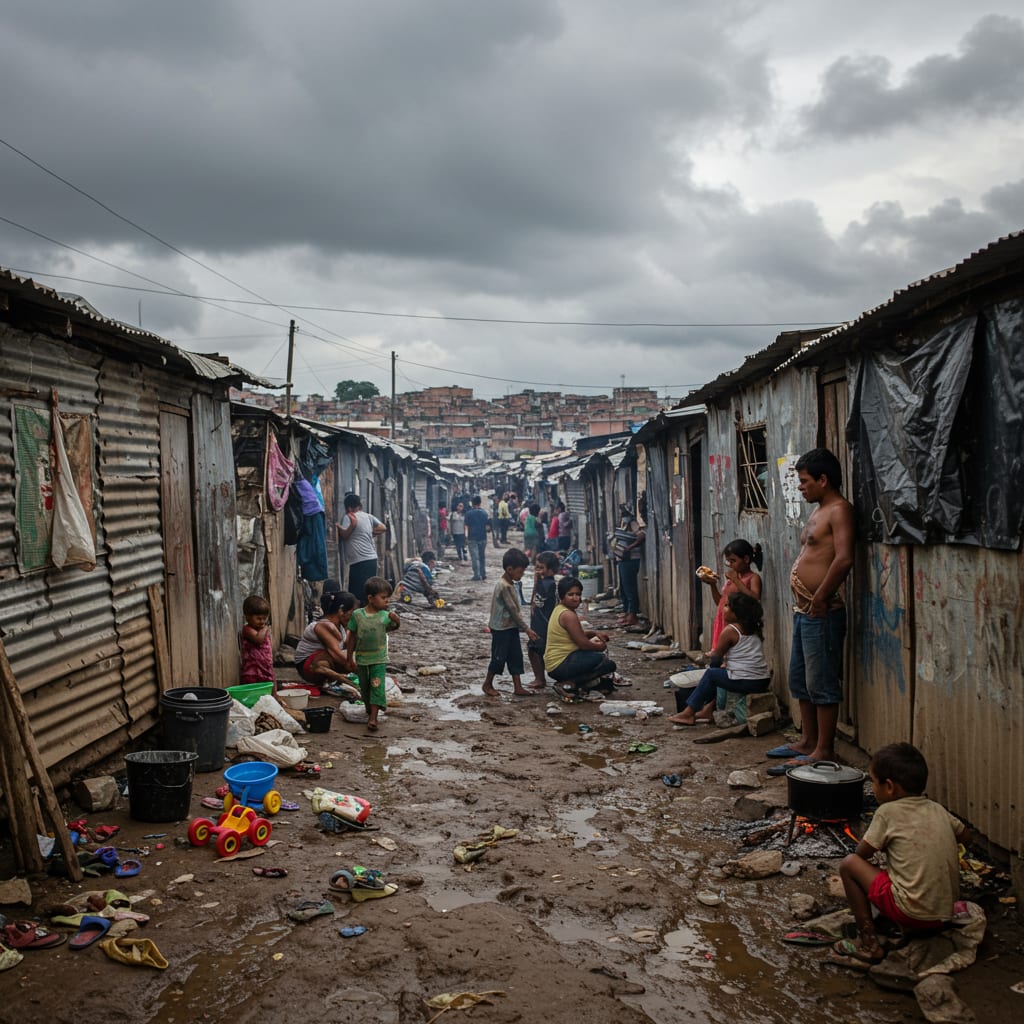
1. South Sudan – ≈ $716 PPP per capita
Rank:Poorest country globally
Background:
Emerged in 2011 as the world’s youngest nation, endowed with fertile land and oil reserves—yet plunging into prolonged civil war, ethnic strife, and instability. Oil, while constituting ~98% of government revenue, is hampered by pipeline disruptions and low global prices.
Human impact:
Estimated 75% live in poverty; inflation soars near 80%; infrastructure is skeletal—unpaved roads, unreliable power, minimal public services.
Challenges:
Civil conflict continues to dissuade investment, devastate agriculture, worsen food insecurity, and deepen dependency on humanitarian aid—trapping the nation in a low‑growth cycle.
2. Burundi – ≈ $1,020 PPP per capita
Rank: 2nd poorest globally
Profile:
A small, densely populated landlocked country in East Africa. Heavily reliant on subsistence agriculture (employing ≈ 90%), but plagued by poor soils, climate vulnerability, and outdated farming techniques.
Political situation:
Long history of ethnic violence. Though a constitutional referendum was held in 2018, fragility remains. In 2021–22, growth clocked at ~3%, but the economy remains structurally weak .
Living conditions:
About 70% of the population lacks electricity; nearly half are chronically food-insecure. Public services—education, healthcare, clean water—are inadequate, while inflation and governance issues persist.
3. Central African Republic (CAR) – ≈ $1,330 PPP per capita
Backdrop:
Landlocked and rich in natural resources, yet crippled by recurrent coups and rebellions. AVG poverty remains high; infrastructure and governance are weak.
Economic structure:
Dominated by subsistence agriculture. While it has resource potential, insecurity and poor infrastructure prevent investment and value addition.
Consequences:
Low per‑capita GDP reflects ongoing conflict, limited public services, and a lack of institutional capacity—keeping it mired in poverty.
4. Yemen – ≈ $1,670 PPP per capita
Rank: 4th poorest globally
Context:
Situated in the Horn‑of‑Africa/Arabia region, Yemen has endured a devastating civil war since 2015, with multiple factions vying for control—leading to severe humanitarian crises.
Economy:
Largely agrarian, but conflict has decimated production, disrupted trade, and devastated public infrastructure. Oil and gas sectors are negligible in their positive impact due to conflict .
Crisis:
Unemployment, hunger, and a near-collapse of healthcare are widespread, compounded by blockades, ruined services, and mass displacement affecting millions.
5. Mozambique – ≈ $1,730 PPP per capita
Rank: 5th poorest globally
Potential and setbacks:
Blessed with natural gas reserves and a long coastline, Mozambique has failed to translate resources into broad-based prosperity due to limited infrastructure and economic diversification.
Vulnerabilities:
Repeated natural disasters—cyclones, flooding—coupled with debt issues have obstructed progress. Debt servicing and weak governance hamper public investment .
Poverty indicators:
Around 75% of the population lives under the global poverty line. Economic growth is irregular and highly sensitive to commodity cycles and external shocks.
🔍 Shared Patterns and Pressures
Conflict & political instability:
South Sudan, CAR, Burundi, and Yemen are or have recently been embroiled in wars, coups, or ethnic violence. This undermines growth, deters investment, and disrupts development.
Weak institutions & infrastructure:
A common thread is deficient governance, low tax capacity, and weak public services, limiting healthcare, education, and economic integration .
Over-reliance on single sectors:
Dependence on agriculture (mostly subsistence) or natural resources leaves these economies vulnerable to climate events, price volatility, and lack of diversification .
External debt & low financing:
Debt-to-GDP ratios are climbing (averaging 72%) in many low-income countries, with limited access to capital markets. This creates unsustainable debt burdens
High poverty & humanitarian needs:
Most citizens in these countries subsist below the $2.15/day threshold. Persistent poverty and food insecurity continue despite pockets of growth .
🛠️ Paths Forward: What Might Help?
Conflict resolution & peace-building:
Political stability is foundational—without it, broader development is stifled.
Institutional strengthening:
Investing in tax systems, governance, and public administration can improve revenue and service delivery .
Economic diversification:
Moving beyond subsistence farming or single commodities to sectors like manufacturing, services, or tourism.
Resilience funds:
Building buffers and infrastructure to address natural disasters and climate risks, especially in Mozambique and the Sahel.
Debt restructuring:
As advocated by the World Bank and G20, canceling or restructuring debt can free fiscal space for critical investment.
📌 Conclusion
- The state of poverty in the world’s five poorest countries in 2025—South Sudan, Burundi, Central African Republic (CAR), Yemen, and Mozambique—reflects far more than just low income levels. It embodies a complex intersection of conflict, institutional weakness, underdeveloped infrastructure, economic dependency, and humanitarian crises. Despite regional differences, these nations share a common struggle against entrenched systemic challenges that have, for decades, hindered sustainable development and prosperity.
- Conflict is arguably the most damaging factor tying these countries together. From South Sudan’s brutal civil war to Yemen’s prolonged multi-sided conflict, violence destroys human capital, forces mass displacement, disrupts trade, and annihilates public infrastructure. In CAR and Burundi, political instability and periodic ethnic violence have perpetuated fear, discouraged investment, and kept national economies operating in survival mode. Even in Mozambique, where formal warfare has subsided, insurgent activity in the north, along with recurring natural disasters, continues to displace people and undermine national cohesion.
About the Creator
LegacyWords
"Words have a Legancy all their own—I'm here to capture that flow. As a writer, I explore the melody of language, weaving stories, poetry, and insights that resonate. Join me as we discover the beats of life, one word at a time.
Keep reading
More stories from LegacyWords and writers in Earth and other communities.
How AI Is Becoming the Next Geopolitical Frontier
Why This Matters Right Now The world is changing faster than ever. Wars, trade, jobs, and even daily life are being reshaped—not only by soldiers and weapons, but by artificial intelligence (AI). Right now, countries are racing to control AI. The reason is simple: whoever leads in AI will likely lead in power, money, and influence. This race is already affecting global politics—and it is quietly touching the lives of ordinary people everywhere. AI is no longer just a technology. It is becoming the next geopolitical frontier.
By LegacyWords2 months ago in Earth
Why Pyrolysis Oil Must Carry ISCC PLUS Certification:
As the global economy shifts toward renewable energy and circular solutions, pyrolysis oil—a liquid derived from the thermal decomposition of waste plastics, biomass, or other organic materials—has emerged as a promising alternative to fossil fuels. However, its role in sustainable energy systems comes with regulatory and ethical responsibilities. One of the most critical requirements is that pyrolysis oil must possess ISCC PLUS certification, a standard ensuring its sustainable origin and responsible use in industrial and energy applications.
By Bestonpyrolysis7 days ago in Earth



Comments
There are no comments for this story
Be the first to respond and start the conversation.