
Thyreophorans: An Overview of Armored Dinosaurs
They originated in the Late Jurassic period (155 million years ago) and in North America survived until 65 million years ago.

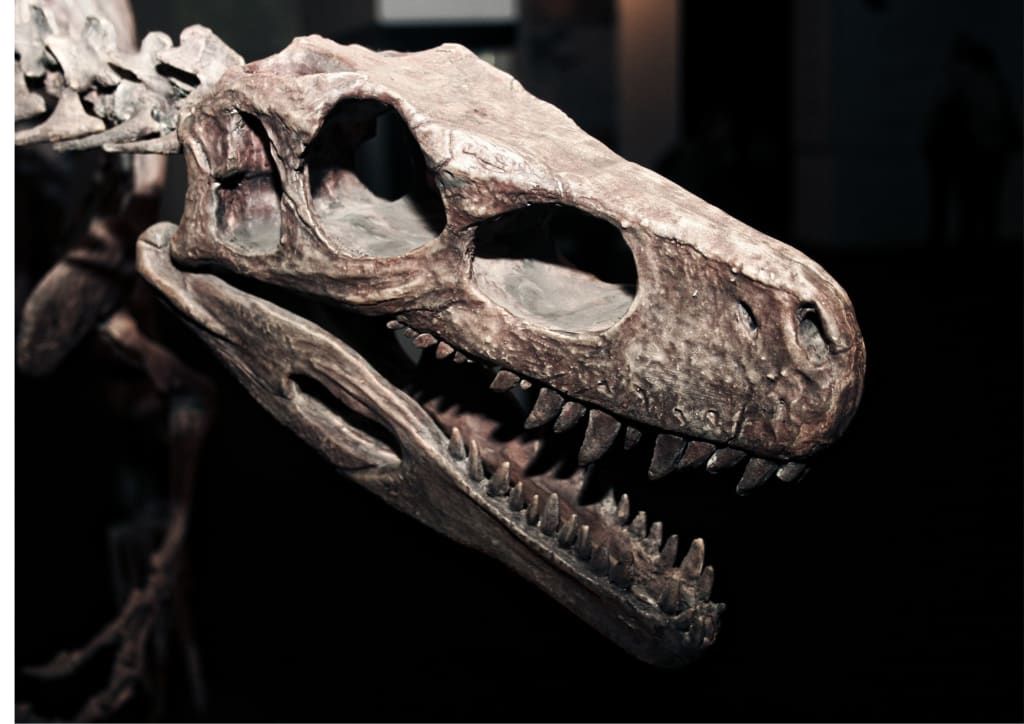
Thyreophorans are a group of herbivorous dinosaurs known for their distinctive armor plating. The name Thyreophorans comes from the Greek words "thyreos" meaning shield, and "phoros" meaning bearer. These armored dinosaurs roamed the Earth during the Jurassic and Cretaceous periods, from about 200 to 66 million years ago. They were a diverse group of dinosaurs that varied in size, shape, and armor arrangement.
Types of Thyreophorans
There were two main types of Thyreophorans: the Ankylosaurids and the Stegosaurs. Ankylosaurids were heavily armored dinosaurs with bony plates and spikes covering their bodies. They had short, sturdy legs and low-slung bodies. Stegosaurs, on the other hand, had large plates on their backs and spikes on their tails. They had longer legs than Ankylosaurids and a higher center of gravity.
Ankylosaurids
Ankylosaurids were one of the most heavily armored groups of dinosaurs. They had thick bony armor covering their body, including their head, back, and tails. Their armor was made up of bony plates called osteoderms, which were fused to the skin. The osteoderms formed a continuous shield that protected the dinosaur from predators. Some Ankylosaurids also had spikes or club-like structures at the end of their tails, which they could use to defend themselves.
Ankylosaurids were relatively small, ranging in size from about 1 to 6 meters long. They had short, sturdy legs and a low-slung bodies, which made them well-suited for moving through dense forests or other environments with obstacles. Some Ankylosaurids also had specialized teeth that allowed them to chew tough vegetation.
Stegosaurs
Stegosaurs were another group of armored dinosaurs that lived during the Jurassic and Cretaceous periods. They were known for their distinctive back plates and tail spikes. The plates on their back were made up of bony protrusions that were covered in keratin, a tough protein. The plates may have served several functions, including thermoregulation, defense against predators, and display during courtship.
Stegosaurs also had spikes on their tails, which they could use to defend themselves. The spikes were made up of bone and were covered in a sheath of keratin. Some Stegosaurs also had armor plating on their necks and shoulders.
Stegosaurs were larger than Ankylosaurids, with some species growing up to 9 meters long. They had long legs and a higher center of gravity, which made them better suited for open environments like grasslands or savannas.
Diet and Habitat
Thyreophorans were herbivores, feeding on a variety of vegetation such as ferns, cycads, and conifers. Their teeth were adapted to grinding tough plant material. Ankylosaurids are believed to have preferred low-lying vegetation, while Stegosaurs may have eaten taller plants.
Thyreophorans lived in a variety of environments, from dense forests to open grasslands. Ankylosaurids were well-suited for moving through dense forests, while Stegosaurs were adapted to more open environments. Some species of Ankylosaurids have been found in what are now northern latitudes, suggesting that they were able to tolerate cold temperatures.
Conclusion
Thyreophorans were a diverse group of armored dinosaurs that roamed the Earth during the Jurassic and Cretaceous periods. They were known for their distinctive armor plating, which served to protect them from predators. The two main types of Thyreophorans were the heavily armored Ankylosaurids and the back-plated Stegosaurs. Both types were herbivorous and feed on a variety of vegetation.
Despite their armor plating, Thyreophorans were not invincible. They were preyed upon by large carnivorous dinosaurs, such as Tyrannosaurs and Allosaurs. In fact, some Ankylosaurid fossils have been found with bite marks from large predators, suggesting that they were attacked and killed by these predators.
Today, Thyreophorans are only known from fossils, but they continue to fascinate scientists and the public alike. Fossil discoveries have shed light on their anatomy, behavior, and evolution. For example, recent studies suggest that some Thyreophorans may have been able to stand on their hind legs and run, using their tail as a counterbalance.
In conclusion, Thyreophorans were a fascinating group of armored dinosaurs that lived during the Jurassic and Cretaceous periods. They were well-adapted to their environments and had unique features, such as armor plating and tail spikes, that helped them survive. While they are no longer with us, their fossils continue to provide valuable insights into the history of life on Earth.
About the Creator
Gokila
She is an astrophile, introvert,
loves to read books all day long,
addicts in healthy lifestyle
and having curiosity to know about new things.
Life Is As Beautiful As You Make It. Contentment Is The Key To Happiness. Peace Be Upon The Saviour.
A Cold Earth-Sized Planet Surprisingly Close to Our Solar System
For decades, astronomers have searched the universe for planets that resemble Earth. While many discoveries have revealed massive gas giants or extremely hot rocky worlds, the discovery of a cold, Earth-sized planet near our cosmic neighborhood has sparked new excitement in the scientific community. This intriguing world demonstrates that small rocky planets like our own may be more common in the galaxy than once believed.
By Irshad Abbasi 7 days ago in Earth



Comments
There are no comments for this story
Be the first to respond and start the conversation.