
The World's Most Powerful Dam or a Time Bomb?
Balancing Development and Environmental Concerns: The Controversies Surrounding the Three Gorges Dam
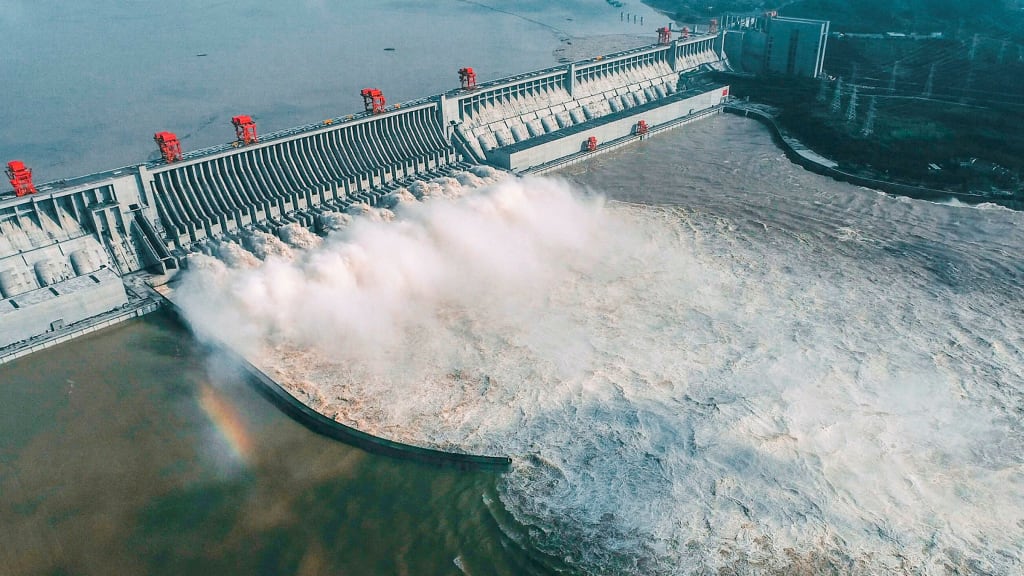
The Three Gorges Dam is a massive hydroelectric dam located in China's Hubei province, spanning the Yangtze River. It is the world's largest power station in terms of installed capacity, producing over 22,500 megawatts of electricity. Its construction began in 1994 and was completed in 2012, with the final cost exceeding $37 billion.
The dam was built to provide much-needed hydroelectric power to the rapidly growing Chinese economy, as well as to mitigate flooding along the Yangtze River. The project also aimed to improve navigation along the river and to provide water for irrigation in the region. However, the construction of the dam has been controversial, with concerns raised about its impact on the environment and the displacement of people living in the area.
This article will provide an overview of the Three Gorges Dam, its construction, and its impact on the environment and local communities.
History and Construction
The idea of building a dam on the Yangtze River was first proposed by Sun Yat-sen, the founding father of the Republic of China, in the early 20th century. However, it was not until the 1980s that the Chinese government began seriously considering the construction of a dam at the Three Gorges site.
The project was officially approved in 1992, and construction began two years later. The construction process was a massive undertaking, with over 27 million cubic meters of concrete and 463,000 metric tons of steel used in the project. The dam is over 2,300 meters long and stands over 180 meters tall.
The construction of the dam involved the relocation of over 1.3 million people living in the area, including entire towns and villages. The relocation process was controversial, with many of the displaced people reporting poor living conditions and inadequate compensation.
Environmental Impact
The construction of the Three Gorges Dam has had a significant impact on the environment. One of the main concerns has been the impact on the river's ecology, including the potential loss of biodiversity and disruption of fish migration patterns.
The dam has also led to the erosion of the riverbanks downstream, as the sediment that used to be deposited along the riverbed is now trapped behind the dam. This sediment is crucial for maintaining the health of the river ecosystem, and its loss could have long-term consequences.
The dam has also increased the risk of landslides and earthquakes in the region. The weight of the water in the reservoir has put additional pressure on the surrounding mountains, increasing the risk of landslides. There are also concerns that the weight of the water could trigger seismic activity in the area.
Social Impact
The construction of the Three Gorges Dam has had a significant impact on the local communities living in the area. The relocation of over 1.3 million people was a massive undertaking, with many of the displaced people reporting poor living conditions and inadequate compensation.
The relocation process also led to the loss of many cultural and historical sites in the area, including ancient temples and other important landmarks. This loss of cultural heritage has been a significant source of concern for many people in China.
Economic Impact
The Three Gorges Dam was built with the aim of providing much-needed hydroelectric power to the rapidly growing Chinese economy. The dam has been successful in this regard, producing over 22,500 megawatts of electricity and helping to meet China's energy needs.
The dam has also improved navigation along the Yangtze River, allowing larger ships to navigate the river and reducing transportation costs. In addition, the dam has provided water for irrigation in the region, supporting agricultural production in the area.
Conclusion
The construction of the Three Gorges Dam has been a massive undertaking, with significant implications for the environment, local communities, and the Chinese economy. The dam has provided much-needed hydroelectric power to China, helping to meet its energy needs and support economic growth. It has also improved navigation along the Yangtze River and provided water for irrigation in the region.
However, the construction of the dam has come at a significant cost. The displacement of over 1.3 million people has been a controversial issue, with many of the displaced people reporting poor living conditions and inadequate compensation. The loss of cultural heritage and the impact on the river's ecology have also been significant concerns.
Looking forward, it is important to continue monitoring the impact of the Three Gorges Dam on the environment and local communities. Measures should be taken to mitigate any negative impacts and to support the affected communities. It is also important to consider alternative energy sources that have less of an impact on the environment and local communities.
Despite the controversies surrounding the Three Gorges Dam, it remains a significant achievement of engineering and construction. It is a testament to China's commitment to developing its infrastructure and meeting the needs of its growing economy. However, it is important to balance economic development with environmental and social concerns, and to ensure that the benefits of development are shared equitably among all members of society.
About the Creator
Arish Ali
The world is yours!
Without Democracy, Donald Trump’s Venezuelan Oil Quest Will Fail
Donald Trump’s renewed interest in Venezuelan oil may seem, on the surface, like a hard-nosed geopolitical calculation. Venezuela holds the world’s largest proven oil reserves, and amid global energy uncertainty, access to those resources is undeniably tempting. But history, economics, and politics all point to the same conclusion: without democratic reform in Venezuela, any attempt by a Trump-led US administration to secure reliable Venezuelan oil will ultimately fail.
By Aarif Lashari4 days ago in Earth
So You Decided To Become a Nurse Practitioner:
So you decided to become an "Advanced Practice" nurse. Congratulations!... is what I would say if this was a good idea. Grad school? In this economy? What were you thinking? Likely it was something along the lines of either 1) “I've seen these other chucklefucks do it— Why can't I?” or even 2) “I've got a nice career, I should shake it up. I miss feeling like I have no clue what I'm doing.”
By Sandor Szaboabout 19 hours ago in Fiction



Comments (1)
❤️