
This Structure Changes the Entire History of Humans
Exploring the Rich History, Culture, and Natural Wonders of Java Island: A Comprehensive Guide to the Top Attractions and Experiences.
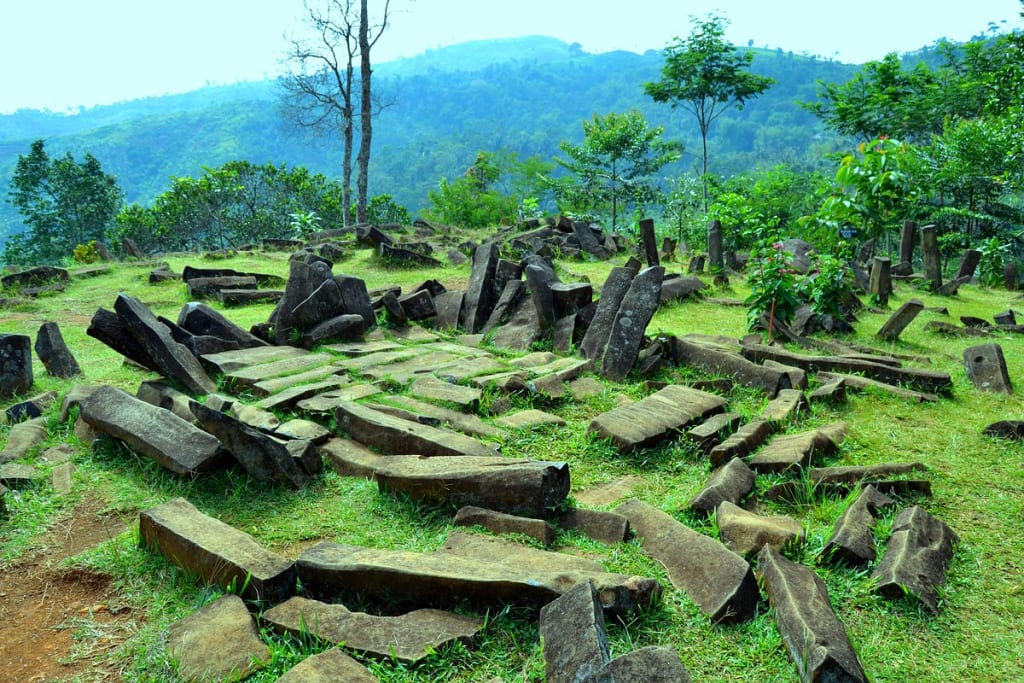
Java is the most populous island in Indonesia and one of the most densely populated places in the world. With a population of over 150 million people, it is home to some of the largest cities in Southeast Asia, including Jakarta, the capital of Indonesia. Java is also known for its rich history, diverse culture, and beautiful natural landscapes. In this article, we will explore the island of Java, its history, culture, and natural wonders.
Geography and Geology:
Java is located in the western part of Indonesia, between Sumatra to the west and Bali to the east. It is the fourth largest island in Indonesia, with an area of 138,800 square kilometers. Java is a volcanic island, with over 100 active and inactive volcanoes, including Mount Merapi, the most active volcano in Indonesia. The island is also home to several mountain ranges, including the Dieng Plateau, the highest plateau in Java, and the Bromo Tengger Semeru National Park, which is home to Mount Bromo, one of the most popular tourist destinations in Java.
History:
Java has a rich history dating back to prehistoric times. The island was inhabited by the Homo erectus around 1.5 million years ago, and evidence of their existence can still be found in several locations on the island. Java was also an important center of trade and commerce during the ancient period, with several powerful kingdoms and empires, including the Mataram Kingdom, the Majapahit Empire, and the Sultanate of Demak, which controlled the island for centuries.
During the colonial period, Java was ruled by the Dutch East India Company, which established a colonial government in Batavia (now Jakarta) in the early 17th century. The Dutch ruled Java for over three centuries until Indonesia gained its independence in 1945. Today, Java is home to several important historical sites and landmarks, including the Borobudur Temple, the largest Buddhist temple in the world, and the Prambanan Temple, a Hindu temple complex that dates back to the 9th century.
Culture:
Java is known for its rich and diverse culture, which is a blend of Hindu, Buddhist, Islamic, and European influences. The island is home to several ethnic groups, including the Javanese, Sundanese, and Betawi, each with their own unique traditions and customs.
One of the most important cultural traditions in Java is wayang kulit, a traditional form of shadow puppetry that dates back to the Hindu-Buddhist period. Wayang kulit is performed during religious ceremonies, festivals, and other important events and tells stories from Hindu epics such as the Ramayana and Mahabharata.
Java is also known for its traditional music, which includes gamelan, a percussion ensemble consisting of metallophones, gongs, and drums. Gamelan is an important part of Javanese culture and is often used in traditional ceremonies and performances.
Food:
Java is known for its delicious cuisine, which is a blend of Javanese, Sundanese, and Betawi influences. One of the most popular dishes in Java is nasi goreng, a fried rice dish that is often served with eggs, chicken, and vegetables. Other popular dishes include gado-gado, a salad of mixed vegetables with peanut sauce, and sate, grilled skewered meat that is often served with peanut sauce.
Natural Wonders:
Java is home to several beautiful natural wonders, including volcanoes, beaches, and national parks. Some of the most popular natural attractions in Java include:
Mount Bromo: Mount Bromo is an active volcano located in the Bromo Tengger Semeru National Park. It is one of the most popular tourist destinations in Java, known for its stunning sunrise views and breathtaking landscapes.
Dieng Plateau: The Dieng Plateau is the highest plateau in Java, located in the central part of the island. It is known for its stunning natural beauty, including volcanic craters, lakes, and hot springs.
Borobudur Temple: The Borobudur Temple is the largest Buddhist temple in the world, located in Central Java. It was built in the 9th century and is known for its intricate carvings and stunning architecture.
Prambanan Temple: The Prambanan Temple is a Hindu temple complex located in Central Java. It was built in the 9th century and is known for its stunning architecture and intricate carvings.
Ijen Crater: The Ijen Crater is a volcanic crater located in East Java. It is known for its stunning blue flames, which are created by the combustion of sulfuric gases.
Ujung Kulon National Park: Ujung Kulon National Park is located in West Java and is home to several endangered species, including the Javan rhinoceros. It is also known for its beautiful beaches and stunning landscapes.
Conclusion:
Java is a fascinating and beautiful island with a rich history, diverse culture, and stunning natural wonders. From its ancient temples and historic landmarks to its beautiful beaches and volcanoes, Java has something to offer everyone. Whether you are interested in history, culture, or nature, Java is a must-visit destination that is sure to leave a lasting impression.
About the Creator
Arish Ali
The world is yours!
BRICS Wargames: Why They Matter — And Why India Chose to Sit Out
BRICS — the economic and political bloc comprising Brazil, Russia, India, China, and South Africa — has long been seen as a counterweight to Western-dominated global institutions. Over the years, it has expanded its influence in finance, trade, and diplomacy. Yet, in recent times, BRICS has begun exploring another domain that grabs headlines and sparks speculation: military cooperation, including large-scale wargames. These exercises are designed to simulate joint operations, test interoperability, and send a signal of strength. For members like Russia and China, wargames serve as both a show of force and a tool to deepen military collaboration within the bloc. However, India’s decision to opt out of recent BRICS wargames has raised questions: why does this matter, and why is India taking a different path from its BRICS partners? The Rise of BRICS Military Exercises Historically, BRICS has been portrayed as primarily economic, focused on initiatives like the New Development Bank (NDB) and trade agreements aimed at reducing Western dominance. But recent years have seen an evolution. Military drills among BRICS members are increasingly prominent, especially in the context of global tension and regional conflicts. These wargames are about more than just tactical drills. They serve multiple purposes: Strategic signaling: By conducting joint exercises, BRICS countries demonstrate unity and military capability to the rest of the world. Operational readiness: Countries test their ability to coordinate in complex scenarios, from humanitarian missions to potential combat operations. Diplomatic leverage: The exercises send subtle messages to other global powers, indicating that BRICS members can collaborate beyond economic forums. For nations like Russia, recently facing sanctions and international scrutiny, these exercises are particularly important. They showcase the ability to maintain partnerships and project power despite global isolation. For China, it is a way to cement strategic influence in Asia and beyond. Why BRICS Wargames Matter Globally The significance of these exercises extends beyond the bloc itself. Analysts note several key implications: Challenge to NATO and U.S. influence: BRICS wargames signal that alternative power centers exist outside Western-led military alliances. Regional security dynamics: Countries bordering BRICS members, particularly in South Asia, Africa, and Latin America, must monitor these developments carefully. Economic-military linkages: Military coordination among major emerging economies could shape security considerations in trade corridors, energy supply routes, and resource-rich regions. In essence, BRICS wargames are not just about soldiers and tanks, but about the broader geopolitical landscape: signaling, strategy, and shaping perceptions of influence. India’s Calculated Decision to Opt Out While Russia, China, Brazil, and South Africa have shown interest in participating actively, India has strategically chosen to abstain from the most recent wargames. This decision may appear surprising, given India’s economic and political stake in BRICS, but several factors explain it. Geopolitical balancing: India maintains complex relations with both China and Russia. While it has defense and historical ties with Russia, its relationship with China has grown tense due to border disputes and regional competition. Joining a wargame with China could be politically and militarily sensitive. Alignment with Western partnerships: India has strengthened ties with Western-led coalitions, including the Quad (U.S., Japan, Australia, India). Participating in BRICS military drills could conflict with these alliances, potentially sending mixed signals. Strategic autonomy: India has long emphasized a policy of strategic autonomy — making decisions based on national interest rather than bloc pressure. Opting out allows India to maintain flexibility in foreign policy and avoid entanglement in exercises that may not align with its regional objectives. Domestic perception: Indian public opinion and political narratives favor cautious engagement with China and Russia on military matters. Skipping the wargames minimizes domestic criticism of appearing too closely aligned with either of the more assertive BRICS powers. What India Gains by Sitting Out Choosing not to participate does not mean India is disengaged from BRICS. Economically and diplomatically, it remains a key player in the bloc. By skipping the wargames, India can: Maintain regional credibility in South Asia while avoiding the perception of aligning militarily with China. Signal strategic independence, reinforcing its image as a nation that prioritizes national security over bloc politics. Focus on bilateral and multilateral exercises elsewhere, such as those with the U.S., Japan, and Australia, which are more aligned with India’s current security priorities. In short, opting out allows India to navigate the delicate balance between its BRICS commitments and broader global strategic interests. Implications for BRICS and Global Security India’s abstention also reflects broader trends within BRICS: the bloc is not monolithic. While economic cooperation is often strong, military integration faces political and strategic limits. Differing national interests, historical rivalries, and regional tensions prevent uniform alignment. For global observers, this is crucial. It shows that while BRICS wargames are important, they are not necessarily indicative of a fully unified military bloc. The exercises are as much about optics as operations, and India’s absence underscores the challenges of aligning countries with divergent security priorities. Conclusion BRICS wargames matter because they are a window into the bloc’s evolving strategic ambitions. They signal power, test cooperation, and demonstrate emerging global influence. Yet India’s decision to opt out highlights that even within this growing coalition, national interests remain paramount. For India, the choice reflects a calculated approach: engage where it benefits national interest, avoid where risks outweigh gains, and maintain strategic flexibility. For the rest of the world, it is a reminder that BRICS, while increasingly important, is not a military monolith. Ultimately, BRICS wargames are as much about geopolitics and signaling as they are about military maneuvers — and India’s careful stance illustrates how emerging powers navigate this complex global chessboard.Start writing...
By Muhammad Hassan6 days ago in Earth
United States Plastic Market Size and Forecast 2025–2033
United States Plastic Market: Size and Forecast 2025–2033 The United States plastic market is projected to expand significantly, growing from US$ 187.96 billion in 2024 to US$ 266.15 billion by 2033, reflecting a steady Compound Annual Growth Rate (CAGR) of 3.94% during 2025–2033. This sustained growth is being fueled by rising demand across packaging, automotive, construction, healthcare, and consumer goods industries, alongside rapid innovations in recycling technologies and sustainable polymer development.
By Aaina Oberoi7 days ago in Earth




Comments
There are no comments for this story
Be the first to respond and start the conversation.