
Underwater Volcano Unveils Thousands of Giant Living Eggs in Breathtaking Discovery That Could Transform Marine Conservation
Marine Scientists Stunned by Rare Find of Pacific White Skate Eggs in Active Volcano, Raising Urgent Concerns for Deep-Sea Ecosystems and Conservation Efforts

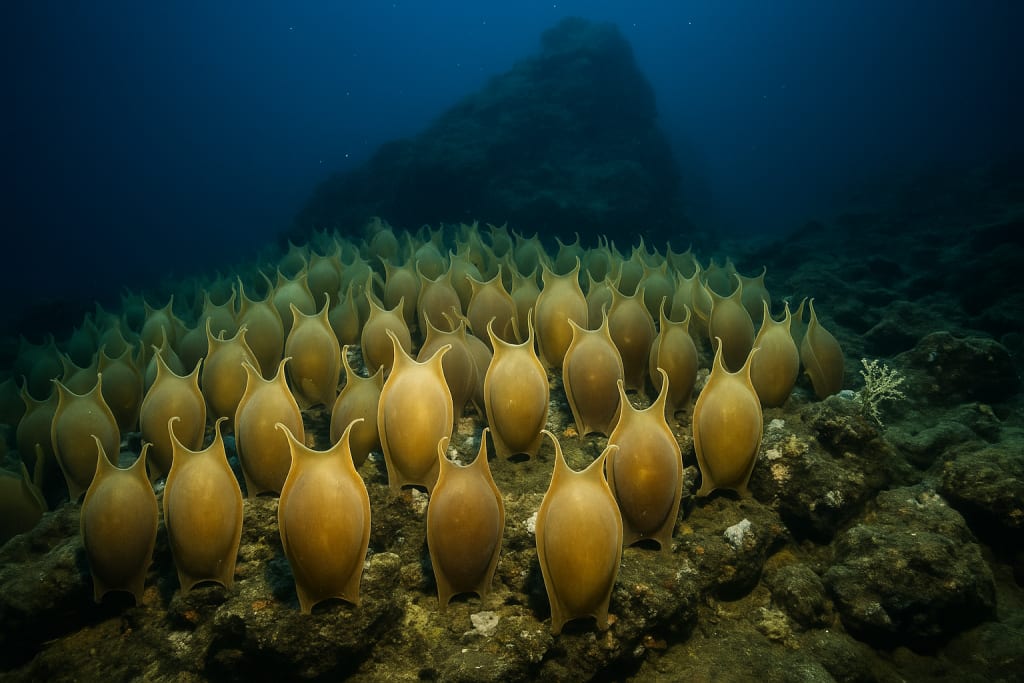
In a groundbreaking discovery off the coast of Vancouver Island, Canada, scientists have uncovered an extraordinary phenomenon: thousands of giant, living eggs nestled within an active underwater volcano. This revelation has stunned marine biologists and raises serious concerns about the fragility of deep-sea ecosystems. These eggs belong to the elusive Pacific white skate (*Bathyraja spinosissima*), a species of deep-sea ray related to sharks, and their discovery offers invaluable insights into the complex relationships between marine life and geological forces.
A Natural Incubator Beneath the Sea
The eggs were found in a geothermal environment formed by an active underwater volcano, located nearly a mile beneath the ocean’s surface. The volcano's constant thermal activity creates a warm, mineral-rich environment, which serves as a natural incubator for these giant eggs. The heat from the geothermal vents speeds up the development of the skate embryos, providing a rare and ideal setting for the species' reproduction.
The Pacific white skate's gestation period is notably long, lasting up to four years. In typical circumstances, the skates’ eggs are vulnerable to cold ocean temperatures, and such a lengthy incubation period can reduce the chances of successful hatching. However, the warmth from the underwater volcano significantly increases the likelihood that these developing embryos will survive. This discovery showcases how unique marine environments can provide the necessary conditions for certain species to thrive.
The Magnitude of the Find: Thousands of Giant Eggs
The eggs, often referred to as "mermaid’s purses" due to their distinct, leathery texture, are an impressive size, measuring between 18 to 20 inches in length. The scale of this discovery is unlike anything seen before—biologists estimate that up to a million of these massive eggs could be found in the area. This extraordinary egg mass marks one of the largest reproductive gatherings ever observed for this species of skate.
Not only are these eggs large in number, but they also represent a critical phase in the species' lifecycle. The Pacific white skate’s reproductive habits are mysterious and difficult to study, as they live in the remote and harsh depths of the ocean, often out of reach for most researchers. However, this discovery has provided a rare opportunity to study the reproductive strategies of a deep-sea species in its natural habitat. Scientists are now racing to understand the full implications of this find and what it means for the future of the species.
An Underwater Nursery: Safe Haven for Juvenile Skates
The site where the eggs were discovered is not just a breeding ground but also serves as an underwater nursery for juvenile skates. The summit of the seamount—an underwater mountain—provides a sheltered environment that offers both protection and ideal living conditions for the developing embryos. The area is often described as a vibrant, otherworldly ecosystem that resembles a coral garden, where the rocky surface offers stability and shelter to both adult skates and young skates alike.
This volcanic seamount's unique geology has created a safe haven for the young skates to grow and develop before they descend into deeper, more dangerous waters. The sheltered environment prevents the embryos from being exposed to predators and other threats commonly found in the open ocean. By staying in this protected area, the young skates can develop without the immediate risks that would typically be present in more exposed regions of the ocean.
The Importance of Protecting Vulnerable Ecosystems
Despite the scientific importance of this discovery, the site where the eggs were found currently lacks formal protection. Marine scientists are deeply concerned that the delicate nature of this underwater ecosystem could be jeopardized by human activities, particularly deep-sea fishing and climate change. Both of these factors have the potential to disrupt the fragile balance of this unique environment and threaten the survival of species like the Pacific white skate.
Deep-sea fishing, in particular, poses a significant risk to these ecosystems. The use of large trawlers to catch fish and other marine life can destroy delicate habitats like the one discovered off Vancouver Island. These fishing practices can not only harm the species directly but also alter the ocean’s ecosystem, reducing biodiversity and making it more difficult for species like the Pacific white skate to thrive.
Climate change also represents a growing threat. As ocean temperatures rise, the delicate geothermal conditions that support the development of these giant eggs may be disrupted. Warmer waters could potentially affect the long gestation period of the Pacific white skate, leading to lower survival rates for the embryos. Scientists fear that the already slow reproductive cycle of the species could be further delayed or even derailed by shifting ocean temperatures.
The Broader Implications for Marine Conservation
The discovery of these giant living eggs highlights the intricate connections between geological activity and marine life. It underscores the importance of preserving fragile ecosystems that exist beneath the ocean's surface. These ecosystems are home to numerous species that are essential for maintaining the health of the global marine environment. Without proper conservation efforts, the survival of many deep-sea species could be at risk.
Marine protected areas (MPAs) have proven to be an effective strategy for safeguarding critical habitats, and experts believe that this newly discovered site should be designated as an MPA. By doing so, the area could receive legal protection from harmful human activities, allowing it to remain a sanctuary for the Pacific white skate and other marine life. Protection could also provide a more stable environment for the continued study of the area, offering valuable insights into deep-sea biodiversity and the role of underwater volcanoes in supporting life.
Conclusion: A Wake-Up Call for Marine Conservation
This breathtaking discovery of thousands of giant living eggs in an active underwater volcano serves as a wake-up call for the importance of marine conservation. It reveals the hidden wonders of our oceans and the critical role that these ecosystems play in the life cycles of many species. As scientists continue to study the area and monitor its ecological significance, it is clear that immediate action is needed to protect such rare and vital habitats.
By raising awareness of these unique environments and the challenges they face, we can take steps to preserve them for future generations. Only through global cooperation and sustainable practices can we ensure that the delicate balance of our oceans remains intact, and that species like the Pacific white skate continue to thrive.
About the Creator
Tech Horizons
Exploring the future of technology, AI, gadgets, and innovations shaping tomorrow. Stay updated with Tech Horizons!
Keep reading
More stories from Tech Horizons and writers in Earth and other communities.
How Climate Change Could Exacerbate Arsenic Contamination in Rice: A Looming Global Health Crisis
Rice, the staple food for over half of the world’s population, faces a dual threat from climate change: not only could yields decline in key growing regions, but the grain may also accumulate dangerous levels of arsenic, a toxic carcinogen. Recent research highlights how rising temperatures, shifting precipitation patterns, and elevated atmospheric carbon dioxide (CO₂) levels are altering soil chemistry and plant physiology in ways that amplify arsenic uptake in rice crops. This convergence of environmental and health risks poses unprecedented challenges for food security and public health, particularly in Asia, where rice accounts for up to 70% of daily caloric intake in countries like Bangladesh and Cambodia.
By Tech Horizons9 months ago in Earth
Antibiotic resistance is released into rivers and other essential water supplies by melting glaciers.
Sea level rise and the disappearance of landscapes are not the only effects of glaciers melting quickly. Melt water may also contain buried genetic material that aids in bacterial resistance to drugs, scientists are now cautioning.
By Francis Dami6 days ago in Earth
Miss Persephone's Manual to a Seemingly Ordinary Life
Miss Persephone was found at the dining table, her blue eyes swollen, her tears arriving and retreating like the tides of the ocean. Earlier that day, her family had visited her in the retirement home where she had lived for eight years. It was her eightieth birthday.
By Imola Tóth4 days ago in Fiction



Comments
There are no comments for this story
Be the first to respond and start the conversation.