
The Thirsting Earth
How Global Warming Is Stealing the World’s Water—And Time Is Running Out

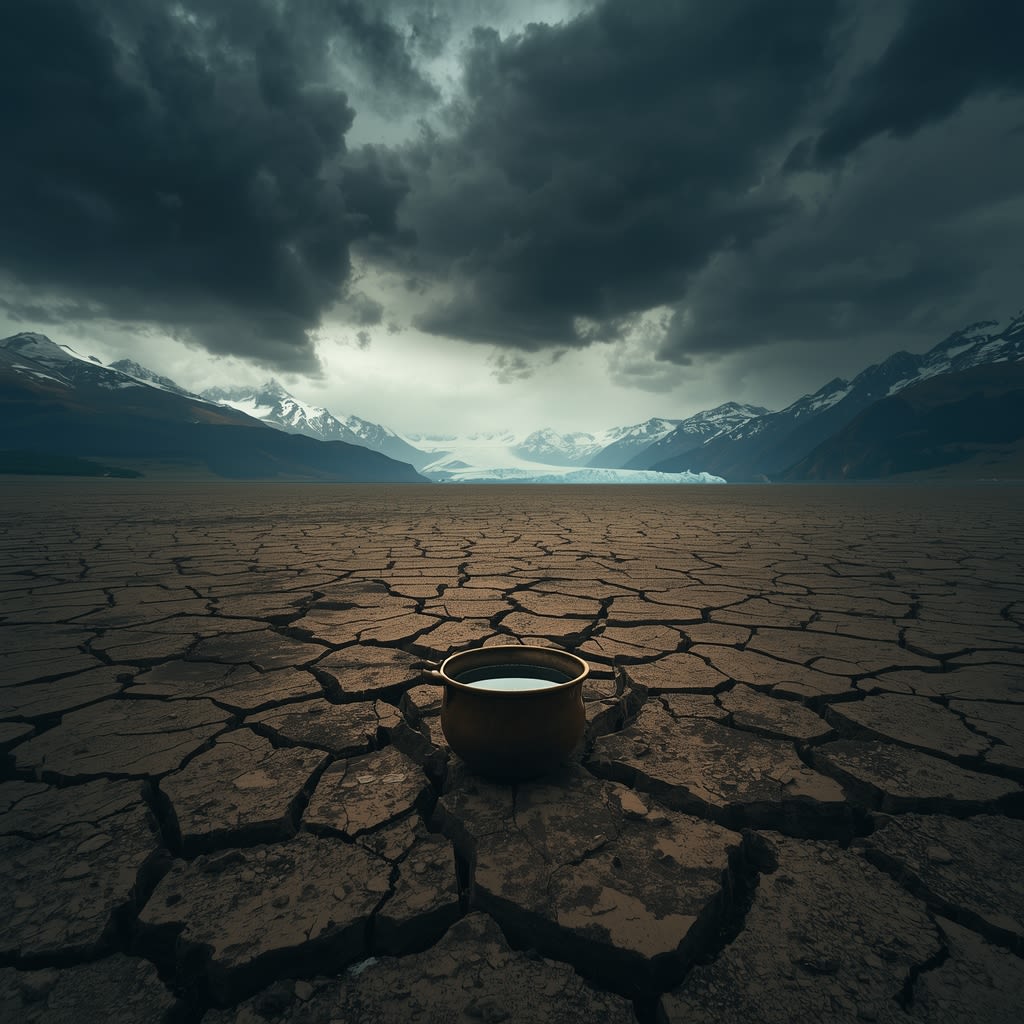
The Thirsting Earth
The world once believed water was endless. Rivers flowed like veins across the planet, glaciers sat tall and unshaken, and rain fell with predictable grace. But humans forgot a simple truth—every resource can be exhausted. Today, global warming has turned the Earth into a thirsty planet, silently draining the water we once took for granted. What used to be a distant fear is now a living reality touching every corner of life.
Across the globe, temperatures are rising faster than ever—heat waves stretch longer, and winters shrink like a fading memory. This warming does not just burn the land; it melts the world’s frozen reservoirs. Mountains that once wore caps of snow now stand bare, exposing their rocky bones. Glaciers, nature’s slow and steady water banks, are shrinking at a pace never seen before. When they melt too quickly, the water rushes away instead of being stored for future generations. What should sustain the rivers during dry seasons becomes a massive flood that leaves the land thirstier than before.
In many regions, rainfall patterns have changed so drastically that farmers pray for the clouds like never before. Some areas face prolonged droughts, while others drown in sudden storms. The balance is gone. Climate change has disrupted the rhythm of the skies, leaving communities confused and unprepared. Where once crops grew with reliability, fields now crack from dryness or rot under unexpected downpours. Both extremes destroy food supplies, harm economies, and weaken the resilience of entire societies.
Rivers that nourished civilizations for thousands of years are disappearing. Lakes shrink until they become ghostly patches of mud. Groundwater—once the secret treasure beneath our feet—is being pumped out faster than nature can refill it. Villages that relied on wells for drinking water now walk miles every day searching for a drop. Parents send children carrying empty containers, hoping to return with something they can use to survive another day. Water, the simplest necessity of life, has slowly become a luxury.
Urban centers are not spared. Major cities around the world are edging toward "Day Zero"—the terrifying moment when taps run dry. In some places, it has already happened. People line up with buckets and bottles at government water stations, taking only what their households can ration. Showers become rare. Washing clothes becomes costly. Even cooking must be carefully planned. Society adapts in ways that once seemed unimaginable, all because global warming is pushing the world toward scarcity.
The ocean, too, is changing. Rising sea levels caused by melting polar ice threaten to swallow coastal communities. Saltwater invades freshwater sources, making wells unusable and farmland unfit for crops. Millions of people face the possibility of displacement as their homes slowly sink beneath rising tides. This crisis does not choose the rich or poor; it touches every human being—just at different scales.
But the greatest tragedy is not what we have already lost—it is what we are still losing every day. Species that relied on rivers and wetlands are disappearing. Forests that depended on seasonal rains are becoming dry, their trees unable to fight wildfires. The natural world is gasping for water, and every lost piece affects the delicate balance that keeps the planet alive.
Yet, hope still exists. Solutions are possible if humanity chooses action over comfort. Nations must reduce emissions, protect forests, and invest in renewable energy. Communities should conserve water, recycle it, and respect every drop as a gift. Individuals must understand that change begins with simple habits—turning off taps, using water responsibly, and supporting environmental protection. The future depends on decisions made today.
Global warming is not just a scientific concept—it is a silent thief stealing water from the Earth. The crisis is not tomorrow’s problem; it is today’s reality. Water, once abundant and ignored, has become the world’s most precious resource. If we fail to protect it, the next generation may inherit a planet they cannot survive on. But if we act wisely, we can restore what has been damaged and keep the Earth from thirsting any further. The choice is in our hands. The time is now.
About the Creator
Wings of Time
I'm Wings of Time—a storyteller from Swat, Pakistan. I write immersive, researched tales of war, aviation, and history that bring the past roaring back to life
Keep reading
More stories from Wings of Time and writers in Earth and other communities.
Global Warning for Water: A Planet on the Edge
Global Warning for Water: A Planet on the Edge Water is life. Every drop sustains a heartbeat, grows a seed, cools a burning land, and keeps civilizations alive. Yet today, the world stands at the sharpest edge of a crisis that many still ignore—the global emergency of water scarcity. Scientists call it the “silent disaster,” because unlike storms or earthquakes, it does not strike suddenly. It creeps slowly, drop by drop, until rivers dry, wells empty, and nations panic. This warning is no longer just a prediction. It is unfolding now.
By Wings of Time about a month ago in Earth
Violence Begets
"Any last words, cowboy?" "None you'd understand, sodbuster." "Funny. That's Marshall Sodbuster to you. But I meant some last nugget that would help us in the adjudication of the myriad offenses counted against you and your gang. I wasn't asking for penitence."
By Adam Diehl5 days ago in Fiction



Comments
There are no comments for this story
Be the first to respond and start the conversation.