
The Power of Humanity: Bridging Gaps in a Divided World
Exploring the Essence of Compassion and Solidarity
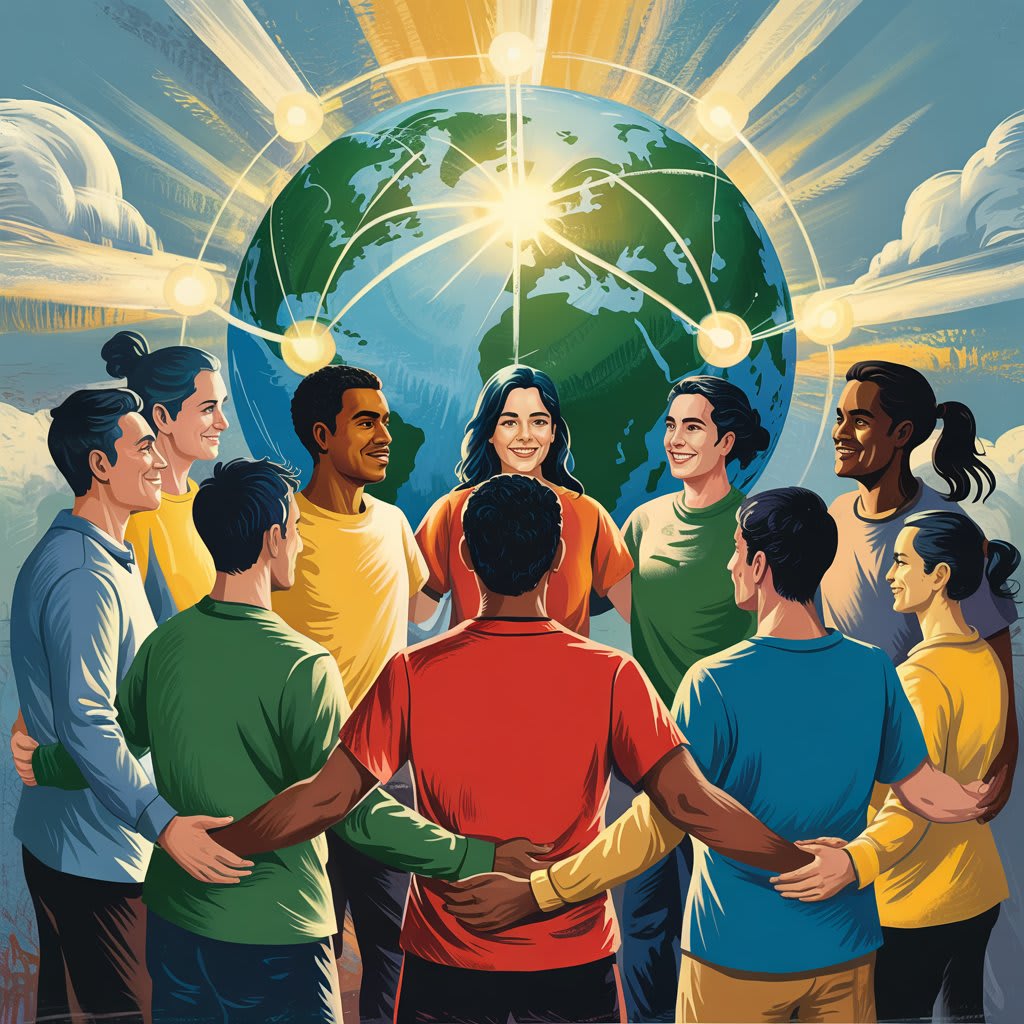
In a world increasingly defined by division, conflict, and uncertainty, one thing remains a constant: humanity. Despite the growing challenges we face, from poverty and inequality to climate change and global crises, it is through our shared sense of humanity that we can find the strength to persevere and overcome these obstacles. Humanity is not merely a concept; it is the very foundation of our existence and the key to a brighter, more compassionate future.
At its core, humanity is about recognizing the dignity and worth of every individual, regardless of their race, religion, culture, or socioeconomic background. It’s about extending empathy, kindness, and solidarity to those around us. In a world where we often see differences highlighted and divisions amplified, humanity calls for a deeper understanding and appreciation of what connects us all. It urges us to transcend borders, ideologies, and biases, and focus on the shared experiences that bind us together as human beings.
The Power of Compassion
Compassion is often seen as a soft virtue, but in truth, it is one of the most powerful forces in the world. It is the driving force behind social change, the catalyst for progress, and the glue that holds communities together. Compassion allows us to empathize with others, to feel their pain and joy as if it were our own. When we act from a place of compassion, we are more likely to prioritize the well-being of others, to seek solutions to their problems, and to work together for the common good.
In today’s society, compassion is more important than ever. We live in an interconnected world, where the actions of one individual or country can have far-reaching consequences. Whether it’s the global refugee crisis, the struggle for equality, or the climate emergency, the challenges we face cannot be solved by individual efforts alone. They require a collective response, driven by compassion and a shared sense of responsibility for one another.
Yet, despite the pressing need for compassion, it often seems in short supply. We are living in an age of cynicism and polarization, where empathy is overshadowed by self-interest, and where the voices of kindness and understanding are drowned out by anger and division. But this doesn’t mean we should give up on compassion; rather, it calls for a renewed commitment to humanity.
Building a Compassionate Society
Creating a compassionate society begins with each of us. It starts with small acts of kindness, with extending a helping hand to those in need, with listening to others without judgment, and with standing up for what is right, even when it is difficult. Every interaction we have is an opportunity to practice compassion and contribute to the world around us.
But compassion doesn’t stop at individual acts; it must also be reflected in our social systems and institutions. A truly compassionate society is one that prioritizes the well-being of its members, especially the most vulnerable. It is a society that invests in education, healthcare, and social services, ensuring that everyone has access to the resources they need to thrive. It is a society that recognizes the value of diversity and fosters inclusion, where people from all walks of life feel respected and valued.
A compassionate society also requires political and economic systems that prioritize human welfare over profit and power. This means creating policies that address poverty, inequality, and injustice, and that work to ensure that every individual has the opportunity to live a dignified life. It means moving away from systems that exploit and oppress and toward systems that uplift and empower.
The Global Responsibility of Humanity
While individual acts of compassion are important, we must also recognize that the challenges we face today are global in nature. Issues like climate change, migration, and global health crises cannot be solved within the confines of national borders. They require a collective response from all of humanity, working together toward common goals.
The concept of "global citizenship" is at the heart of this collective responsibility. As global citizens, we must understand that the well-being of one is intrinsically linked to the well-being of all. When we see someone suffering halfway across the world, it is not enough to feel sympathy; we must take action, whether through supporting humanitarian efforts, advocating for policies that promote peace and justice, or making personal choices that reduce our environmental footprint.
Humanity’s interconnections means that the consequences of our actions reach far beyond our immediate surroundings. A decision made in one country can affect millions of people in another. This is why it is essential to approach global challenges with compassion and a sense of shared responsibility. We cannot afford to turn a blind eye to the suffering of others, nor can we continue to exploit resources and people without regard for the future.
The Role of Technology in Promoting Humanity
In today’s digital age, technology has the potential to be a powerful force for good in promoting humanity. Social media, for instance, has the ability to bring attention to important issues, mobilize support for causes, and connect people across borders. Online platforms can serve as a space for fostering dialogue, understanding, and empathy.
However, technology also poses challenges to our humanity. The rise of misinformation, cyber bullying, and digital isolation is a reminder that technology must be used responsibly and ethically. To harness the full potential of technology for humanity, we must ensure that it serves to enhance, rather than diminish, our capacity for compassion and connection.
A Call to Action: Embracing Humanity
The future of our world depends on our ability to embrace our shared humanity. In a time when division seems to be the dominant narrative, it is up to each of us to rewrite the story. We must choose compassion over indifference, unity over division, and humanity over all else.
Every small action counts. Whether it’s standing up for someone who is marginalized, helping a neighbor in need, or supporting a cause that promotes justice and equality, these actions matter. They create a ripple effect that can transform lives and communities.
As we move forward, let us not forget that humanity is not just a lofty ideal or a distant goal. It is a choice we make every day, in every interaction, in every decision. The key to overcoming the challenges of our time lies not in wealth, power, or technology, but in the simple yet profound act of being human.
Conclusion:
Humanity is our shared inheritance, and it is through compassion and solidarity that we can build a future worth fighting for. In every act of kindness, in every gesture of support, we move one step closer to a world where empathy, respect, and dignity are the norms, not the exceptions. It is time to embrace our humanity fully, to recognize that we are all in this together, and to act with the understanding that the well-being of one is the well-being of all.
Let us choose compassion, let us choose humanity, and together, let us create a future that reflects the very best of who we are.
About the Creator
How to Create Engaging Content That Drives Traffic: Tips for Writers and Bloggers"
Creating engaging content is key to becoming a successful blogger or writer. Whether you're starting out or have been creating content for a while, it’s important to craft articles that not only captivate readers but also boost traffic. Here’s how you can create compelling content that will drive more visitors to your website or blog.
By falak10 months ago in Motivation
Stock Market Today: Nasdaq Futures Rise; Oil Skids After Trump Dials Down Iran Tension
If you’ve been following the markets this week, you’ve probably noticed how sensitive traders are to geopolitical headlines. On Thursday, Nasdaq futures rose, while oil prices dropped after U.S. President Donald Trump made remarks that dialed down fears of immediate military escalation with Iran. It’s a classic example of how news can move multiple markets at once — tech stocks climbing while commodities react in the opposite direction. Nasdaq Futures Bounce Back Technology and growth-focused stocks led the recovery in futures trading. Nasdaq futures climbed, signaling that investors are regaining confidence after recent volatility. Many traders have been cautious, with some taking profits from high-flying tech names, but today’s rebound shows that market optimism is returning. Corporate earnings are a big factor here. Several tech giants, including semiconductor and software companies, have beaten analyst expectations in recent weeks. These results support longer-term growth narratives, giving investors confidence that the tech sector can continue to outperform even amid economic uncertainty. For anyone watching the markets, this is a reminder: futures are forward-looking indicators. When traders see signs of stabilization — like reduced geopolitical tension or strong earnings — markets often react positively before the official trading session even begins. Oil Prices Fall Amid Eased Tensions On the flip side, oil prices skidded. The energy market had been pricing in potential supply disruptions due to the tension with Iran, particularly in critical regions like the Strait of Hormuz. But after Trump’s comments, traders interpreted a lower risk of military conflict, and crude futures dropped sharply. West Texas Intermediate (WTI) and Brent crude both saw declines of around 4–5%, as investors adjusted their positions. This shows how geopolitical risk premiums can inflate commodity prices — and how quickly they can disappear once the perceived threat diminishes. Lower oil prices are a double-edged sword. On one hand, cheaper fuel eases costs for consumers and businesses. On the other, energy companies and oil-exporting nations may face pressure on revenue and profits if prices remain soft. Why Geopolitics Moves Markets The Middle East continues to be a major driver of global market sentiment. Even the possibility of conflict in oil-rich regions can make investors nervous, sending equities lower and commodities higher. Conversely, statements that calm these fears can produce quick rebounds in risk assets like stocks and a decline in commodities like oil. This week’s developments show just how reactive the markets have become. A single remark from a world leader — in this case, Trump — can shift risk perception and trigger immediate moves across multiple asset classes. Earnings and Economic Data Still Key While geopolitical headlines dominate daily moves, corporate earnings and economic data remain critical for long-term market trends. Financial giants like Morgan Stanley recently reported results that beat expectations, boosting their stock prices and reinforcing positive sentiment in the sector. Investors are paying close attention to these fundamentals. Earnings reports and macroeconomic indicators provide insight into underlying trends, helping traders separate short-term volatility from sustainable growth. What Investors Should Watch For stock investors: The rebound in Nasdaq futures suggests that growth and technology stocks are finding support, but volatility is still high. Active risk management and portfolio diversification remain essential. For energy markets: Today’s slump in oil prices highlights how commodities react to geopolitical sentiment. Traders should watch for developments in the Middle East, as any escalation could reverse the decline in prices almost immediately. For global markets overall: Investors must balance multiple narratives — geopolitical events, corporate earnings, economic data, and interest rate expectations. This interplay shapes risk appetite and influences how capital flows across sectors and regions. The Takeaway Today’s market action illustrates a broader theme: markets are highly sensitive to shifts in risk perception. When geopolitical tension eases, equities tend to rise, and risk-sensitive commodities like oil fall. But when threats reappear, sentiment can flip, reminding investors that global markets are dynamic and interconnected. This combination of Nasdaq gains and falling oil prices isn’t just about numbers — it’s about investor psychology, risk management, and the speed at which news travels in our global economy. The lesson is clear: staying informed and flexible is more important than ever for anyone participating in today’s markets.
By Muhammad Hassan4 days ago in Earth
Cement's Quiet Pivot
Why this is under-the-radar progress Cement and concrete account for a sizable slice of global CO₂, but the fastest cuts right now aren’t headline-grabbing moonshots — they’re practical shifts already filtering through specifications, standards, and procurement. Three forces are converging: (1) modern cement standards that enable big clinker reductions with reliable performance; (2) rapid market adoption of Portland-limestone cement (PLC) and new ternary blends such as limestone–calcined clay cements (LC3); and (3) public buyers setting embodied-carbon requirements that move the market. Together, these are driving real-world emission declines from the most-used construction material on earth — often without changing how structures are designed or built [8].
By Futoshi Tachino7 days ago in Earth



Comments (2)
well bro
really very nice