
The Misunderstood Hero:
What the Opossum Teaches Us About Fear, Empathy, and Survival

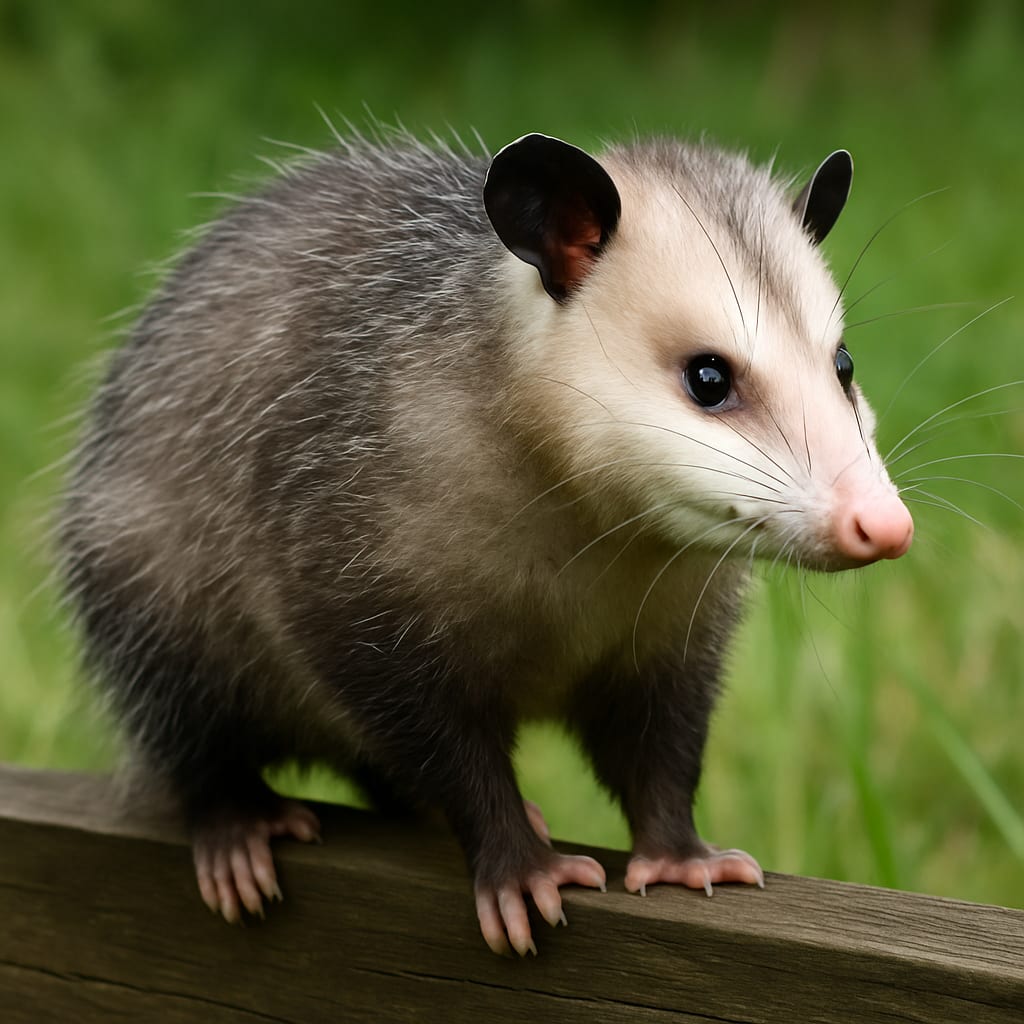
They hiss. They drool. They “play dead.”
And most people still scream when they see one.
The North American opossum—the only marsupial native to the United States—is one of the most efficient, least appreciated public-health workers in nature. While many fear them for looking “dirty” or “rabid,” opossums are disease-resistant, pest-controlling, and life-saving.
The tragedy is that they are judged by reflex, not reality.
The truth: opossums are ecological and psychological teachers disguised as vermin.
Venom-Proof and Vital
Opossums can survive up to 80 rattlesnake or coral snake bites. Their blood contains Lethal Toxin-Neutralizing Factor (LTNF)—a peptide that neutralizes venom from snakes, scorpions, and even bees. Scientists used this discovery to design modern antivenoms that save human lives.
So when someone mutters, “It’s just a possum,” they’re overlooking a biological miracle that literally helps keep us alive.
Tick Terminators and Silent Custodians
Each opossum destroys up to 5,000 ticks per season through constant grooming. They do not transport parasites—they eliminate them. By doing so, they reduce Lyme disease, Rocky Mountain Spotted Fever, and other zoonotic infections that thrive on hosts we actually do fear.
Their nightly diet reads like an environmental cleanup checklist:
- rotting fruit,
- carrion,
- snails,
- insects,
- rodents, and
- roadkill.
They do not tear up lawns, chew wires, or invade homes. They remove what we refuse to see. They are the ecosystem’s quiet custodians.
The Physiology of Fear
When cornered, opossums collapse into the state humans call “playing dead.” But this is not a conscious act. It’s tonic immobility—a physiological override identical to what trauma therapists observe.
In trauma therapy, we see the same autonomic reaction in humans who experience extreme fear or helplessness. The body takes control, freezing movement, slowing breath, and numbing awareness. The opossum doesn’t “pretend.” It survives the only way its nervous system allows.
Understanding this dissolves the myth of cowardice. What looks like passivity or "dumbness" is actually a form of nervous-system intelligence—an ancient reflex that conserves energy and prevents escalation.
The Reflex to Destroy What Unsettles Us
Our discomfort with opossums is not about them. It’s about us.
Humans carry an inherited reflex to eliminate whatever triggers disgust or confusion. That reflex shows up in wildlife control, politics, medicine, and relationships. When something doesn’t fit neatly into our comfort zone, we pathologize it—or kill it. The opossum simply happens to be the most visible casualty of that reflex.
Beyond Anthropomorphism: Empathy Without Projection
Empathy science offers a third path between sentimentality and cruelty. Instead of projecting human emotion onto animals, it invites us to understand their context. The opossum’s nocturnal habits, awkward gait, and primitive physiology are not flaws—they are evidence of behavioral resilience. This animal survived the Ice Age but not through aggression or speed. It survived through adaptability. This animal is the embodiment of endurance without violence.
When humans call such creatures “ugly,” they reveal their own discomfort with vulnerability. Therefore, the opossum is our mirror, not a menace.
Disgust and the Death of Empathy
Studies in environmental psychology show that disgust shuts down empathy in the brain. Once disgust activates, logic recedes. We stop seeing behavior—then we only see revulsion.
The opossum’s hairless tail, sharp teeth, and unpredictable movement trigger that ancient disgust circuit, and from there, empathy collapses. That reaction is older than reason. But maturity—both personal and cultural—means outgrowing instinctual disgust in favor of comprehension.
To kill what disgusts us is to psychologically regress. It teaches children that control is more valuable than coexistence. It reinforces the false equation that power equals order.
The Ecology of Compassion
In ecological terms, every animal serves a function. The opossum’s is purification—of decay, of disease, of imbalance.
In psychological terms, its role is no less symbolic: it challenges our bias toward beauty and our intolerance for imperfection.
Behavioral ecology calls it low-impact omnivory. Therapists might call it embodied humility.
Either way, this animal survives quietly, helps relentlessly, and demands nothing in return so why not respect and protect it?
How to Help, Not Harm
- Do not trap or kill opossums. They are non-aggressive and legally protected in many regions.
- Avoid poison and glue traps. These cause unnecessary suffering and disrupt ecological balance.
- Drive carefully at night. Most opossums die scavenging along roadsides.
- Educate neighbors. Replace fear with facts—rabies risk is almost zero, and tick control benefits everyone.
- Advocate for coexistence. Encourage city councils and pest-control companies to adopt humane wildlife policies.
The Gentle Soul in the Shadows
An opossum crossing your yard is not an intruder—it’s an employee.
- It does not hunt; it repairs.
- It does not invade; it cleans.
- It does not attack; it endures.
When we swat at it, trap it, or kill it, we are not removing a pest—we are rejecting a life lesson. If we cannot—or refuse to—make peace with a harmless animal that keeps our ecosystems balanced, how will we ever make peace with one another?
The Behavioral Bottom Line
- We kill what mirrors our fear.
- We save what mirrors our beauty.
That’s not biology—it’s projection.
The opossum invites us to evolve past that reflex. To recognize that courage can look like stillness, and empathy can start with understanding something many perceive as "ugly."
So the next time one shuffles across your porch under the porch light, please do not reach for a broom or a bb gun. Watch it. Learn from it. Let it live it's life just as it's helping you live yours.
That small, quiet marsupial is doing its job—cleaning up the messes of a human species that should know better.
If you know someone who hurts animals, then you understand why I created the PET VR program, currently in its fiscal sponsorship phase with Chappy & Friends. It’s a project dedicated to changing the narrative around animal behavior, promoting empathy, and addressing the root causes of harm through education and rehabilitation. Because if we’re going to evolve past our instinctual reactions to animals, we have to start by helping humans change how they see them.

Sources That Don’t Suck:
• National Geographic – The Opossum’s Secret Weapon Against Snake Venom (2023)
• The Atlantic – America’s Most Misunderstood Marsupial (2022)
• Journal of Venomous Animals and Toxins – LTNF Peptide and Antivenom Research (2021)
• National Wildlife Federation – The Ecological Role of Opossums in North America (2023)
• Environmental Psychology Review – Disgust and Empathy: Neural Correlates of Human Reactions to Wildlife (2022)
• Journal of Comparative Psychology – Anthropomorphic Bias in Human Perception of Nonhuman Animals (2021)
• Behavioral Ecology Reports – Tonic Immobility and Defensive Behavior in Marsupials (2020)
• U.S. Fish and Wildlife Service Archives – Urban Wildlife Adaptation Reports
• Cary Institute of Ecosystem Studies – Opossums as Tick Predators (2019)
• CDC – Rabies Risk and Marsupial Immunity Studies (2022)
About the Creator
Dr. Mozelle Martin | Ink Profiler
🔭 Licensed Investigator | 🔍 Cold Case Consultant | 🕶️ PET VR Creator | 🧠 Story Disrupter |
⚖️ Constitutional Law Student | 🎨 Artist | 🎼 Pianist | ✈️ USAF
Keep reading
More stories from Dr. Mozelle Martin | Ink Profiler and writers in Earth and other communities.
Collapse as Routine:
Civilizations rarely fail in a single headline. They fail by habit. What shocks at first becomes tolerable, then law, then culture. Cruelty becomes commerce. Moral authority becomes political capital. Money becomes the mechanism of coercion. By the time the fracture is visible, the architecture that produced it has long been in place.
By Dr. Mozelle Martin | Ink Profiler4 months ago in Earth
Homes in North Scotland Without Power as Arctic Weather Sweeps the UK
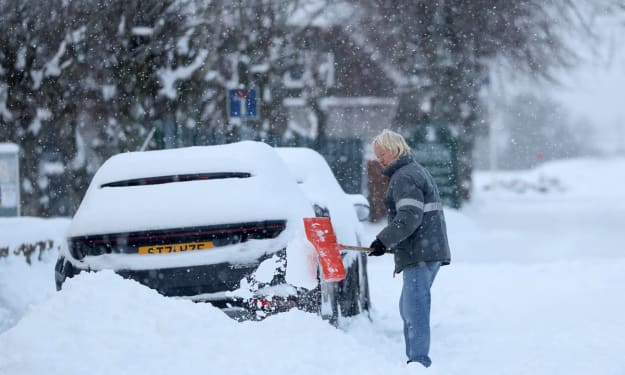
As Arctic air sweeps across the United Kingdom, communities in northern Scotland are bearing the brunt of one of the harshest winter spells in recent years. Sub-zero temperatures, heavy snowfall, and powerful winds have combined to knock out power supplies to thousands of homes, leaving residents facing prolonged outages amid dangerously cold conditions. The extreme weather has once again highlighted the vulnerability of infrastructure in remote regions and raised urgent questions about preparedness in an era of increasingly volatile winters. A Deep Freeze Grips the North The latest cold snap has been driven by an Arctic air mass plunging southwards, bringing temperatures well below freezing across much of the UK. In parts of the Highlands, temperatures have dropped to levels not seen for several winters, with wind chill making conditions feel even more severe. Heavy snow and ice have blanketed roads, while gusts strong enough to down power lines have created widespread disruption. Northern Scotland, known for its rugged terrain and dispersed communities, has been particularly affected. Rural villages and isolated households are often connected by long stretches of overhead power lines, which are highly susceptible to damage from ice buildup and falling trees. As snow accumulated and winds intensified, multiple faults occurred across the network, leaving homes without electricity for hours—and in some cases, days. Power Outages and Daily Life For residents, the loss of power during Arctic conditions is more than an inconvenience. Electricity is essential not only for lighting and communication but also for heating, cooking, and water supply in many modern homes. Without it, indoor temperatures can drop rapidly, posing serious risks to vulnerable groups such as the elderly, young children, and those with health conditions. Many households have had to rely on alternative heat sources such as fireplaces or portable gas heaters, while others sought refuge with relatives or in community shelters. Local authorities and volunteer groups have stepped in to provide support, distributing hot meals, blankets, and updates to those affected. However, the scale of the outages has stretched resources, particularly in remote areas where access is limited by snow-covered roads. Strain on Infrastructure The Arctic blast has once again exposed the fragility of power infrastructure in extreme weather. Much of Scotland’s electricity network, especially in rural areas, still relies on overhead lines rather than underground cables. While overhead systems are cheaper to install and maintain, they are far more vulnerable to storms, heavy snow, and ice. Energy companies have deployed repair crews around the clock, often working in treacherous conditions to restore supplies. Engineers have faced blocked roads, poor visibility, and freezing temperatures, slowing repair efforts. Despite these challenges, utility providers have emphasized that safety must come first, as repairing live lines in severe weather carries significant risks. Travel and Wider Disruption Power outages are only one part of the broader disruption caused by the Arctic weather. Snow and ice have forced road closures across the Highlands and islands, while rail services have been reduced or suspended in some areas. Schools have closed as a precaution, and health services have urged people to avoid non-essential travel. Airports in northern regions have also experienced delays and cancellations, as icy runways and poor visibility complicate operations. For businesses, particularly small enterprises in tourism and agriculture, the weather has delivered another economic blow during what is already a challenging winter period. Climate Change and Colder Extremes While cold snaps are a natural part of the UK’s climate, scientists warn that climate change may be making winter weather more unpredictable and extreme. A warming Arctic can disrupt atmospheric patterns, increasing the likelihood of sudden cold outbreaks like the one currently affecting Scotland. This paradox—where global warming can lead to more intense cold spells—adds complexity to planning and resilience efforts. The current outages have reignited debate about the need to modernize infrastructure to cope with these extremes. Calls are growing for greater investment in underground cabling, improved grid resilience, and community-level backup systems, particularly in regions that are repeatedly affected by severe weather. Community Resilience and the Road Ahead Despite the challenges, stories of resilience and solidarity have emerged from affected communities. Neighbors have checked on one another, shared generators, and opened their homes to those without heat. Local councils and charities have coordinated relief efforts, demonstrating the importance of community networks during crises. Looking ahead, experts argue that lessons must be learned from each severe weather event. Improving early warning systems, strengthening infrastructure, and ensuring clear communication between authorities and residents are all critical steps. For northern Scotland, where extreme weather is a fact of life, building resilience is not optional—it is essential. Conclusion The Arctic weather sweeping across the UK has left homes in northern Scotland without power, disrupting daily life and underscoring the challenges of maintaining essential services during extreme conditions. While emergency responses have helped mitigate the immediate impact, the situation highlights a broader issue: the need for long-term investment and adaptation in the face of a changing climate. As temperatures slowly recover and power supplies are restored, the experience serves as a stark reminder that winter extremes remain a serious threat. For policymakers, energy providers, and communities alike, the message is clear—preparing for harsher, more unpredictable winters must be a priority, not an afterthought.
By Fiazahmedbrohi 5 days ago in Earth
How A Dog Bite Attorney Can Get You Fair Compensation
Dog bites can happen unexpectedly, leaving victims with physical injuries, emotional trauma, and financial burdens. In the United States, millions of dog bites occur each year, according to data from health organizations. These incidents often lead to medical bills, lost wages, and long-term recovery needs. Seeking fair compensation is crucial for victims to cover these costs and move forward. This article explores how legal professionals specializing in dog bite cases can assist in navigating the process, from understanding laws to building a strong claim. By learning about the steps involved, individuals can make informed decisions after such an event.
By CEO A&S Developers4 days ago in Earth



Comments