
Introduction:
The Indian Swallow is a small, agile bird known for its distinctive flight patterns and melodious calls. A member of the **Hirundinidae** family, this bird is widely distributed across India and other parts of Asia. Swallows are admired for their aerial acrobatics and play a vital role in controlling insect populations.
In this article, we will explore the Indian Swallow’s physical characteristics, habitat, diet, breeding habits, migration patterns, and cultural significance in India.
Physical Characteristics :
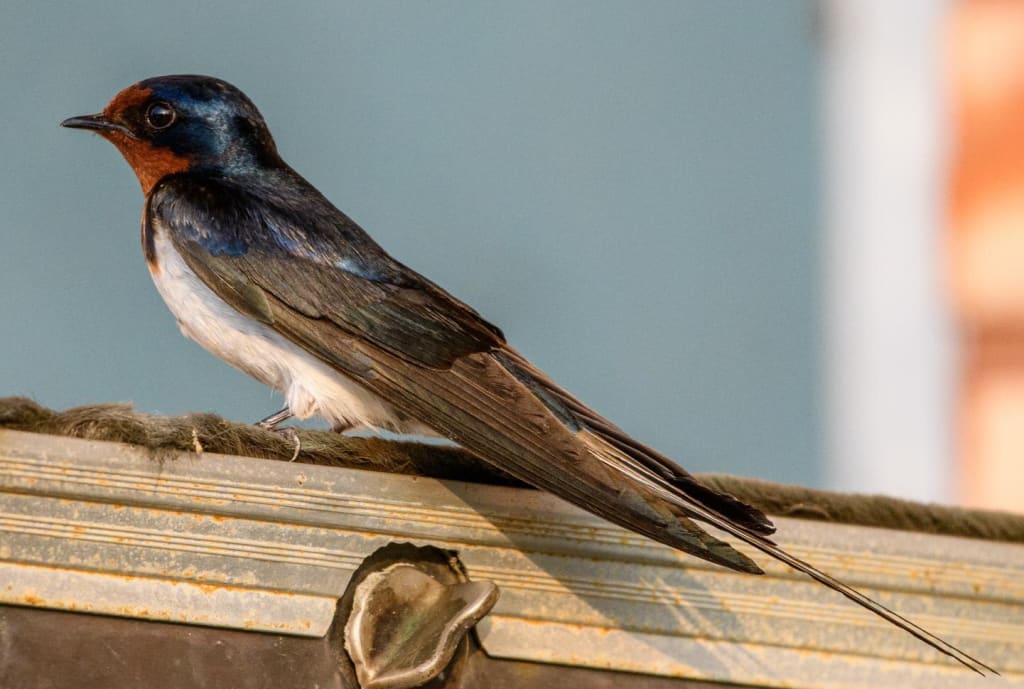
The Indian Swallow (Hirundo smithii) is a small bird with a streamlined body, long pointed wings, and a deeply forked tail.
Key Features:
- Size: Around 13-15 cm in length
- Wingspan: Approximately 30 cm
- Weight: Between 10-20 grams
- Color: Glossy blue-black upperparts and creamy or white underparts
- Tail: Deeply forked, with elongated outer feathers
- Bill: Short and slightly curved, adapted for catching insects mid-air
Males and females are similar in appearance, but males generally have longer tail streamers.
Habitat and Distribution :
Indian Swallows are highly adaptable birds that thrive in diverse environments. They are commonly found in:
- Open fields and grasslands
- Near water bodies such as lakes and rivers
- Agricultural fields and villages
- Urban areas, including cities and towns
These birds are distributed throughout India, Sri Lanka, Nepal, Bangladesh, and parts of Southeast Asia. They prefer areas where insects, their primary food source, are abundant.
Behavior and Flight Patterns :
Swallows are highly skilled fliers. Their swift, darting flight allows them to maneuver through the air with ease.
Flight Behavior:
- Fast and agile: They can change direction swiftly.
- Acrobatic: They perform mid-air twists and turns to catch insects.
- Gliding ability: They often glide for long distances using thermal currents.
They are social birds and are often seen flying in groups, especially near water sources where insects are plentiful.
Diet and Feeding Habits :
Indian Swallows are insectivorous and rely on their aerial agility to capture prey mid-flight.
Common Prey:
- Flies
- Mosquitoes
- Beetles
- Ants
- Grasshoppers
They hunt in open spaces, often above water bodies or fields. Their wide gape and sharp reflexes make them efficient hunters.
Breeding and Nesting :
The breeding season for Indian Swallows usually falls between March and June. They build cup-shaped nests using mud, which they collect with their beaks and mix with saliva to create a sturdy structure.
Nesting Habits:
- Location: Often found under bridges, in caves, or under the eaves of buildings.
- Material: Mud pellets, grass, feathers, and soft plant materials.
- Eggs: Females lay 2-5 white eggs.
- Incubation: Lasts about 14-16 days.
- Parental Care: Both parents feed and protect the chicks until they fledge in about 20-25 days.
Migration Patterns :
Indian Swallows are partially migratory. While some populations remain resident throughout the year, others migrate seasonally in response to food availability and climate changes.
Migration Facts:
- In winter, they migrate to warmer regions.
- Some northern populations travel southward during colder months.
- They use wind currents to conserve energy during migration.
Role in Ecosystem :
Swallows play an essential role in maintaining ecological balance by controlling insect populations. As natural pest controllers, they help reduce the need for chemical pesticides in agricultural areas.
Additionally, their nests provide shelter for smaller birds and insects, contributing to biodiversity.
Cultural and Mythological Significance :
In India, swallows are associated with good fortune, prosperity, and the arrival of spring. Many cultures view them as symbols of hope, freedom, and endurance.
- In Hindu mythology, they are sometimes linked with deities symbolizing swiftness and grace.
- Farmers consider their presence a sign of a good harvest, as they indicate a healthy ecosystem.
- Many folk beliefs state that harming a swallow brings bad luck.
Threats and Conservation :
Despite their widespread presence, Indian Swallows face several threats:
Major Threats:
- Habitat destruction: Urbanization and deforestation reduce nesting sites.
- Pollution: Pesticides reduce insect populations, leading to food shortages.
- Climate change: Alters migration patterns and food availability.
Conservation Efforts:
- Protection of natural habitats
- Reduction in pesticide use
- Awareness programs to encourage the preservation of nesting sites
Indian Swallows are currently classified as Least Concern (LC) on the IUCN Red List, but continued conservation efforts are necessary to maintain their populations.
Conclusion :
The Indian Swallow is a remarkable bird known for its agility, beauty, and ecological significance. Its ability to thrive in both natural and urban environments makes it a fascinating subject of study.
By protecting their habitats and ensuring sustainable practices, we can help preserve these birds for future generations. Their presence in the skies is a reminder of nature’s delicate balance and the interconnectedness of all living beings.
----------
About the Creator
Subhash C
As a naturalist, I am passionate about conservation and educating others about the importance of biodiversity and ecological balance. My work involves field research, wildlife observation, and environmental advocacy.
Discovery of the “Word Fish” That Lived Millions of Years Ago
In a groundbreaking paleontological discovery, scientists have unearthed the fossilized remains of an ancient fish species that lived millions of years ago, now being referred to as the “Word Fish.” This remarkable find, preserved in near-perfect condition, is providing researchers with a unique glimpse into marine life from a time long before humans walked the Earth.
By Irshad Abbasi 4 days ago in Earth


Comments (1)
very good