
The Importance of Mammals in Maintaining Ecosystem Balance
Exploring the Diversity, Importance, and Threats to Mammals: A Comprehensive Overview

Mammals are a diverse group of animals that are characterized by their warm-blooded nature, fur or hair, and the ability to produce milk to feed their young. They are found in almost every part of the world and come in a wide variety of shapes and sizes. From the tiniest shrews to the massive blue whales, mammals are an essential part of our planet's ecosystem.
Types of Mammals:
There are three major types of mammals: monotremes, marsupials, and placental mammals. Each of these groups has its unique characteristics and adaptations.
Monotremes:
Monotremes are a group of mammals that are distinguished by their ability to lay eggs instead of giving birth to live young. They are found only in Australia and New Guinea and include the platypus and echidnas. Monotremes are some of the most primitive mammals and have many reptilian-like characteristics.
Marsupials:
Marsupials are a group of mammals that give birth to relatively undeveloped young and carry them in a pouch until they are fully developed. They are found primarily in Australia, but also in the Americas, and include kangaroos, wallabies, opossums, and koalas.
Placental Mammals:
Placental mammals are a group of mammals that give birth to fully developed young after a gestation period. The young are nourished in the uterus by a placenta, which provides nutrients and oxygen. Placental mammals are the most diverse group of mammals and include everything from rodents to whales to primates.
Physical Characteristics of Mammals:
Mammals have several physical characteristics that distinguish them from other groups of animals. One of the most notable features is their warm-blooded nature. This means that mammals are able to regulate their body temperature internally, which allows them to thrive in a wide variety of environments.
Mammals also have fur or hair, which provides insulation and protection from the elements. This fur or hair can come in a wide range of colors and textures, depending on the species and habitat. For example, arctic animals such as polar bears and arctic foxes have thick, white fur that helps them blend in with their snowy surroundings.
Another defining characteristic of mammals is their ability to produce milk to feed their young. This milk is produced by mammary glands, which are unique to mammals. The composition of the milk can vary depending on the species and can provide essential nutrients, antibodies, and other beneficial compounds for the developing young.
Importance of Mammals:
Mammals play a vital role in maintaining the balance of nature and the ecosystem. They serve as pollinators, seed dispersers, and predators, and are essential for maintaining biodiversity. Many mammals also serve as a source of food and income for humans.
Pollination:
Many species of mammals, such as bats and rodents, play an important role in pollination. They help to transfer pollen from one plant to another, which is essential for the reproduction of many plant species. Without pollinators, many plant species would be unable to reproduce and would eventually die out.
Seed Dispersal:
Mammals also play a critical role in seed dispersal. They help to spread seeds by eating fruits and other plant materials and then depositing the seeds in their droppings. This helps to ensure that plants are able to colonize new areas and maintain genetic diversity.
Predation:
Mammals are also important predators, helping to control populations of other animals and maintain a balance within ecosystems. Without predators, populations of prey species can become too large, leading to overgrazing and other negative impacts on the ecosystem.
Food and Income:
Mammals also serve as a source of food and income for humans.
About the Creator
Keep reading
More stories from Kamal Mourya and writers in Earth and other communities.
Experience the Next Generation of Protection with 5G AirWave Defender: Your Ultimate EMF Shield
5G AirWave Defender (EMF Shield) is an innovative device designed to protect individuals from electromagnetic radiation (EMR) emitted by various electronic devices. The device is particularly useful for those who are concerned about the potential health hazards of EMR, such as headaches, fatigue, and even cancer. In this note, we will discuss the features, benefits, and effectiveness of the 5G AirWave Defender.
By Kamal Mourya3 years ago in Earth
Pakistan and China Seek to Boost Bilateral Agricultural Trade
Pakistan and China are taking steps to enhance their bilateral agricultural trade, reflecting a growing focus on food security, technological exchange, and economic cooperation. This initiative comes as both countries look to strengthen ties within the framework of the China-Pakistan Economic Corridor (CPEC) and broader trade agreements, while addressing domestic and global challenges in the agricultural sector.
By Muhammad Hassan4 days ago in Earth
Global Aerosol Paints Market Forecast 2025–2033
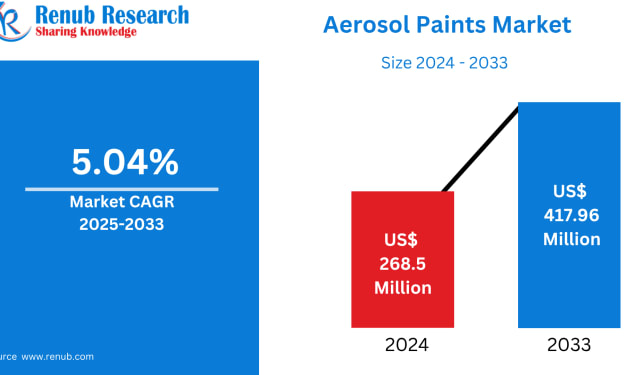
Introduction The global aerosol paints market is steadily transforming from a niche convenience product into a mainstream coating solution used across industries, homes, and creative spaces. In 2024, the market was valued at USD 268.5 million, and it is projected to reach USD 417.96 million by 2033, expanding at a CAGR of 5.04% during 2025–2033, according to Renub Research. This growth is driven by the convergence of DIY culture, automotive customization, construction activity, and industrial maintenance needs, alongside innovation in eco-friendly formulations and application technologies.
By Aaina Oberoi4 days ago in Earth



Comments
There are no comments for this story
Be the first to respond and start the conversation.