
The Hidden Lives of Microbes: How Invisible Worlds Shape Our Planet
Unseen Architects of Life: How Microbes Shape Our World and Our Future


Introduction: A Universe in a Drop of Water
Imagine holding a single drop of pond water between your fingertips. To the unaided eye, it is bland—clear, serene, and uninspiring. Yet, through the microscope, it's a metropolis. Tiny microbes dart, spin, and cooperate in a more intricate dance than any city on Earth.
Microbes—the unseen bacteria, archaea, fungi, and protists—are in command of life on earth. They predate trees, whales, or humans. They occupy every imaginable niche: soil, oceans, atmosphere, within animals, and even in hostile environments once thought to be uninhabitable.
Despite their microscopic nature, microbes are planet engineers. They shape ecosystems, sustain life, and affect our own health in ways we are only now beginning to discover. Their stories are not scientific oddities—They are epiphanies that transform the way we consider life itself.
Microbes in Soil and Plants: Earth's Hidden Gardeners
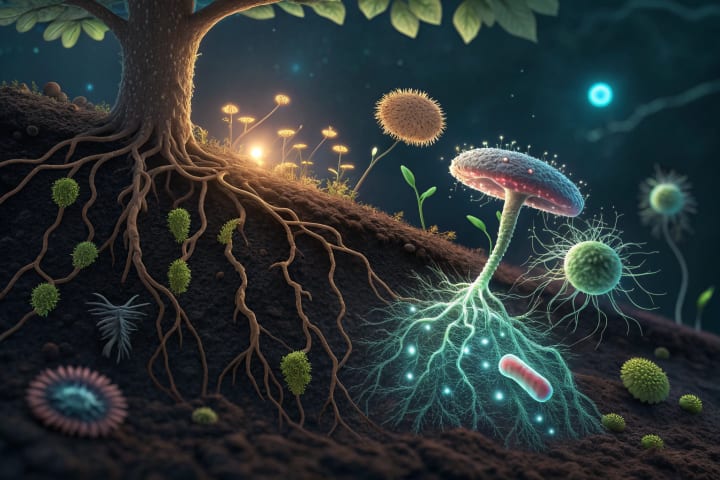
Beneath our feet is a world of unseen workers. Soil is not just sterile dust; it's a living community of microbes. There are billions of microbes and fungi in one gram, breaking down organic matter, cycling nutrients, and maintaining the soil's fertility.
Take mycorrhizal fungi, for instance. Fungi form symbiotic networks with plant roots, often called the "Wood Wide Web." Trees trade nutrients, water, and even warning signals for pests through this network. It's an internet of microbes beneath our feet, secret but vital.
Soil bacteria also fix nitrogen—a critical nutrient for plant development. Absent microbial chemists such as these, agriculture as we know it today would not exist. These microbe chemists take inert atmospheric nitrogen and convert it to usable forms supporting the life cycles that deliver nutrients to humans, animals, and the planet itself.
Even composting relies on microbes. When you dispose of your household waste in a bin, fungi and bacteria turn trash into fertile soil infested with nutrients. Their labor is slow, invisible, and miraculous. So in some way, each garden, forest, or farm is not merely populated by plants and animals but also by microbial symphony orchestras playing symphonies of life.
The Gut Microbiome: Microbes Inside Us
Microbes don't just live in far-off soils or oceans—microbes live within us. The human digestive system houses trillions of viruses, bacteria, and fungi that collectively create the gut microbiome. This biome governs digestion, immunity, and even mental health.
Consider it: two people have the same dinner, yet they metabolize it differently due to their gut microbes. Certain microbes receive more energy from food; others produce vitamins or anti-inflammatory substances. Recent studies even link the gut microbiome to mood and cognitive function, suggesting that microbes may have greater influence over our behavior than we realized.
Antibiotics, diet, stress, and lifestyle affect this internal microbial community. A healthy microbiome is associated with better health results, while imbalances have been linked to obesity, autoimmune diseases, and depression. Scientists now turn to "microbiome therapies"—probiotics, prebiotics, and even fecal transplants—to restore balance to the microbes and cure illness.
We like to think of ourselves as single animals, but we are actually compound bodies—superbodies—commensal with microbes that determine who we are, both inside and out.
Life in Extreme Environments: Microbial Survivors
Microbes are the ultimate survivors on our planet. While we freeze on arctic tundras or boil in hot springs, microbes live on. Extremophiles, as they're called, exist in conditions that would be lethal to most life: acid lakes, hydrothermal vents, radioactive environments, and oceanic trenches.
For example, thermophiles in Yellowstone's hot springs can thrive at over 160°F (70°C), reducing sulfur instead of oxygen. In the towering depths of the Mariana Trench, piezophiles endure crushing pressure, existing without sunlight in complete darkness.
These resilient microbes not only endure but also thrive, performing chemical conversions that energize ecosystems. Microbes that inhabit the deep ocean recycle nutrients, sustain bizarre food webs, and even produce compounds that have medical potential. Studying extremophiles not only advances our understanding of life on Earth but also informs the search for life elsewhere in the universe, where conditions may be as extreme.

Symbiotic Relationships: Life in Partnership
Microbes rarely function independently. Symbiosis—close association of species—is a feature of microbial life. These relationships often decide the fate of entire ecosystems.
Consider coral reefs, for instance. Corals harbor microscopic algae called zooxanthellae within them, which use sunlight to produce nutrients for the coral via photosynthesis. The coral gets protection in return. When such delicate microbial partnerships fail due to stress or sea levels rising, coral bleaching occurs—a visual reminder of microbes' role in the ecosystem.
Another example is the nitrogen cycle in the sea. Certain bacteria live together with ocean plants, fixing nitrogen into forms that can be used. Microbes are what prevent those vast regions of the sea from being nutrient wastelands.
Even we humans rely on symbiotic microbes. Pathogens are repelled by skin bacteria, and complex fiber digestion is assisted by gut microbes. We are ecosystems, microbe-dependent worlds within a skin-and-bone container.
Implications for Science and Sustainability
Microbial knowledge has revolutionary applications. From healthcare to farming, microbes hold the answer to issues formerly thought impossible to resolve.
Medicine: Researchers are hunting microbes in order to produce antibiotics, anticancer compounds, and vaccines. Treatments based on the microbiome may one day treat metabolic disease or autoimmune disease, delivering personalized healthcare at the microbial level.
Agriculture: Microbes can reduce the application of chemical fertilizers and pesticides. Farmers can initiate crop development in an eco-friendly way by maintaining soil's natural microbial populations, ensuring food security in addition to environmental safety.
Climate Science: Greenhouse gas emission, carbon sequestration, and nutrient cycling are influenced by soil microbes. Enhanced management of these processes may be able to slow down climate change. Even in wastewater treatment, microbes play significant roles in breaking down pollutants, converting waste to resources.
Space Exploration: Astrobiology is led by extremophile microbes, and scientists employ them to predict where life exists in the universe outside of Earth. They also inspire emerging biotechnologies, from biomining asteroids to life-support systems for long-duration space flight in the future.
In brief, microbes are friends and teachers. They educate us about the versatility, diversity, and interdependence of life. Learning from them redefines our biology, ecology, and even the meaning of life.

Reflections: Seeing the Invisible
The next time you stroll through a forest, garden, or even in your kitchen, take a moment to reflect on the unseen worlds underneath your feet, inside your body, and all around you. Microbes are omnipresent, silently leading the symphony of life. They recycle nutrients, sustain ecosystems, guard our health, and even affect our minds.
Microbe recognition transforms our perspective. We are no longer solitary animals struggling against nature. We are part of a grand web of microbes, deeply connected to the unseen microbes that create all ecosystems. Our survival—and our definition of health, sustainability, and even creativity—depends on being able to see and respect these small friends.
In the end, microbes humble us. They remind us that the most powerful forces in life are the invisible. They inspire curiosity, awe, and wonder at the living planet's intricate beauty. As we explore them, we defend them, and we learn from them, we can not only advance the science discipline but foster a greater sense of stewardship for the planet.
The next time you dig up a handful of soil, swallow a glass of water, or bite into a fermented food, remember: you're touching the invisible world that sustains life. And in that quiet, hidden world, an amazing truth emerges: life is more interconnected, robust, and miraculous than we ever dreamed of.
About the Creator
The Chaos Cabinet
A collection of fragments—stories, essays, and ideas stitched together like constellations. A little of everything, for the curious mind.
Keep reading
More stories from The Chaos Cabinet and writers in Earth and other communities.
The Taste of Science: Why We Desire Some Flavors More Than Others and How It Impacts Our Health
Introduction: The Power of Taste and What We Consume We have all been there with those spontaneous cravings that pop up—whether it's something sweet, salty, or even savory. But have you ever taken a moment to question why you desire some flavors more than others, and how these cravings influence your entire health? Taste is not merely a survival issue, but also a choice of what we prefer to eat and what we like to eat. Although we associate taste with pure joy, taste is a complex biological and psychological phenomenon grounded in evolution, culture, and emotions.
By The Chaos Cabinet3 months ago in Earth
Stock Market Today: Nasdaq Futures Rise; Oil Skids After Trump Dials Down Iran Tension
If you’ve been following the markets this week, you’ve probably noticed how sensitive traders are to geopolitical headlines. On Thursday, Nasdaq futures rose, while oil prices dropped after U.S. President Donald Trump made remarks that dialed down fears of immediate military escalation with Iran. It’s a classic example of how news can move multiple markets at once — tech stocks climbing while commodities react in the opposite direction. Nasdaq Futures Bounce Back Technology and growth-focused stocks led the recovery in futures trading. Nasdaq futures climbed, signaling that investors are regaining confidence after recent volatility. Many traders have been cautious, with some taking profits from high-flying tech names, but today’s rebound shows that market optimism is returning. Corporate earnings are a big factor here. Several tech giants, including semiconductor and software companies, have beaten analyst expectations in recent weeks. These results support longer-term growth narratives, giving investors confidence that the tech sector can continue to outperform even amid economic uncertainty. For anyone watching the markets, this is a reminder: futures are forward-looking indicators. When traders see signs of stabilization — like reduced geopolitical tension or strong earnings — markets often react positively before the official trading session even begins. Oil Prices Fall Amid Eased Tensions On the flip side, oil prices skidded. The energy market had been pricing in potential supply disruptions due to the tension with Iran, particularly in critical regions like the Strait of Hormuz. But after Trump’s comments, traders interpreted a lower risk of military conflict, and crude futures dropped sharply. West Texas Intermediate (WTI) and Brent crude both saw declines of around 4–5%, as investors adjusted their positions. This shows how geopolitical risk premiums can inflate commodity prices — and how quickly they can disappear once the perceived threat diminishes. Lower oil prices are a double-edged sword. On one hand, cheaper fuel eases costs for consumers and businesses. On the other, energy companies and oil-exporting nations may face pressure on revenue and profits if prices remain soft. Why Geopolitics Moves Markets The Middle East continues to be a major driver of global market sentiment. Even the possibility of conflict in oil-rich regions can make investors nervous, sending equities lower and commodities higher. Conversely, statements that calm these fears can produce quick rebounds in risk assets like stocks and a decline in commodities like oil. This week’s developments show just how reactive the markets have become. A single remark from a world leader — in this case, Trump — can shift risk perception and trigger immediate moves across multiple asset classes. Earnings and Economic Data Still Key While geopolitical headlines dominate daily moves, corporate earnings and economic data remain critical for long-term market trends. Financial giants like Morgan Stanley recently reported results that beat expectations, boosting their stock prices and reinforcing positive sentiment in the sector. Investors are paying close attention to these fundamentals. Earnings reports and macroeconomic indicators provide insight into underlying trends, helping traders separate short-term volatility from sustainable growth. What Investors Should Watch For stock investors: The rebound in Nasdaq futures suggests that growth and technology stocks are finding support, but volatility is still high. Active risk management and portfolio diversification remain essential. For energy markets: Today’s slump in oil prices highlights how commodities react to geopolitical sentiment. Traders should watch for developments in the Middle East, as any escalation could reverse the decline in prices almost immediately. For global markets overall: Investors must balance multiple narratives — geopolitical events, corporate earnings, economic data, and interest rate expectations. This interplay shapes risk appetite and influences how capital flows across sectors and regions. The Takeaway Today’s market action illustrates a broader theme: markets are highly sensitive to shifts in risk perception. When geopolitical tension eases, equities tend to rise, and risk-sensitive commodities like oil fall. But when threats reappear, sentiment can flip, reminding investors that global markets are dynamic and interconnected. This combination of Nasdaq gains and falling oil prices isn’t just about numbers — it’s about investor psychology, risk management, and the speed at which news travels in our global economy. The lesson is clear: staying informed and flexible is more important than ever for anyone participating in today’s markets.
By Muhammad Hassan3 days ago in Earth
Cement's Quiet Pivot
Why this is under-the-radar progress Cement and concrete account for a sizable slice of global CO₂, but the fastest cuts right now aren’t headline-grabbing moonshots — they’re practical shifts already filtering through specifications, standards, and procurement. Three forces are converging: (1) modern cement standards that enable big clinker reductions with reliable performance; (2) rapid market adoption of Portland-limestone cement (PLC) and new ternary blends such as limestone–calcined clay cements (LC3); and (3) public buyers setting embodied-carbon requirements that move the market. Together, these are driving real-world emission declines from the most-used construction material on earth — often without changing how structures are designed or built [8].
By Futoshi Tachino6 days ago in Earth


Comments
There are no comments for this story
Be the first to respond and start the conversation.