
The Heartbreak of Disappearing Landscapes
Climate Change's Impact on Indigenous Communities
Once upon a time in a remote village nestled amidst lush green forests and flowing rivers, there lived a community of indigenous people called the Serene Tribe. For generations, they had inhabited this land, deeply connected to their ancestral roots, traditions, and the natural wonders that surrounded them.
The Serene Tribe revered their land as more than just a physical space; it was the heart of their culture and identity. The elders passed down stories of their ancestors, emphasizing the sacred bond between the community and the earth. The Serene Tribe believed that their spirits were intertwined with the land, and in return, the land nurtured and provided for them.
However, as time passed, an invisible threat began to loom over their serene paradise. The concept of climate change slowly crept into their lives. At first, it was the unusual weather patterns—a sudden increase in storms and erratic rainfall—that disrupted their farming practices. The Serene Tribe could feel the land responding differently, as if it was struggling to maintain its harmony.
As the years went by, the effects of climate change intensified. The once predictable monsoon season turned erratic, leading to droughts and crop failures. The rivers that had been a lifeline for generations began to dry up, leaving the community desperate for water. Their forests, once brimming with diverse flora and fauna, faced the harsh reality of deforestation and loss of biodiversity.
The Serene Tribe's connection to the land was unraveling before their eyes, and with it, their culture and way of life. The younger generation felt the weight of the changes, witnessing their elders' despair over the disappearing landscapes and uncertain future. It was no longer just about the physical changes; the emotional toll became unbearable.
Elder Maia, the village storyteller, gathered the community one evening under the starry sky. She spoke with a mixture of sorrow and determination in her voice, recounting the legends and wisdom passed down by their ancestors. She shared personal stories of families forced to leave their homes due to rising sea levels, of sacred sites lost forever, and of the pain that accompanied such losses.
The emotional consequences of climate change began to manifest within the Serene Tribe. Grief enveloped the community, a collective mourning for what was slipping away. The loss of their ancestral lands felt like a piece of their souls being torn apart. The younger members of the tribe, burdened with a sense of responsibility, battled feelings of helplessness and anger at a world seemingly indifferent to their plight.
But amidst the heartbreak, the Serene Tribe discovered resilience. They united, drawing strength from their shared experiences and the knowledge that their fight was not over. Together, they initiated innovative farming techniques to adapt to changing climates, embracing sustainable practices and preserving their traditional knowledge.
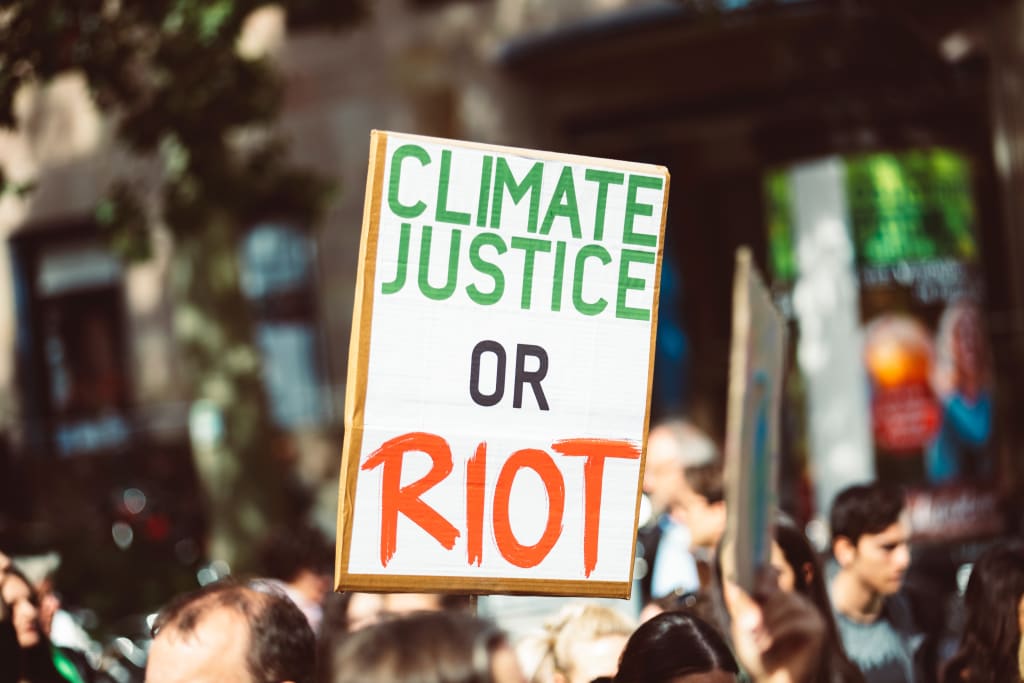
The Serene Tribe refused to be victims of climate change. They formed alliances with other indigenous communities facing similar challenges, creating a powerful network of voices advocating for climate justice. They protested, marched, and demanded that the world listen to their stories, urging everyone to recognize the interconnectedness of humanity and the earth.
Their call to action resonated beyond their village, reaching hearts and minds across the globe. People from diverse backgrounds and cultures stood in solidarity with the Serene Tribe, understanding that the heartbreak of disappearing landscapes extended beyond their community alone.
As the story of the Serene Tribe spread, it became a powerful catalyst for change. Governments and organizations began to take notice, implementing policies and initiatives to mitigate climate change's impact on indigenous communities. Support and resources poured in, enabling the Serene Tribe and others like them to continue their fight for a sustainable future.
While the emotional wounds caused by climate change would never fully heal, the Serene Tribe stood as a testament to the strength of the human spirit. Their heartbreak transformed into resilience, their pain into purpose. They remained unwavering in their determination to protect their ancestral lands and ensure the survival of their cultural heritage for generations to come.
The story of the Serene Tribe serves as a poignant reminder that climate change is not just an environmental issue; it is an emotional one that affects the very essence of who we are. It calls upon each individual, community, and society to take action, to preserve our precious landscapes, and to protect the vulnerable populations like the indigenous communities who hold profound wisdom and knowledge of living in harmony with nature. For in their stories and struggles lies the hope for a future where humanity learns to coexist with the earth in a sustainable and balanced way.
About the Creator
Keep reading
More stories from writers in Earth and other communities.
Industries Hit Back at Decision to Extend Over Rs15bn to Rice Exporters
The Pakistani government’s recent decision to extend more than Rs15 billion in financial support to rice exporters has sparked a wave of criticism from domestic industries. While the move is intended to boost exports and strengthen the country’s foreign exchange reserves, local manufacturers argue that it favors exporters at the expense of other industrial sectors, raising questions about fairness, economic priorities, and long-term industrial policy. Industry representatives, economists, and policymakers are now debating the potential impact of this substantial financial package, highlighting the challenges of balancing export promotion with support for domestic production and job creation. Background: The Financial Extension The government’s support package includes: Cash incentives and subsidies for rice exporters Assistance for logistics, storage, and shipment costs Measures aimed at enhancing Pakistan’s competitiveness in international rice markets According to officials, the goal is to maintain export momentum in the face of rising global demand for Pakistani rice, especially basmati and long-grain varieties. The rice industry contributes significantly to the country’s economy, providing employment to millions of farmers, millers, and transport workers. However, critics argue that while rice exporters benefit, other industrial sectors are overlooked, leaving them to bear the burden of rising costs and limited support. Industrial Sector Response Local industry associations have expressed strong opposition to the extension, citing several concerns: Unequal treatment: Manufacturers in textiles, ceramics, and other sectors feel that their contributions to the economy are being undervalued. Resource allocation: The diversion of funds to rice exporters could strain public finances and reduce available support for broader industrial development. Inflationary pressures: Critics warn that focusing heavily on exports without balancing domestic production could drive up prices for local consumers, particularly for staple goods. A spokesperson for the Pakistan Industries Association stated: "While supporting exporters is important, allocating such a large sum exclusively to rice exporters sets a dangerous precedent. All industrial sectors contribute to Pakistan’s economy and deserve equitable support." Economic Arguments Economists note that export incentives can help strengthen foreign reserves, especially in a country facing balance-of-payment pressures. Support for rice exporters may lead to: Increased foreign currency inflows Growth in agricultural output and processing industries Enhanced competitiveness in global rice markets However, experts also caution that over-reliance on subsidies for a single sector may distort the industrial landscape. Diversified support policies could help boost overall manufacturing, create jobs, and stabilize domestic prices while still promoting exports. Regional and International Implications Pakistan is a major player in the global rice market, particularly in South Asia and the Middle East. By extending financial support, the government hopes to: Maintain market share against competitors like India, Thailand, and Vietnam Encourage investment in modern milling and processing technologies Strengthen trade relations with import-dependent countries Yet, domestic industries argue that this focus on exports might undermine long-term industrial development, especially if other manufacturing sectors face financial constraints. Balancing international competitiveness with local growth remains a key challenge. Public Perception and Political Debate The decision has also sparked public debate and media scrutiny. Citizens and commentators have questioned: Why rice exporters are receiving such significant financial support while other sectors struggle Whether this approach will benefit ordinary consumers, particularly in rural and urban areas dependent on domestic production The potential for political influence or lobbying shaping economic decisions Political parties and opposition figures have criticized the government for favoring certain industries, calling for more transparent and inclusive industrial policies. Possible Solutions and Recommendations Experts suggest several measures to balance export promotion with domestic industrial growth: Equitable support: Extend incentives to other industrial sectors based on contribution to employment and GDP. Conditional subsidies: Link export incentives to investment in technology, workforce development, and sustainable practices. Transparent allocation: Ensure public funds are distributed fairly across sectors to avoid favoritism and economic imbalance. Monitoring and evaluation: Regularly assess the impact of financial support on both exports and domestic markets. By adopting a holistic approach, the government can maintain export competitiveness while ensuring that industrial growth is inclusive and sustainable. Impact on Farmers and Rural Communities While industrialists express concern, the rice industry emphasizes the benefits for farmers and rural communities: Increased income for smallholder farmers Job creation in processing, storage, and logistics Support for rural development and agricultural investment Proponents argue that supporting rice exports indirectly boosts local economies in agricultural regions, highlighting the complex trade-offs policymakers face. Looking Ahead The debate over the Rs15 billion support package is likely to continue, as industrial sectors, policymakers, and civil society weigh the benefits and drawbacks of prioritizing rice exports. Key factors to watch include: Government response to industrial backlash Adjustments to export incentives or subsidy allocations Long-term impact on domestic manufacturing and consumer prices Balancing the needs of exporters, industrial manufacturers, and domestic consumers will remain a critical challenge for Pakistan’s economic planners in the coming months. Conclusion The extension of over Rs15 billion to rice exporters has highlighted tensions between export promotion and domestic industrial interests. While the policy aims to strengthen Pakistan’s position in the global rice market and support rural economies, domestic industries argue for more equitable treatment and transparent allocation of resources. As the debate unfolds, policymakers must navigate the delicate balance between encouraging exports, supporting local manufacturing, and safeguarding consumer interests, ensuring that Pakistan’s economic growth is both inclusive and sustainable.
By Muhammad Hassan7 days ago in Earth


Comments
There are no comments for this story
Be the first to respond and start the conversation.