
Industries Hit Back at Decision to Extend Over Rs15bn to Rice Exporters
Domestic manufacturers voice concerns as government support stirs debate


The Pakistani government’s recent decision to extend more than Rs15 billion in financial support to rice exporters has sparked a wave of criticism from domestic industries. While the move is intended to boost exports and strengthen the country’s foreign exchange reserves, local manufacturers argue that it favors exporters at the expense of other industrial sectors, raising questions about fairness, economic priorities, and long-term industrial policy.
Industry representatives, economists, and policymakers are now debating the potential impact of this substantial financial package, highlighting the challenges of balancing export promotion with support for domestic production and job creation.
Background: The Financial Extension
The government’s support package includes:
Cash incentives and subsidies for rice exporters
Assistance for logistics, storage, and shipment costs
Measures aimed at enhancing Pakistan’s competitiveness in international rice markets
According to officials, the goal is to maintain export momentum in the face of rising global demand for Pakistani rice, especially basmati and long-grain varieties. The rice industry contributes significantly to the country’s economy, providing employment to millions of farmers, millers, and transport workers.
However, critics argue that while rice exporters benefit, other industrial sectors are overlooked, leaving them to bear the burden of rising costs and limited support.
Industrial Sector Response
Local industry associations have expressed strong opposition to the extension, citing several concerns:
Unequal treatment: Manufacturers in textiles, ceramics, and other sectors feel that their contributions to the economy are being undervalued.
Resource allocation: The diversion of funds to rice exporters could strain public finances and reduce available support for broader industrial development.
Inflationary pressures: Critics warn that focusing heavily on exports without balancing domestic production could drive up prices for local consumers, particularly for staple goods.
A spokesperson for the Pakistan Industries Association stated:
"While supporting exporters is important, allocating such a large sum exclusively to rice exporters sets a dangerous precedent. All industrial sectors contribute to Pakistan’s economy and deserve equitable support."
Economic Arguments
Economists note that export incentives can help strengthen foreign reserves, especially in a country facing balance-of-payment pressures. Support for rice exporters may lead to:
Increased foreign currency inflows
Growth in agricultural output and processing industries
Enhanced competitiveness in global rice markets
However, experts also caution that over-reliance on subsidies for a single sector may distort the industrial landscape. Diversified support policies could help boost overall manufacturing, create jobs, and stabilize domestic prices while still promoting exports.
Regional and International Implications
Pakistan is a major player in the global rice market, particularly in South Asia and the Middle East. By extending financial support, the government hopes to:
Maintain market share against competitors like India, Thailand, and Vietnam
Encourage investment in modern milling and processing technologies
Strengthen trade relations with import-dependent countries
Yet, domestic industries argue that this focus on exports might undermine long-term industrial development, especially if other manufacturing sectors face financial constraints. Balancing international competitiveness with local growth remains a key challenge.
Public Perception and Political Debate
The decision has also sparked public debate and media scrutiny. Citizens and commentators have questioned:
Why rice exporters are receiving such significant financial support while other sectors struggle
Whether this approach will benefit ordinary consumers, particularly in rural and urban areas dependent on domestic production
The potential for political influence or lobbying shaping economic decisions
Political parties and opposition figures have criticized the government for favoring certain industries, calling for more transparent and inclusive industrial policies.
Possible Solutions and Recommendations
Experts suggest several measures to balance export promotion with domestic industrial growth:
Equitable support: Extend incentives to other industrial sectors based on contribution to employment and GDP.
Conditional subsidies: Link export incentives to investment in technology, workforce development, and sustainable practices.
Transparent allocation: Ensure public funds are distributed fairly across sectors to avoid favoritism and economic imbalance.
Monitoring and evaluation: Regularly assess the impact of financial support on both exports and domestic markets.
By adopting a holistic approach, the government can maintain export competitiveness while ensuring that industrial growth is inclusive and sustainable.
Impact on Farmers and Rural Communities
While industrialists express concern, the rice industry emphasizes the benefits for farmers and rural communities:
Increased income for smallholder farmers
Job creation in processing, storage, and logistics
Support for rural development and agricultural investment
Proponents argue that supporting rice exports indirectly boosts local economies in agricultural regions, highlighting the complex trade-offs policymakers face.
Looking Ahead
The debate over the Rs15 billion support package is likely to continue, as industrial sectors, policymakers, and civil society weigh the benefits and drawbacks of prioritizing rice exports. Key factors to watch include:
Government response to industrial backlash
Adjustments to export incentives or subsidy allocations
Long-term impact on domestic manufacturing and consumer prices
Balancing the needs of exporters, industrial manufacturers, and domestic consumers will remain a critical challenge for Pakistan’s economic planners in the coming months.
Conclusion
The extension of over Rs15 billion to rice exporters has highlighted tensions between export promotion and domestic industrial interests. While the policy aims to strengthen Pakistan’s position in the global rice market and support rural economies, domestic industries argue for more equitable treatment and transparent allocation of resources.
As the debate unfolds, policymakers must navigate the delicate balance between encouraging exports, supporting local manufacturing, and safeguarding consumer interests, ensuring that Pakistan’s economic growth is both inclusive and sustainable.
About the Creator
Muhammad Hassan
Muhammad Hassan | Content writer with 2 years of experience crafting engaging articles on world news, current affairs, and trending topics. I simplify complex stories to keep readers informed and connected.
Keep reading
More stories from Muhammad Hassan and writers in Earth and other communities.
Exclusive: Amazon Plans Thousands More Corporate Job Cuts Next Week, Sources Say
Amazon, one of the world’s largest e-commerce and technology companies, is reportedly planning to announce thousands of additional corporate job cuts next week, according to sources familiar with the matter. This latest round of layoffs is part of a broader trend of corporate restructuring at the company, which has seen waves of job reductions in recent months.
By Muhammad Hassanabout 5 hours ago in Earth
“Make America Go Away”: Spoof MAGA Caps Soar in Popularity Amid the Greenland Crisis
Political slogans have always been powerful, but in today’s hyper-connected world, they often take on a life of their own. In recent weeks, a new phrase has been popping up across social media, protests, and online marketplaces: “Make America Go Away.” Printed boldly on red caps that closely resemble the iconic MAGA hats, the slogan is a pointed parody—and it’s rapidly gaining popularity amid renewed tensions surrounding Greenland and U.S. foreign policy rhetoric.
By Aarif Lashari3 days ago in Earth
Australia Urea Market Size and Forecast 2025–2033
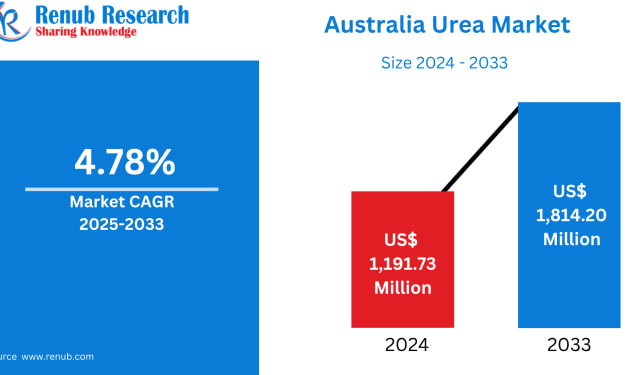
Australia Urea Market Overview The Australian Urea Market is anticipated to reach US$ 1,814.20 million in 2033, up from US$ 1,191.73 million in 2024, growing at a CAGR of 4.78% during 2025–2033, according to Renub Research. This growth is being driven by increasing demand from the agricultural sector for high-nitrogen fertilizers, expanding grain and crop cultivation, and rising government incentives for sustainable farming practices. Import substitution policies and growing interest in domestic production capabilities are also shaping market dynamics.
By Marthan Sir7 days ago in Earth
Smart phones, Humans and Aliens.
WARNING. I will be tapping into one of your favorite creative tensions: The absurdity of humans worshipping their glowing rectangles as if they were tiny oracles. There’s something deliciously poetic about that contradiction, and it lends itself beautifully to an instructive proviso.
By Novel Allen7 days ago in Poets



Comments
There are no comments for this story
Be the first to respond and start the conversation.