
The Ground Over Yellowstone is Rising - Is It Going to Erupt?
By Brian Dickerson
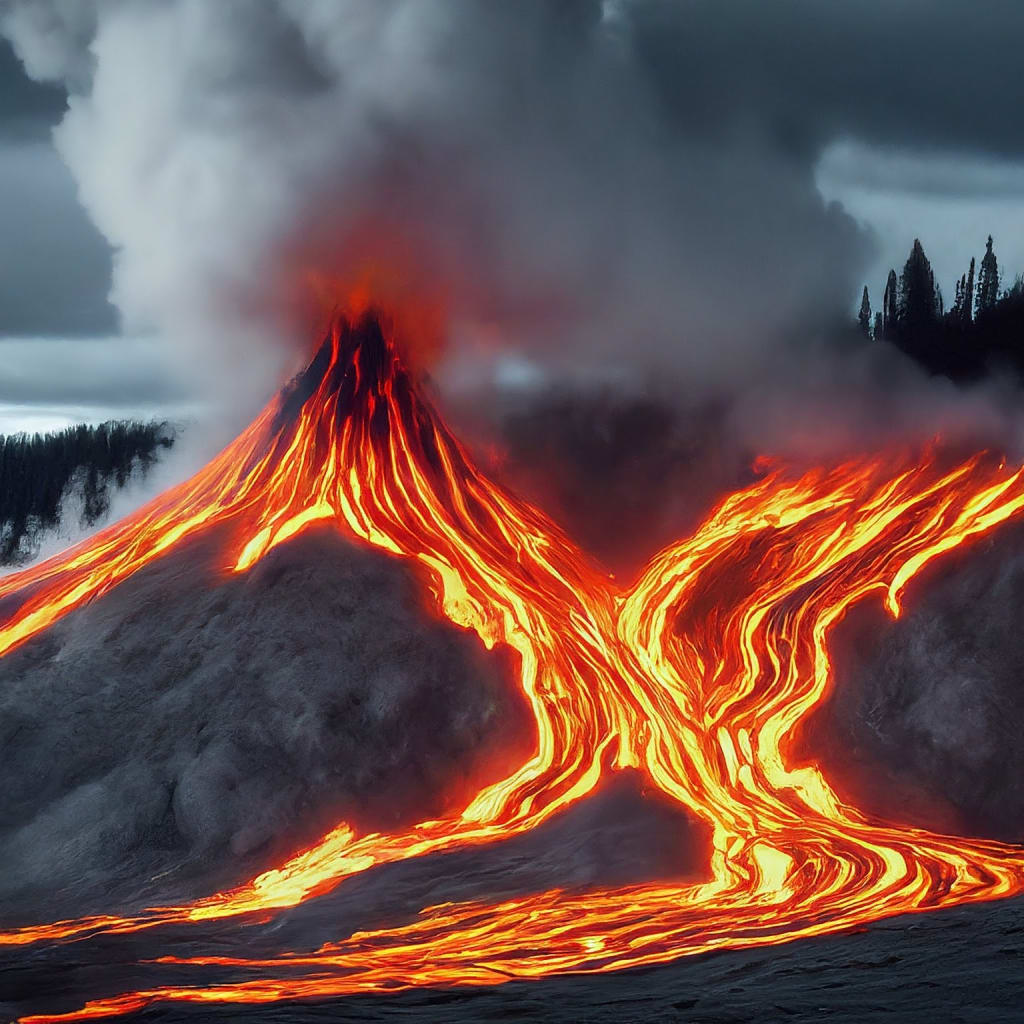
It is likely that you are aware that Yellowstone National Park is situated atop a massive supervolcano, which accounts for the region's impressive geysers and hot springs. However, this also indicates the presence of a substantial magma chamber beneath Yellowstone. In 2015, researchers from the University of Utah discovered that this chamber was significantly larger than previously estimated. They also identified an additional reservoir of magma located beneath the primary chamber. Notably, the larger the chambers, the greater the volume of magma they can hold. Collectively, these two reservoirs contain a quantity of magma sufficient to fill the Grand Canyon eleven times over.
The most concerning aspect of magma Chambers is their tendency to exert pressure on the ground above them. Consequently, Yellowstone rises about 1 to 2 inches per year. Additionally, Yellowstone is classified as an active volcano with a volcanic explosivity index of 8 out of 8. This high rating indicates that an eruption would be catastrophic. For comparison, the eruption of Pinatubo in 1991, considered one of the most powerful in recent history, was rated a 6 on the volcanic explosivity index. To assess the situation, in March 2023, the University of Utah seismograph stations detected 354 earthquakes in the Yellowstone National Park region, which seems significant.
It is important to note that the most notable occurrence of the month was a minor earthquake registering a magnitude of 3.7. This event was part of a series of 106 earthquakes that commenced on March 29th and persisted until the month's conclusion. Earthquakes, it appears, can indeed occur in swarms, so vigilance is advised. Experts indicate that the seismic activity at Yellowstone is somewhat more pronounced than usual; however, it does not pose any significant threat. Michael Poland, a geophysicist at the Yellowstone Volcano Observatory, asserts that an eruption of the volcano is not imminent. For such an event to take place, there must be a sufficient quantity of magma ready to erupt beneath the surface, along with adequate pressure to facilitate the ascent of this magma. Currently, neither of these conditions is present.
The stability of Yellowstone has been confirmed by experts. Meanwhile, Poland and his team are diligently monitoring all underground activities in search of warning signs for potential eruptions. These signs may include increased frequency of earthquakes and ground deformation. The occurrence of numerous earthquakes, along with drastic changes in the ground surface, can be cause for concern. The team is also keeping a close eye on the temperature of the park's thermal features, as this can serve as another important indicator of a possible disaster. Additionally, any widespread changes in geyser activity, as well as gas and thermal emissions, are being closely monitored.
Despite claims in the media that Yellowstone is on the brink of eruption due to its last eruption 70,000 years ago, experts emphasize that volcanoes do not operate on fixed timelines. This misconception is one of the most common misunderstandings about volcanic activity.1. In the event of a super eruption, the primary concern would not be the lava flows or the earthquakes that would likely accompany such a natural disaster. Rather, the most significant consequence would be the ash and ashfall. To illustrate this, we can examine the historical eruptions of the Yellowstone volcano. Throughout its history, Yellowstone has experienced at least three super eruptions, with the most powerful being 2,500 times more catastrophic than the infamous eruption of Mount St. Helens in Washington State in 1980.
The most recent of these super eruptions, known as the Lava Creek eruption, resulted in the formation of the Yellowstone caldera after releasing an enormous volume of dust, volcanic ash, and rock into the atmosphere. Scientists have recently discovered two additional super eruptions that occurred approximately 9 and 8.7 million years ago. The younger of the two is now recognized as the largest recorded event in the entire Snake River Yellowstone volcanic Province. Let's delve into what transpired millions of years ago, as none of us were present during that time. Our understanding is based on evidence. The initial signs of the disaster emerged long before the catastrophe unfolded. For thousands of years, heat had been building up from the planet's core, melting rock beneath the crust, and creating massive chambers.
The chambers were brimming with a compressed blend of semi-solid rock magma, water vapor, and various gases such as carbon dioxide. This scalding subterranean concoction was swelling as additional magma continued to flow in over time. The terrain above the volcanic network was gradually ascending, almost imperceptibly. A year prior to the catastrophic Yellowstone eruption, there was a signal, perhaps a small belch, but back then, there was no one capable of deciphering these warnings. Furthermore, these alarming processes were predominantly unfolding beneath the surface. For instance, decompression leads to the release of gas bubbles, and the eruption of such bubbles can often trigger specific types of volcanic activity months in advance.
Small-scale earthquakes increased in frequency and intensity, causing the ground in various areas around the super volcano to heat up. Surface lakes and groundwater also experienced a rise in temperature. If individuals had been present during that period, they would have observed unusual steam fogging in the vicinity shortly before the eruption commenced. The mounting pressure forced the ground above the magma chamber to rise, forming a dome-shaped uplift. Subsequently, narrow cracks began to appear along the edges of this dome. Picture the act of opening a bottle of soda after vigorously shaking it; a similar phenomenon was occurring near the volcano, akin to the reaction between Mentos and Diet Coke. The pressure was eventually released through these fractures as gases erupted from beneath the surface.
Prior to the disaster, the ground surrounding the Yellowstone volcano began to rise as geothermal pools and geysers heated up to boiling temperatures and became more acidic than usual. The magma started to ascend towards the surface, causing the rock roof of the magma chamber to eventually give way. The eruption commenced with small but continuous tremors that had been shaking the ground for days leading up to the catastrophe. However, the true shaking only began moments before the eruption, accompanied by a deafening roar. A massive column of lava and ash was forcefully ejected into the air, followed by a pyroclastic flow that swiftly swept across the area at an alarming speed. This flow, consisting of a mixture of semi-solid lava pieces, volcanic ash, and hot expanding gases, resembled a scorching, toxic snow avalanche with temperatures reaching approximately 1300°.
The volcano continued to spew ash for days on end, resulting in one of the most perilous consequences of the eruption - ash fallout. Volcanic ash transforms into glassy cement within seconds of inhalation, proving fatal for most animals. Even sturdy trees succumbed to the weight of this dense substance. Within a matter of days, vast territories were blanketed by a thick layer of ash. As the ash dispersed into the stratosphere, global temperatures plummeted. The eruption, rich in sulfur, acted as an effective sun blocker, causing a worldwide cooling effect that lasted for several years. The absence of summer led to a scarcity of food and clean water, making survival a daunting challenge for animals worldwide.
The natural disaster known as the Graze Landing super eruption was described by researchers as monumental in their recent studies. It impacted an extensive area, with streams of lava covering a region comparable in size to New Jersey, transforming the landscape into scorching volcanic glass. This event resulted in the immediate sterilization of the land, eradicating all existing plant life. Should a similar eruption occur today, it would blanket Colorado, Utah, and Wyoming with nearly three feet of toxic volcanic ash. Many areas would be enveloped in darkness, and even coastal regions, where a significant portion of the American population resides, would face challenges due to the ash cloud's spread. This would lead to the destruction of crops, contamination of pastures, and damage to power lines and electrical transformers. It is indeed fortunate that such a catastrophic event is not anticipated in the near future, as we already have enough challenges to address. That concludes today's discussion.
About the Creator
Keep reading
More stories from Brian Dickerson and writers in Earth and other communities.
What if All The Clouds Disappeared Forever?
Clouds, ranging from delicate and wispy to large and fluffy, envelop approximately 70% of the Earth's surface at any given time. However, consider the scenario where, in an instant, they vanish completely. This sudden absence would likely astonish astronauts observing from the International Space Station. Conversely, an individual hiking in a desert environment may not immediately recognize the impending crisis on Earth. Within a few days, the initial indicator would manifest as increased humidity. This effect would be exacerbated for those residing near coastal areas. Typically, the sun's warmth causes water to evaporate, primarily from the ocean, with the resulting vapor forming clouds. Yet, if clouds were removed from the Earth's hydrological cycle, the moisture would linger in the atmosphere, leading to nearly 100% humidity levels. Should you board a flight during this time, you might encounter heightened turbulence. The absence of clouds, which normally reflect sunlight back into space, would result in increased solar heating of the Earth, generating more rising and uneven hot air.
By Brian Dickersonabout a year ago in Earth
Muslim Countries Condemn Israel’s Gaza Strikes, Allege ‘Repeated Violations’ of Ceasefire
Several Muslim-majority countries have condemned recent Israeli strikes in Gaza, alleging that the attacks represent repeated violations of ceasefire agreements. The statements, issued through official government channels and regional organizations, reflect growing diplomatic tensions and renewed concern about stability in the Middle East.
By Aarif Lashari3 days ago in Earth



Comments (3)
amazing story.
Amazing
Thanks for sharing