
What if All The Clouds Disappeared Forever?
What Would Happen?
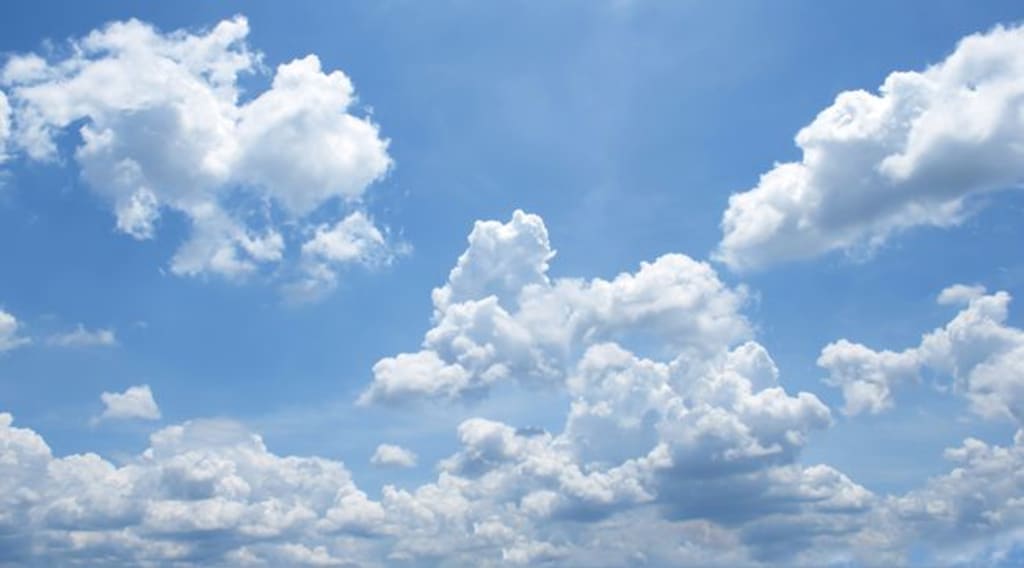
Clouds, ranging from delicate and wispy to large and fluffy, envelop approximately 70% of the Earth's surface at any given time. However, consider the scenario where, in an instant, they vanish completely. This sudden absence would likely astonish astronauts observing from the International Space Station. Conversely, an individual hiking in a desert environment may not immediately recognize the impending crisis on Earth. Within a few days, the initial indicator would manifest as increased humidity. This effect would be exacerbated for those residing near coastal areas. Typically, the sun's warmth causes water to evaporate, primarily from the ocean, with the resulting vapor forming clouds. Yet, if clouds were removed from the Earth's hydrological cycle, the moisture would linger in the atmosphere, leading to nearly 100% humidity levels. Should you board a flight during this time, you might encounter heightened turbulence. The absence of clouds, which normally reflect sunlight back into space, would result in increased solar heating of the Earth, generating more rising and uneven hot air.
A problematic flight may be the least of our concerns, as we face the prospect of no more rain, snow, or even light mist. This absence signifies a lack of means to replenish our vital water sources, such as lakes, streams, rivers, springs, and aquifers. Consequently, once the snow from last winter has melted, we will be left with only the water currently available to us. The urgency of the situation cannot be overstated. If global water consumption continues at its present rate, we could deplete all freshwater lakes and rivers within approximately 23 years. Therefore, to safeguard our freshwater resources, humanity must adopt a strategic approach. Presently, the average American consumes between 80 to 100 gallons of water daily. However, preserving our water supply will require more than merely reducing the duration of showers and laundry cycles. The water utilized in residential and public settings constitutes only 21% of our total water consumption. The primary demands arise from thermoelectric power generation and agricultural irrigation.
Power plants consume vast quantities of water, and those utilizing nuclear fuel pose a significant risk if their cooling towers deplete their water supply. The catastrophic events of the 2011 Fukushima nuclear disaster were triggered when an earthquake disrupted the power to the cooling pumps. Additionally, agricultural sectors will require even more water in the absence of sufficient rainfall. A prolonged drought would devastate numerous plant species and wildlife as the landscape becomes increasingly arid. Within a few years, the degradation of soil could lead to severe dust storms reminiscent of the Dust Bowl era in the 1930s. Concurrently, the Earth's climate would experience severe disruptions in the absence of cloud cover. While precise predictions necessitate costly climate modeling, cloud specialist Chris Fairall provided some preliminary estimations. In the absence of clouds, average surface temperatures could increase by as much as 22 degrees Celsius. This drastic rise in temperature would obliterate the habitats of most plant and animal life, extinguishing those that manage to survive the drought, while also contributing to the melting of polar ice caps and resulting in significant flooding in coastal urban areas.
It is possible that you may find yourself among the 40% of the global population compelled to relocate inland, with your new residence potentially situated in an unending desert as seawater infiltrates our vital freshwater supplies. While this scenario is indeed concerning, there are some positive aspects to a cloudless world. We would no longer face the threat of catastrophic hurricanes and tornadoes, experience flight delays due to inclement weather, or contend with overcast skies that hinder our stargazing endeavors. As our water resources diminish, we will be faced with difficult decisions; however, humanity has a remarkable capacity for innovation. We could develop methods to desalinate seawater or capture moisture from the atmosphere. The urgency of these solutions cannot be overstated, as we are already witnessing a decline in cloud cover. Unprecedented carbon dioxide levels, along with rising ocean and atmospheric temperatures, are contributing to the thinning of clouds. Therefore, despite the potential benefits, it may be prudent to focus on reducing our greenhouse gas emissions to avert this daunting future.
About the Creator
Reader insights
Nice work
Very well written. Keep up the good work!
Top insights
Expert insights and opinions
Arguments were carefully researched and presented
Eye opening
Niche topic & fresh perspectives
Keep reading
More stories from Brian Dickerson and writers in Earth and other communities.
The Ground Over Yellowstone is Rising - Is It Going to Erupt?
It is likely that you are aware that Yellowstone National Park is situated atop a massive supervolcano, which accounts for the region's impressive geysers and hot springs. However, this also indicates the presence of a substantial magma chamber beneath Yellowstone. In 2015, researchers from the University of Utah discovered that this chamber was significantly larger than previously estimated. They also identified an additional reservoir of magma located beneath the primary chamber. Notably, the larger the chambers, the greater the volume of magma they can hold. Collectively, these two reservoirs contain a quantity of magma sufficient to fill the Grand Canyon eleven times over.
By Brian Dickerson2 years ago in Earth
Flooding wetlands in an effort to combat climate change could backfire.
Despite making up a fairly small portion of the planet's surface area, wetlands store a disproportionate amount of carbon on land. Wetland soil disturbance can release massive volumes of greenhouse gases, which is why they are at the centre of climate debates.
By Francis Dami2 days ago in Earth
Rachel Reeves Delivers ‘Killer Blow’ to UK’s Most-Loved Place Tomorrow – Has It Gone Too Far?
The UK is bracing for a major policy announcement from Chancellor Rachel Reeves that critics have described as a potential “killer blow” to what many call one of Britain’s most-loved national features. While supporters argue the move is necessary for economic stability and modernization, critics warn it could damage businesses, communities, and cultural identity.
By Aarif Lashari5 days ago in Earth
Feelings Never Die
It is Valentine's Day again, and it bought back memories that were over fifty years old. It bought me back to 1971, and I woke up and I knew my baby was due today. I was big and pregnant, and I felt like I was about to burst wide open. Imagine my surprise when the doctor told my I had a due date of February 14. I couldn't believe it, and since my baby was due today, I felt I could indulge myself a bit. I had gained a lot of weight, and chocolate was on the no-no list, but I had came to the end of this pregnancy, and I hoped it would be okay, after all I would deliver this baby today. So I walked across the street to the grocery story, and bought myself, a peppermint patty, covered in chocolate, my favorite. Me and my Valentine's baby would enjoy it together.
By Susan Paytonabout 12 hours ago in Fiction


Comments (2)
This is interesting and lovely
Wow , such an educative piece