
The Final Hour: Countdown to Doomsday
When Time Runs Out and Humanity Faces Its Last Stand
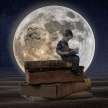

The sun rose over a quiet Earth, but it brought no warmth. A strange silence had spread across the planet. No birds sang. No waves crashed. The winds had stilled as if the world itself was holding its breath. It was the morning of December 21, 2094—the day humanity had long feared, the day scientists had come to call Doomsday.
The warning signs had been there for decades. The climate had gone haywire—ice caps vanished, wildfires swept continents, and oceans swallowed entire cities. But even that chaos was dwarfed by what came next: the discovery of Object X-47, a rogue asteroid the size of a small moon, drifting into the solar system on a collision course with Earth.
At first, governments tried to calm the public. They launched missions to divert the object. Nuclear warheads were tested in space. Satellites monitored it every second. But nothing worked. X-47 was too fast, too dense, and on an unchangeable path. Impact was inevitable.
With only a few weeks remaining, world leaders declared a global state of emergency. Cities turned into chaos zones. Some looted and rioted. Others gathered in prayer or silence. Underground bunkers were filled with scientists, leaders, and people deemed “essential” to preserve knowledge and restart civilization—if survival was even possible.
In New York City, a 17-year-old girl named Lena Rivers sat by her window, watching a crimson sky. Her parents were gone—volunteers in one of the failed asteroid missions. She lived with her younger brother, Sam, in a small apartment they had fortified with food and water. Though young, Lena had become a leader among the local community. She organized food, helped elders, and comforted children. But as the final day arrived, she, like everyone else, felt powerless.
Across the ocean, in a secure facility beneath the Swiss Alps, Dr. Emil Vargas, one of the world’s leading astrophysicists, stared at a massive screen counting down the time to impact: 14 hours, 22 minutes, and 16 seconds. He had been working nonstop for months, trying to develop a last-minute solution, a miracle of science. But he had nothing left to try. The asteroid was now visible to the naked eye, a burning star growing larger each hour.
In India, massive crowds gathered at the banks of the Ganges, chanting ancient hymns. In Brazil, people danced in the streets, choosing joy over fear. In Japan, monks lit thousands of lanterns, floating them into the sky. The world, fractured by borders for centuries, had suddenly become one. One species. One fate.
Back in New York, Lena took Sam to the rooftop. Around them, neighbors had gathered—once strangers, now family. They held hands, shared stories, and looked at the stars. The asteroid was now a glowing streak in the sky. The Earth trembled slightly beneath them. Time was running out.
Lena stood and spoke, her voice calm and clear. “If this is the end, then let it be a beginning too. Let this moment remind us that we were more than wars, more than greed. We loved. We dreamed. We mattered.”
At the exact moment of impact, the world lit up—not with fire, but with memories. Around the globe, screens went black. Buildings shook. Oceans rose. And then—stillness.
But the story didn’t end there.
Deep beneath the surface, in a hidden vault known only to a handful, artificial intelligence systems came online. Designed by the brightest minds, they held the sum of human knowledge, culture, art, and history. In stasis chambers, a small group of survivors slept, preserved by cryogenic technology.
Among them was Lena Rivers.
She had been selected without her knowledge. Her leadership, empathy, and strength were noticed by watchers and scientists months before. As the countdown reached its final hour, she and a few others were transported to the vault.
Years passed. Decades, perhaps centuries.
One day, Lena opened her eyes.
The Earth was different. Scarred, but healing. Trees had returned. The sky was blue once more. And Lena stood upon a land reborn. She was not the last human—but the first of a new beginning.
Doomsday had come. But so had dawn.
And from the ashes of the final hour, hope rose again.
About the Creator
Mati Henry
Storyteller. Dream weaver. Truth seeker. I write to explore worlds both real and imagined—capturing emotion, sparking thought, and inspiring change. Follow me for stories that stay with you long after the last word.
Keep reading
More stories from Mati Henry and writers in Earth and other communities.
The Rift Beneath: Africa's Awakening Earth
In the heart of East Africa, a strange phenomenon had begun to stir the land—a growing crack tearing through fields, roads, and villages. It began quietly, almost imperceptibly, in the Great Rift Valley, but soon it would demand the world's attention.
By Mati Henry 10 months ago in Earth
Face to Face with Creatures of the Deep
Asia The Maldives At the Maldives you can enjoy the wonder of whale sharks, the largest fish in the ocean. These gentle giants swim among coral reefs of the Maldives archipelago, which has the world’s largest population of whale sharks. You can swim alongside these creatures from May to December, during the southwest monsoon season when plankton blooms and attracts the whale sharks.
By Rasma Raisters4 days ago in Earth
When the Shelter Closes
Across the street from my house, a man slept under a tree, his dog by his side. My first, naive thought: he must be traveling through. But he kept coming back, often sleeping there during the day. Then it hit me—that person might not have a home.
By Bride of Sound4 days ago in Humans


Comments
There are no comments for this story
Be the first to respond and start the conversation.