
The essential components of life may have always been present on Earth.
An essential component of life on Earth

What was the origin of life on Earth? That has been a long-standing question. The solutions are still strewn across rocks, seas, and prehistoric terrain. One hint can be found in phosphorus, a necessary component of life.
In living things, phosphorus is present everywhere. It keeps RNA and DNA together. It creates the cell membrane's structure. Without it, no life can develop or thrive.
Phosphorus, however, primarily remains trapped in rocks. Phosphate minerals, which hardly dissolve in water, conceal it. That brings up a long-standing and perplexing question: How did early Earth obtain enough phosphorus to support life?
That question was taken seriously by Yuya Tsukamoto and Takeshi Kakegawa of Tohoku University. They decided to search where most people wouldn't: in rocks that are billions of years old, deep beneath the ocean.
An essential component of life on Earth
The Pilbara Craton in Western Australia, which is home to some of the oldest known seafloor rocks, was the researchers' primary focus. The age of the rocks is an incredible 3.455 billion years. It wasn't a subtle discovery for the crew. Out of the data, it leapt.
"In drill core samples recovered from the Pilbara Craton, Western Australia, we analysed 3.455-billion-year-old basaltic seafloor rocks and found that P was significantly leached from the hydrothermally altered rocks compared to the least altered rocks," Tsukamoto said.
He pointed out that additional mineralogical investigations showed that rocks with P depletion had dissolved phosphate minerals.
In other words, phosphorus was drawn out of these rocks by heated fluids that passed through them. The phosphorus didn't simply vanish. It permeated the nearby saltwater, converting areas of the ocean into areas that are rich in phosphorus.
Monitoring the phosphorus source
The story wasn't fully revealed by the rocks alone. The team's goal was to figure out what caused this phosphorus leak. Two types of hydrothermal fluids that influenced this process were discovered by them.
One kind was sulfur-rich, heated, and had a rapid rate of mineral breakdown. The other, which was mildly acidic to alkaline fluids at lower temperatures, was more unexpected.
Because carbon dioxide was prevalent in the Earth's atmosphere throughout the Archean period, these fluids were widespread. These fluids had unanticipated reactions with the rocks because of that special environment.
The outcome? enormous levels of phosphate dissolved in the water. The figures were startling. Up to 2 millimolar phosphate, or around 1,000 times more than what is present in contemporary saltwater, could be present in these fluids.
All of a sudden, early Earth wasn't a desolate place. Phosphorus was abundant in its seas.
Elements for life were found in the waters of Earth.
This was more than a simple chemistry test. The findings altered scientists' perspectives on early Earth. The amount of phosphorus that these submerged systems could emit was determined by the researchers.
The results were astounding. The quantity of phosphorus that these hydrothermal systems discharge into the oceans may be equal to or more than that which enters contemporary oceans through rivers and the weathering of land rocks.
Tsukamoto continues, "This study quantifies the potential P flux from these hydrothermal systems to the early ocean and provides direct evidence that submarine hydrothermal activity leached P from seafloor basaltic rocks."
Imagine nutrient-rich prehistoric oceans. Some of the earliest microbial life on Earth might have existed in these phosphorus-rich waters.
A large, lush planet was not necessary for the ancient societies. To begin, it merely required these obscure underwater settings.
On-land secret worlds and hot springs
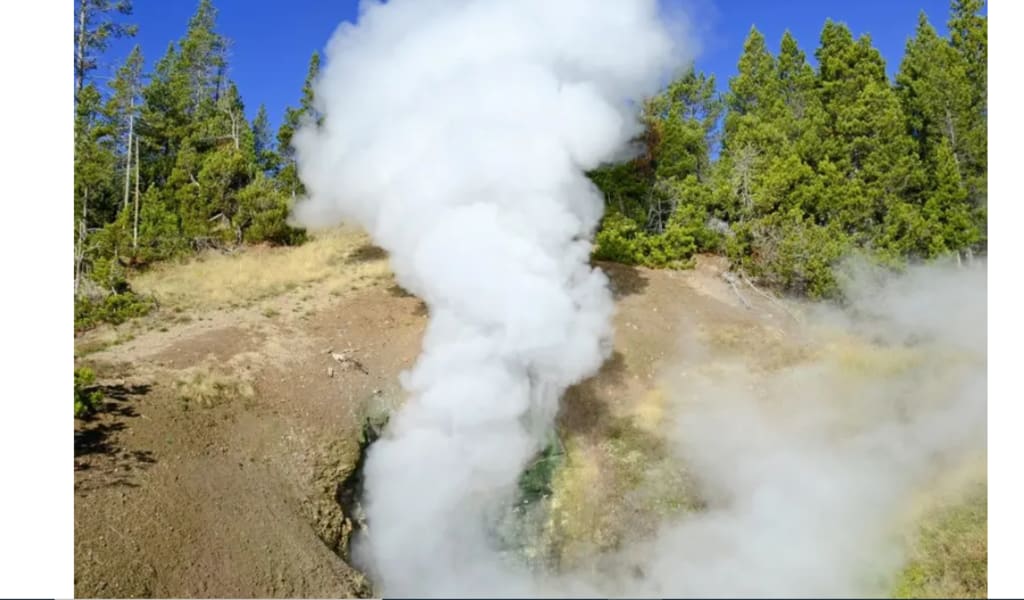
The research didn't end there. It also suggested the existence of hot springs on land, which are located outside of the oceans. Not all hydrothermal systems are found beneath the ocean. They can also be found on land in locations like hot springs.
On early Earth, these conditions may have also emitted phosphorus. Thus, deep-sea vents were not the only place where life's building elements might be found. On land, they might have been found in hot ponds.
More discoveries are made possible by this. Researchers now intend to investigate the behaviour of phosphate in rocks from various epochs of Earth's history. They intend to uncover new facets of Earth's history by tracking phosphorus over time.
The message is unmistakable: It's possible that the elements of life originated in Earth's uncharted territories. It's possible that life silently began deep beneath the seas, inside rocks that had been contacted by ancient fluids.
About the Creator
Keep reading
More stories from Francis Dami and writers in Earth and other communities.
To cope with climate change, ancient societies employed a variety of tactics.
The contemporary age was not the beginning of climate change. Africa's prehistoric past shows that people are already battling climatic instability and are adapting through a variety of coping mechanisms.
By Francis Dami9 months ago in Earth
Exploring the Amazing World Beneath the Waves
Beneath the surface of the world’s oceans lies a vast and mysterious universe that few humans have truly experienced. Often described as Earth’s “final frontier,” the underwater world is filled with stunning landscapes, colorful creatures, and ecosystems that are both fragile and vital to life on our planet. From shallow coral reefs to the dark depths of the ocean floor, this hidden realm continues to amaze scientists, explorers, and nature lovers alike.
By Irshad Abbasi 3 days ago in Earth



Comments
There are no comments for this story
Be the first to respond and start the conversation.