
Exploring the Amazing World Beneath the Waves
A journey into the mysterious and breathtaking underwater world filled with vibrant life, hidden landscapes, and remarkable ecosystems.

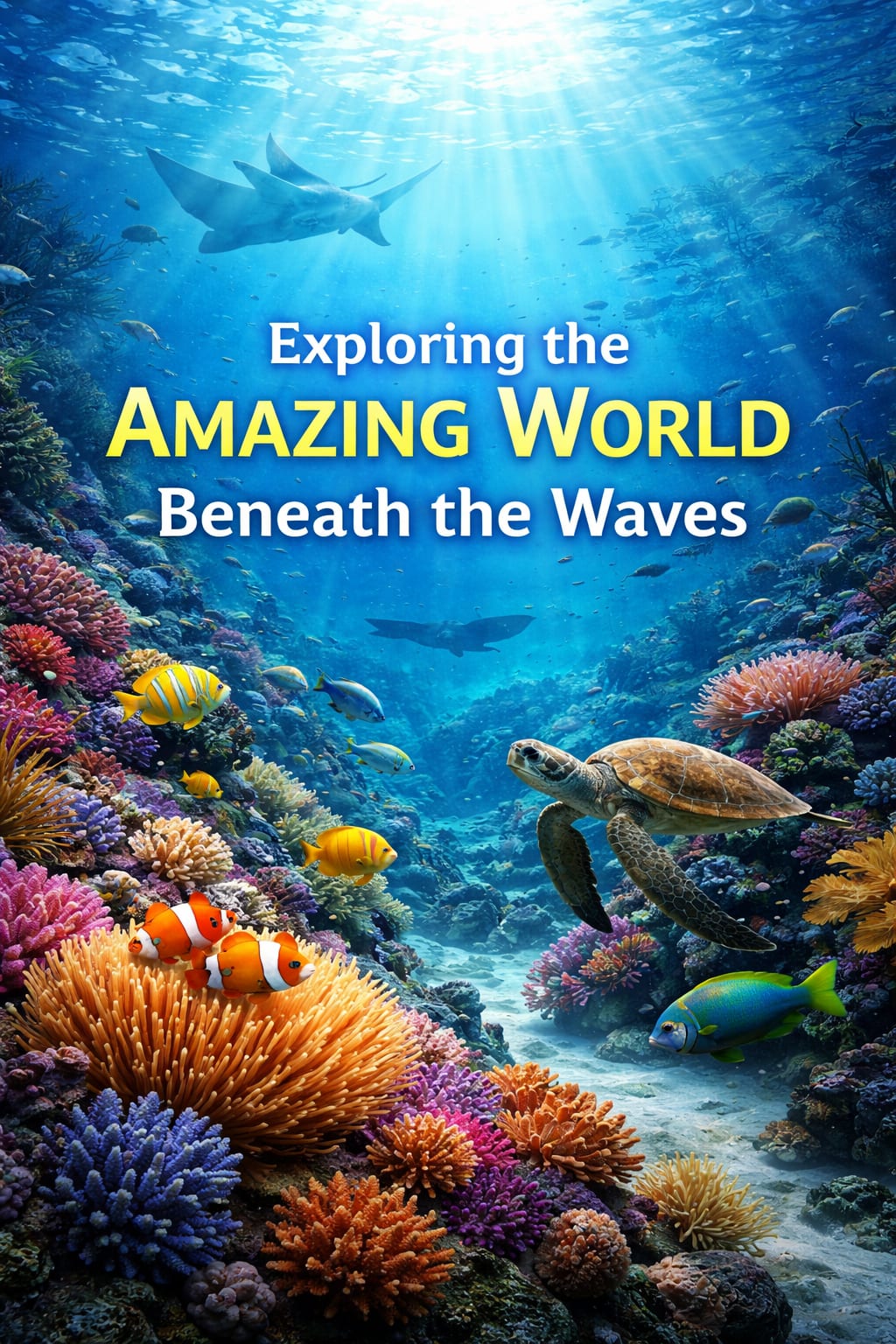
Beneath the surface of the world’s oceans lies a vast and mysterious universe that few humans have truly experienced. Often described as Earth’s “final frontier,” the underwater world is filled with stunning landscapes, colorful creatures, and ecosystems that are both fragile and vital to life on our planet. From shallow coral reefs to the dark depths of the ocean floor, this hidden realm continues to amaze scientists, explorers, and nature lovers alike.
The oceans cover more than 70 percent of Earth’s surface, yet a large portion of them remains unexplored. What we do know, however, reveals a world more diverse and fascinating than many could imagine. Coral reefs, for example, are among the most vibrant ecosystems in the underwater environment. Often referred to as the “rainforests of the sea,” coral reefs support thousands of species of fish, plants, and marine animals. Their colorful formations create a breathtaking underwater landscape that attracts divers and researchers from around the globe.
In these reefs, tiny clownfish dart between swaying sea anemones, while graceful sea turtles glide slowly through the clear blue water. Brightly colored parrotfish nibble on coral, and schools of shimmering fish move together like living clouds. Each creature plays an important role in maintaining the balance of the ecosystem. Even the smallest organisms contribute to the health and survival of the reef.
But the wonders of the underwater world are not limited to shallow waters. Far below the surface lies the deep sea, a region of darkness and extreme pressure. In this mysterious environment, sunlight cannot penetrate, and temperatures remain near freezing. Yet despite these harsh conditions, life has found extraordinary ways to survive.
Some deep-sea creatures produce their own light through a process known as bioluminescence. Glowing jellyfish, anglerfish with luminous lures, and strange translucent animals drift through the darkness, creating an otherworldly spectacle. These glowing adaptations help animals attract prey, communicate, or hide from predators.
The ocean floor also holds remarkable geological formations. Underwater mountains, called seamounts, rise from the seabed, while deep trenches plunge thousands of meters below the surface. The deepest known part of the ocean, the Mariana Trench in the Pacific Ocean, reaches depths of nearly 11 kilometers. Despite the crushing pressure, scientists have discovered unusual life forms even in these extreme depths.
Hydrothermal vents are another incredible feature of the underwater world. These vents release superheated, mineral-rich water from beneath the Earth’s crust. Around them thrive unique ecosystems where organisms rely not on sunlight but on chemical energy to survive. Giant tube worms, unusual crabs, and specialized bacteria form communities unlike anything found elsewhere on Earth.
Beyond its beauty and mystery, the underwater world plays a crucial role in sustaining life on the planet. Oceans regulate the Earth’s climate by absorbing heat and carbon dioxide from the atmosphere. They also produce more than half of the oxygen we breathe through microscopic plants called phytoplankton.
Additionally, millions of people depend on the ocean for food, livelihoods, and transportation. Fisheries, tourism, and shipping industries all rely on healthy marine environments. The ocean is also a source of scientific discovery, as many marine organisms have inspired new medicines and technologies.
However, the underwater world faces growing threats. Pollution, overfishing, and climate change are placing immense pressure on marine ecosystems. Rising ocean temperatures can cause coral bleaching, a process that weakens and sometimes kills coral reefs. Plastic waste has also become a major problem, harming fish, turtles, and seabirds.
Scientists and conservationists around the world are working to protect these fragile ecosystems. Marine protected areas have been established in many regions to safeguard important habitats and allow marine life to recover. Efforts to reduce plastic waste, promote sustainable fishing, and address climate change are also essential steps toward preserving the ocean’s health.
Exploration continues to reveal new wonders beneath the waves. Advanced submarines, underwater drones, and modern research vessels allow scientists to reach places that were once impossible to explore. Each expedition often leads to the discovery of new species, unknown habitats, and deeper insights into how the ocean functions.
The underwater world remains one of the most extraordinary parts of our planet. Its beauty, diversity, and importance remind us that the ocean is not only a place of mystery but also a vital system that supports life on Earth. Protecting this hidden world ensures that future generations will continue to marvel at the breathtaking universe beneath the waves.
About the Creator
Irshad Abbasi
Ali ibn Abi Talib (RA) said 📚
“Knowledge is better than wealth, because knowledge protects you, while you have to protect wealth.
Keep reading
More stories from Irshad Abbasi and writers in Earth and other communities.
Astronomers Capture Rare Evidence of Two Planets Colliding
Astronomers have gathered rare and compelling evidence suggesting that two planets collided in a distant star system, producing a dramatic cosmic event that has fascinated scientists around the world. Planetary collisions are believed to have played a major role in shaping many solar systems, including our own, but witnessing the aftermath of such a violent event is extremely rare. The new discovery offers valuable clues about how planets grow, change, and sometimes destroy each other during the chaotic early stages of planetary formation.
By Irshad Abbasi about 14 hours ago in Earth
Watering Wisely: Techniques for Deep Roots and Drought Tolerance
But beneath the surface, that shallow sprinkle is doing more harm than good. It encourages shallow roots that stay near the surface, dependent on your daily attention. When you forget to water—or when vacation or life intervenes—those shallow roots have no way to reach deeper moisture. Your plants wilt, stress, and sometimes die.
By Emma Wallace2 days ago in Earth




Comments
There are no comments for this story
Be the first to respond and start the conversation.