
The Deceptive Dance of the Bee Orchid
Nature's Hidden Masterpiece

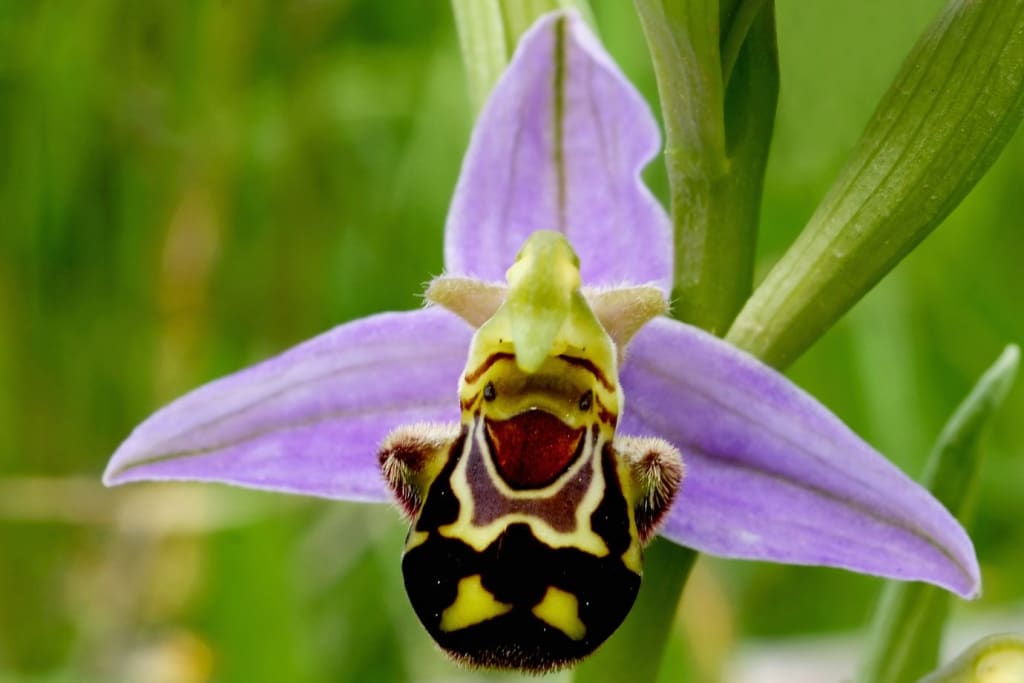
The Enigmatic Bee Orchid: Nature’s Master of Deception
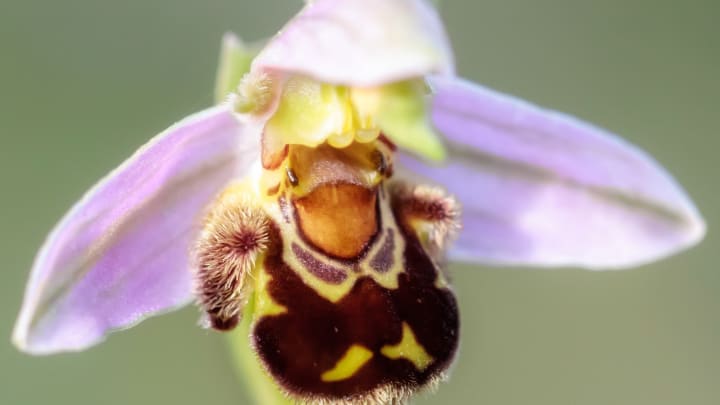
In the quiet corners of meadows and grassy slopes, where the earth breathes through the whisper of wildflowers and the sun’s golden fingers gently caress the soil, there exists a flower that is both a marvel and a mystery. This is the tale of the Bee Orchid (Ophrys apifera), a flower that has mastered the art of mimicry, weaving a delicate dance of deception in the heart of nature’s intricate tapestry.
A Quiet Bloom in the Meadow
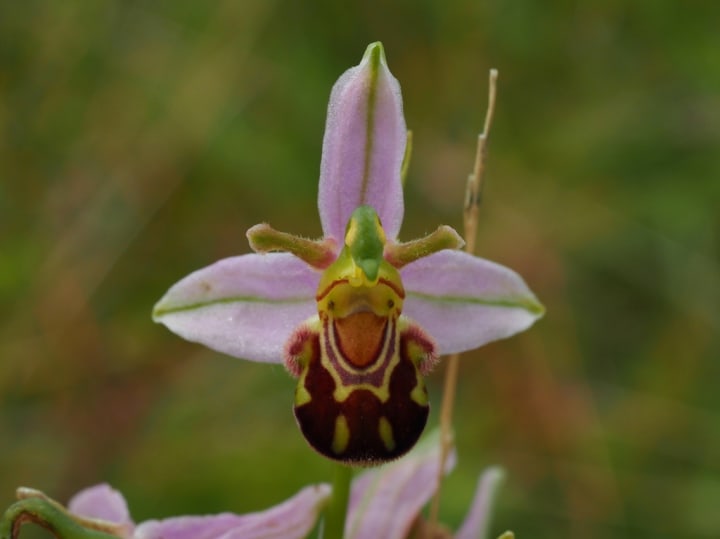
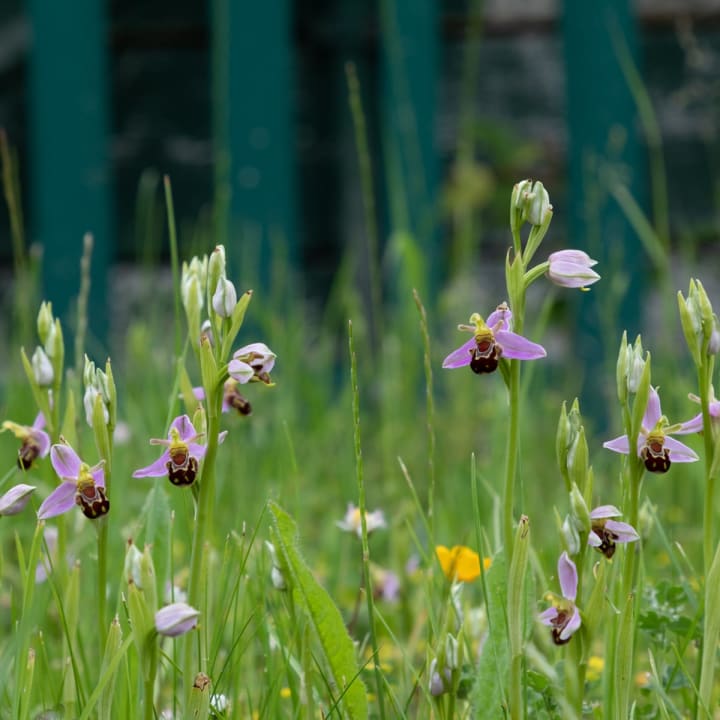
Imagine walking through a meadow on a warm summer’s day. The air is thick with the scent of blooming flowers, and the ground is soft beneath your feet. As you meander through the sea of green, your eyes are drawn to a small, unassuming flower that stands quietly among the grass. It’s easy to overlook it at first—its size and subtlety almost blending into the landscape. But upon closer inspection, something extraordinary comes into view.
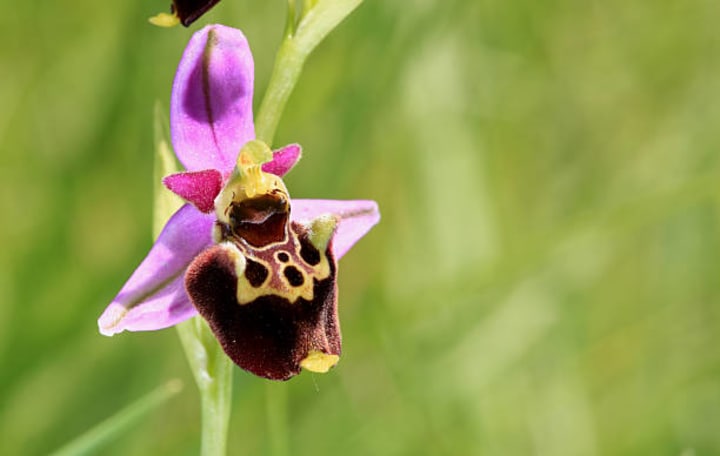
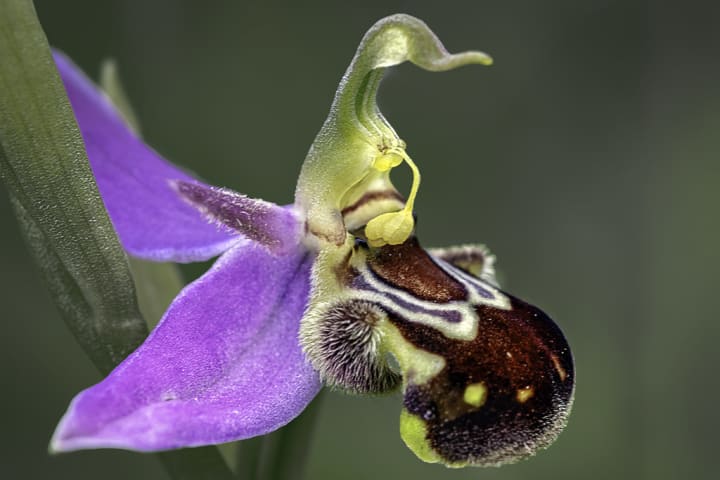
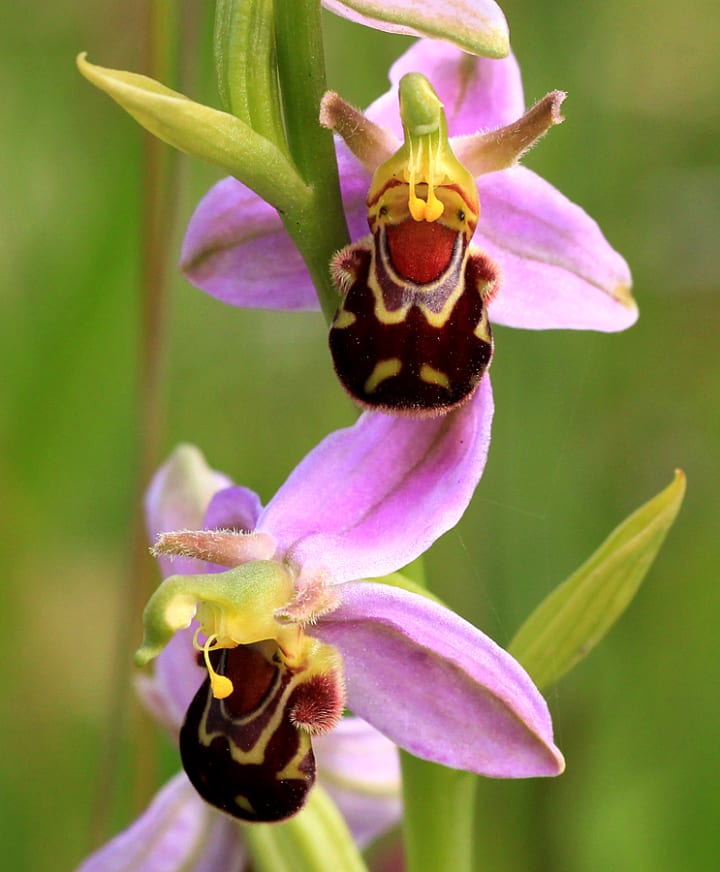
There, perched on a slender stem, is the Bee Orchid, a flower so cunning in its design that it deceives even the sharpest of eyes. Its petals are soft and pink, surrounding a central labellum that is unlike any other. This lip, velvety and rich in color, is a near-perfect replica of a female bee, complete with markings that mimic the insect’s eyes, body, and wings. It is a flower that has evolved not just to attract, but to entice, to fool, and to draw in the unsuspecting.
The Dance of Deception
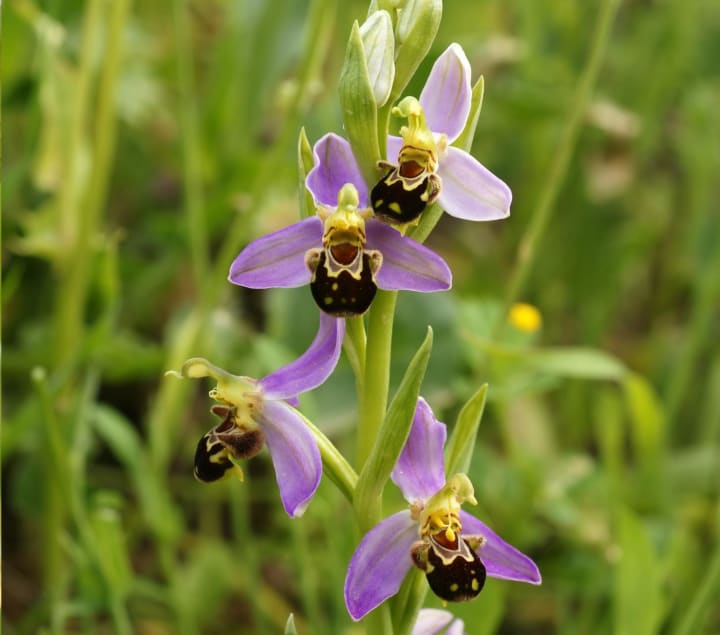
The story of the Bee Orchid is one of nature’s most captivating tales—a tale of evolution, survival, and the deep interconnectedness of life. In a world where the fight for survival is fierce, the Bee Orchid has developed a strategy that is both beautiful and ingenious. Its goal is simple: to ensure its species continues to thrive by securing the attention of male bees.
But this is no ordinary attraction. The Bee Orchid doesn’t rely on the usual allure of bright colors or sweet nectar. Instead, it has become a master of deception, using mimicry to trick male bees into thinking they’ve found a mate. The orchid’s labellum, with its fuzzy texture and bee-like appearance, lures the male bee into a false sense of opportunity. In a moment of what can only be described as botanical trickery, the bee attempts to mate with the flower—a behavior known as pseudocopulation.
As the bee clings to the orchid, driven by instinct, it inadvertently brushes against the flower’s reproductive organs. Pollen clings to the bee’s body, and when it moves on to another Bee Orchid, the pollen is transferred, facilitating cross-pollination. The bee, unaware of the deception, plays a crucial role in the continuation of this delicate species.
A Solitary Survivor
But the tale of the Bee Orchid doesn’t end with its mimicry. In many regions, the orchid has adapted to a life where its once-reliable pollinators have become scarce. As bee populations face decline due to habitat loss, pesticide use, and climate change, the Bee Orchid has had to evolve yet again. In a remarkable twist of fate, this flower has learned to survive on its own.
Through a process known as self-pollination, the Bee Orchid can fertilize itself without the need for a bee. This self-sufficiency ensures that even in the absence of its traditional partners, the orchid can still produce seeds and propagate its species. It is a testament to the resilience and adaptability of nature, where even the most specialized relationships can find a way to endure.
The Unseen Beauty of Nature
As captivating as the Bee Orchid’s story is, it is also a reminder of the unseen beauty and complexity of the natural world. This small, often overlooked flower embodies the intricate dance of life that takes place all around us, a dance that is as delicate as it is profound.
In the ecosystem, the Bee Orchid plays a subtle yet significant role. Its presence in a meadow or grassland is often an indicator of a healthy environment, a sign that the land is rich in diversity and relatively undisturbed by human activity. The orchid’s preference for well-drained soils and calcareous environments makes it a key player in the balance of these habitats.
Moreover, the Bee Orchid contributes to the overall biodiversity of its ecosystem. Its relationship with bees, though less prominent in some areas, is a crucial part of the web of life. Pollinators like bees are essential for the reproduction of countless plants, including those that produce the fruits and seeds we rely on for food. By supporting pollinator populations, the Bee Orchid indirectly supports a vast array of other species.
The Guardians of the Meadow
Yet, despite its ecological importance and evolutionary ingenuity, the Bee Orchid faces challenges that threaten its existence. Habitat loss, changes in land use, and the decline of bee populations all pose risks to this delicate flower. In some regions, the Bee Orchid is becoming increasingly rare, its presence fading from the meadows and grasslands it once thrived in.
But all is not lost. Conservation efforts are underway to protect the Bee Orchid and the habitats it calls home. These efforts include preserving wildflower meadows, reducing pesticide use, and encouraging the growth of native plants that support pollinators. In the UK, where the Bee Orchid is a protected species, conservationists are working to ensure that this remarkable flower continues to grace the landscape for generations to come.
A Legacy of Wonder
As you walk away from the meadow, the image of the Bee Orchid lingers in your mind. It is a flower that tells a story—a story of nature’s creativity, resilience, and the ever-present drive to survive. The Bee Orchid reminds us that the world is full of wonders, many of which go unnoticed by the casual observer.
In a world where the popular and the showy often steal the spotlight, the Bee Orchid stands as a quiet reminder of the beauty that lies in subtlety and the power of adaptation. It is a symbol of the delicate balance of life, where even the smallest flower can play a role in the grand tapestry of existence.
So the next time you find yourself in a meadow, take a moment to look closer. You might just find a Bee Orchid standing tall, its deceptive beauty waiting to tell you a story of its own. A story of survival, of partnership, and of the timeless dance between life and nature—a story that, like the Bee Orchid itself, is both intricate and extraordinary.
About the Creator
Keep reading
More stories from Elizabeth Orji and writers in Earth and other communities.




Comments (1)
Really liked it. Appreciated.