
The Darvaza Gas Crater: Welcome to Turkmenistan’s Door to Hell
It’s a fiery pit in the middle of nowhere that’s been burning for over 50 years.

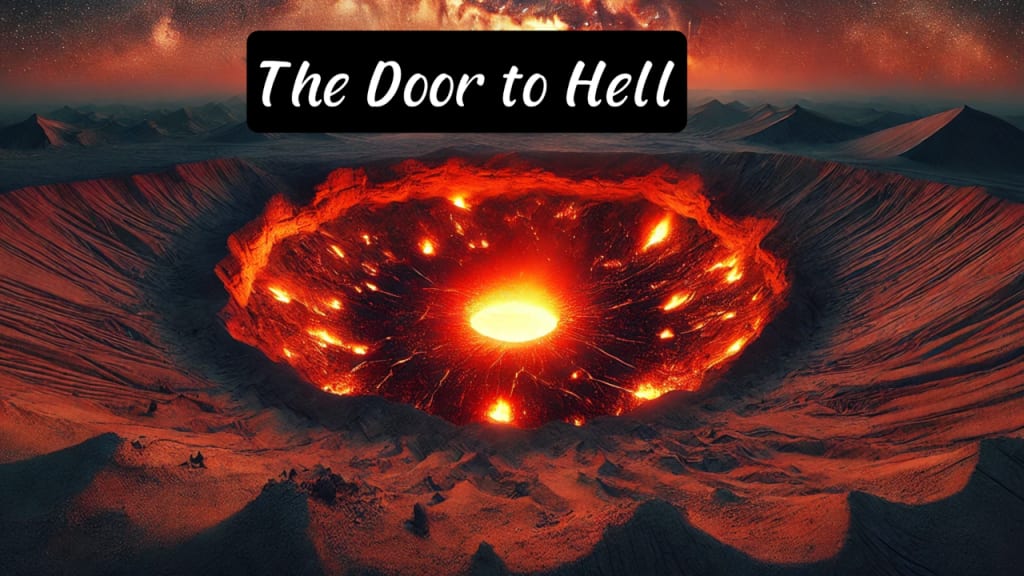
Some places on Earth seem designed to remind us that nature has a sense of humor—and maybe a touch of the dramatic. Case in point: the Darvaza gas crater in Turkmenistan, better known by its spicy nickname, The Door to Hell. It’s a fiery pit in the middle of nowhere that’s been burning for over 50 years. A perfect backdrop for your next Instagram photo, right?
But what exactly is this infernal abyss? How did it come to be, and why is it still burning? Pull up a marshmallow stick (but keep your eyebrows at a safe distance), because we’re diving into the fascinating—and slightly terrifying—story of the Darvaza gas crater.
A Hole in the Middle of Nowhere
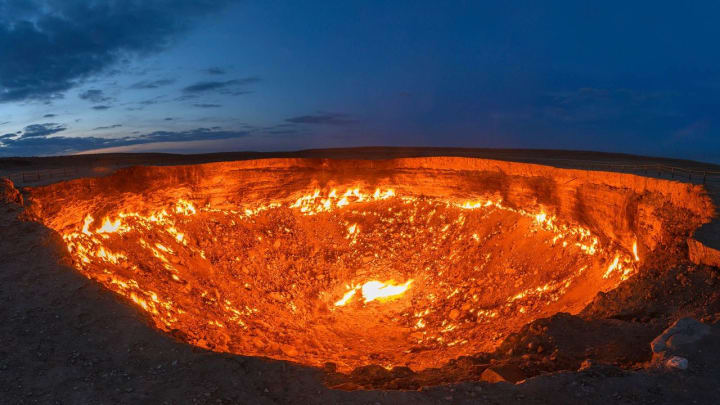
First, let’s set the scene. Turkmenistan’s Karakum Desert is vast, remote, and looks like it’s straight out of a Mad Max movie. It’s not exactly a hotspot for tourism, unless you count the odd camel or the occasional adventure-seeker chasing viral content. And right in the middle of this barren expanse lies the Darvaza gas crater: a fiery pit 70 meters wide and 20 meters deep that’s been blazing away like it’s auditioning for a role in the next apocalypse.
The Accidental Door to Hell
You’d think something called the Door to Hell would have some ancient, mystical backstory—maybe an angry god or a curse gone wrong. Nope. The origins of this fiery spectacle are about as mundane as it gets: human error.
In 1971, Soviet geologists were drilling for natural gas in the area. Turkmenistan, it turns out, sits on some of the largest natural gas reserves in the world. During their exploration, the ground beneath the drill site collapsed, revealing a massive underground cavern filled with natural gas.
Not exactly thrilled at the idea of poisonous methane leaking into the atmosphere (or their lungs), the scientists decided to burn it off. Their logic? The fire would consume all the gas in a few weeks. Spoiler alert: it didn’t.
Fifty-Plus Years of Flames
What was supposed to be a brief, controlled burn has turned into a decades-long inferno. The exact reasons for the fire’s longevity remain a mystery, but it likely involves a combination of factors: the vast reserves of natural gas beneath the surface and the crater’s unique geology, which seems to act like a perpetual barbecue lighter.
And so, the fire rages on, turning the Darvaza gas crater into an accidental monument to human miscalculation. It’s a bit like that one kitchen experiment you tried in college that ended with the fire department being called, except on a much larger—and hotter—scale.
The Science of the Inferno
From a scientific perspective, the Darvaza gas crater is a fascinating study in geology and combustion. The flames are fueled by methane, a potent greenhouse gas, which seeps up through the Earth’s crust and ignites in the open air. The intense heat creates a mesmerizing glow, especially at night, when the crater looks like a portal to another dimension—or at least the setting for a heavy metal album cover.
The temperatures near the crater are scorching, with some estimates suggesting they exceed 1,000 degrees Celsius (1,832°F) in certain spots. So, yeah, maybe leave the s’mores kit at home.
A Tourist Attraction, If You Dare
Despite its remote location and searing temperatures, the Darvaza gas crater has become an unlikely tourist attraction. Visitors from around the world brave the Karakum Desert’s heat to catch a glimpse of this natural (or not-so-natural) wonder. It’s particularly popular among thrill-seekers and Instagram influencers looking to boost their follower count with a backdrop that screams, “Look how adventurous I am!”
Turkmenistan’s government has even considered shutting down the crater to preserve natural gas resources, but as of now, the fire still burns, and curious tourists still flock to its edges.
How the Soviets accidentally discovered the 'Gates of Hell' - BBC REEL
Legends and Lore
With a name like “The Door to Hell,” it’s no surprise that the Darvaza gas crater has inspired its fair share of myths and legends. Locals tell stories of the pit being cursed or linked to otherworldly forces. Some say it’s a gateway to the underworld, while others claim it’s a warning from nature about the consequences of human greed and exploitation.
Whether you see it as a cautionary tale or just a really cool photo op, there’s no denying the crater’s eerie allure.
Environmental Impact: Burning Questions
While the crater is undeniably spectacular, it’s also an environmental headache. Methane is a potent greenhouse gas, and letting it burn for decades isn’t exactly a win for the planet. However, it’s worth noting that an open burn like this is slightly less harmful than letting methane leak into the atmosphere unchecked—though that’s a bit like saying a house fire is better than an explosion.
Efforts to extinguish the fire have been proposed, but the logistics are tricky, to say the least. Imagine trying to put a lid on a hole the size of a football field that’s spewing flames. Not exactly a job for your local fire department.
The Fiery Legacy
The Darvaza gas crater is a symbol of humanity’s complex relationship with nature. It’s a reminder of how small mistakes (like drilling into a giant underground gas pocket) can have massive consequences. But it’s also a testament to the Earth’s raw, untamed power—a fiery spectacle that continues to burn, defying human attempts to control it.
Final Thoughts: A Hot Topic
The Darvaza gas crater is more than just a fiery pit in the ground. It’s a living, breathing (well, metaphorically) story of science, history, and humanity’s occasional hubris. Whether you see it as a wonder of the modern world or a cautionary tale about the dangers of meddling with nature, there’s no denying its unique place in the global landscape.
So, if you ever find yourself wandering through Turkmenistan, why not take a detour to the Door to Hell? Just remember: it’s hot, it’s remote, and it’s one heck of a conversation starter.
About the Creator
Keep reading
More stories from Marveline Merab and writers in Earth and other communities.
Poveglia Island: HAUNTED History of Italy’s Creepiest Getaway
If there’s a place that screams “Do not disturb,” it’s Poveglia Island. Nestled in the Venetian Lagoon, this seemingly idyllic spot is one of the most haunted places on Earth—or at least that’s what every ghost-hunting show claims. But don’t let the stunning views of Venice fool you; this isn’t a dreamy retreat for sipping espresso by the water. It’s more like a paranormal buffet, where the ghosts of plague victims, tormented asylum patients, and who-knows-what-else have allegedly decided to hang out for eternity.
By Marveline Merababout a year ago in Earth
Trump’s Greenland Threats Push Europe Toward Divorcing America
When you think of Greenland, the first things that probably come to mind are icebergs, polar bears, and maybe some adventurous explorers. But lately, Greenland has become the center of a major diplomatic drama — one that’s forcing Europe to question its long-standing relationship with the United States. And the spark? Donald Trump’s threats over Greenland. The Controversy: Trump’s Unusual Move Back in January 2026, Trump shocked the world again, not with an election campaign but with a bold — and many would say bizarre — plan to acquire Greenland. But he didn’t stop at just “expressing interest.” He threatened eight European nations with tariffs — starting at 10% and potentially climbing to 25% — unless Denmark agreed to sell Greenland to the U.S. Yes, you read that right: tariffs on allies to buy a remote Arctic island. For Europe, this was more than shocking — it felt like a betrayal from a partner they’ve relied on for decades. Europe’s Response: Outrage and Solidarity European leaders didn’t hold back. Germany, France, Norway, the UK, and others banded together to condemn Trump’s approach. The message was clear: Europe won’t be blackmailed. Even usually cautious leaders spoke up. Norway’s Prime Minister bluntly said, “Threats have no place among allies.” Meanwhile, European Commission President Ursula von der Leyen emphasized that tariffs between allies “have no place” and could undermine decades of cooperation. This isn’t just a political disagreement. Europe sees this as a test of trust, sovereignty, and alliance reliability. Why Greenland Matters At first glance, Greenland might seem like just a frozen island. But strategically, it’s a big deal: Location: Greenland sits between North America and Europe, controlling key air and sea routes. Military Importance: It hosts radar and U.S. military infrastructure critical to early-warning systems. Resources: Beneath the ice lie minerals and rare earth elements that the world desperately needs. For Europe, Greenland is also about principle. The island belongs to Denmark and the Greenlandic people, not Washington. Europe’s support for Denmark shows a broader commitment to respecting sovereignty — a principle that Trump’s threats directly challenged. The Bigger Picture: A Crisis of Trust Greenland may just be the tip of the iceberg. For years, European nations have felt frustrated by U.S. policies that seemed unpredictable — whether it’s climate agreements, trade deals, or security commitments. Trump’s Greenland threats amplified these frustrations. Suddenly, Europe is questioning something fundamental: Can the U.S. be trusted as a long-term partner? Some European leaders have even started talking about a kind of “divorce” from the U.S. — not literally leaving NATO, but rethinking how dependent they should be on America for security and strategic decisions. Europe’s Path Toward Strategic Independence This Greenland drama is accelerating discussions about European strategic autonomy. Basically, Europe is asking: Should we be able to protect our own interests without always relying on the U.S.? The EU has long talked about building stronger defense capabilities and investing more in its own military, but progress has been slow. Greenland might just be the wake-up call that finally pushes Europe to act. What’s Next? So, what happens from here? Europe isn’t just going to sit quietly. Leaders are looking at: Economic counter-measures like tariffs on U.S. goods Strengthening European defense and security collaboration Reasserting Europe’s role on the global stage, with less reliance on Washington Even if Europe doesn’t fully “divorce” America, Greenland is changing the terms of the transatlantic partnership. Europe will now demand more respect, clearer rules, and recognition of its sovereignty — and they’re not afraid to make that clear. Why This Matters to All of Us You might wonder why this matters if you’re not in Europe or the U.S. Greenland may seem remote, but this story is about alliances, trust, and how global power is shifting. The way Europe responds could reshape the world order, affect trade, military cooperation, and even the global economy. And for anyone following U.S.-European relations, it’s a reminder that sometimes the smallest places — even a frozen island — can have huge global consequences. Bottom line: Trump’s Greenland threats aren’t just a bizarre footnote in history. They’re a wake-up call for Europe, forcing the continent to rethink its ties with America and consider a future where it can act independently — strategically, economically, and politically. Greenland, icy as it is, might just melt the old rules of alliance forever.
By Muhammad Hassanabout 22 hours ago in Earth
High-Speed Train Crash in Southern Spain Leaves at Least 21 Dead
A devastating high-speed train crash in southern Spain has left at least 21 people dead and dozens injured, shocking the nation and triggering a major emergency response. The incident, which occurred on a busy rail route connecting key southern cities, has reignited concerns over railway safety, infrastructure maintenance, and emergency preparedness in one of Europe’s most advanced rail networks.
By Aarif Lasharia day ago in Earth
Center Stage with Paul Stewart
*** I'm keen to republish the interviews I did for my series with Vocal creators. It's been a few years and I thought it might be nice to revisit these wonderful conversations. I'll be releasing them one at a time for a few weeks/months.
By Heather Hubler5 days ago in Interview



Comments
There are no comments for this story
Be the first to respond and start the conversation.