
The Complete Guide to Growing Strawberries at Home
Strawberries are one of the most rewarding fruits

you can grow at home. With their sweet flavor and attractive appearance, they're perfect foStrawberries are one of the most rewarding fruitsr gardens, patios, or even windowsills. guide will walk you through everything you need to know to successfully grow strawberries in your own space.
Getting Started with Strawberries
Choosing Your Plants
You have two options for starting:
Bare-root plants (dormant plants sold without soil)
Potted plants (actively growing plants from nurseries)
For beginners, potted plants are easier as they establish faster. Look for certified disease-free plants from reputable suppliers.
Best Varieties for Home Growing
June-bearing: Produce one large crop (e.g., 'Honeoye')
Everbearing: Multiple harvests (e.g., 'Albion')
Day-neutral: Continuous fruit (e.g., 'Tristar')
Planting Your Strawberries
Ideal Location
Strawberries need:
6-10 hours of direct sunlight daily
Well-draining soil
Protection from strong winds
Soil Preparation
Create the perfect growing medium:
Mix 2 parts garden soil
1 part compost
1 part perlite or sand
Adjust pH to 5.5-6.5
Planting Technique
Dig holes wide enough for roots to spread
Position plants so the crown sits at soil level
Space plants 12-18 inches apart
Water thoroughly after planting
Caring for Your Plants
Watering Requirements
Keep soil consistently moist
Water at the base to avoid wetting leaves
Increase watering during fruit development
Fertilizing Schedule
Apply balanced fertilizer at planting
Use high-potassium feed when flowers appear
Stop fertilizing after August to harden plants for winter
Mulching Benefits
Use straw or pine needles to:
Retain moisture
Suppress weeds
Keep fruit clean
Protect crowns in winter
Managing Pests and Diseases
Common Problems
Slugs/Snails: Use beer traps or copper tape
Birds: Install netting before fruit ripens
Powdery mildew: Improve air circulation
Verticillium wilt: Rotate crops yearly
Organic Solutions
Neem oil for insects
Baking soda spray for fungus
Companion planting with garlic or chives
Harvesting Your Strawberries
When to Pick
Harvest when berries are fully red
Pick in the morning when cool
Check plants daily during peak season
Proper Technique
Hold the stem above the berry
Twist gently while pulling
Leave the green cap attached
Place carefully in shallow containers
Post-Harvest Care
Refrigerate unwashed berries
Consume within 3-5 days
Freeze extras for later use
Year-Round Maintenance
Summer Care
Remove excess runners
Water deeply during heat waves
Shade plants in extreme heat
Fall Preparation
Trim old leaves
Apply winter mulch
Protect from early frosts
Spring Revival
Remove winter protection
Clear away old mulch
Apply compost tea as growth resumes
Propagating New Plants
Using Runners
Identify healthy daughter plants
Peg them into small pots
Sever from mother plant after rooting
Transplant to permanent locations
Dividing Crowns
Dig up mature plants
Separate healthy crowns
Replant immediately
Water thoroughly
Container Growing Tips
Best Containers
Strawberry pots with pockets
Hanging baskets
Window boxes
5-gallon buckets
Special Care
Water more frequently
Use liquid fertilizer
Rotate for even sun exposure
Protect from winter cold
Troubleshooting Guide
Common Issues
Small fruit: Needs more sun/fertilizer
No flowers: Too much nitrogen
Misshapen berries: Poor pollination
Yellow leaves: Overwatering
Preventive Measures
Rotate planting locations
Choose resistant varieties
Maintain good air circulation
Practice crop rotation
With proper care, your strawberry plants can produce abundant harvests for 3-4 years. The key is consistent attention to their needs and prompt action when problems arise. Whether you're growing a few plants in containers or establishing a strawberry patch, these delicious berries will reward your efforts with sweet, homegrown flavor that's far superior to store-bought fruit.
Remember that strawberry plants are most productive in their second year, so be patient with your first season's harvest. As you gain experience, you'll learn to recognize your plants' needs and adjust your care accordingly. 🌱
About the Creator
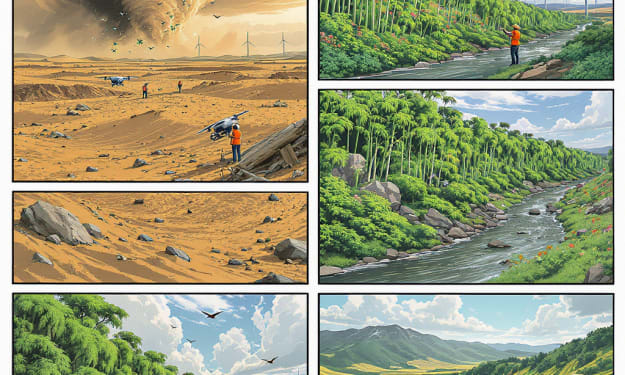
Chinese Planetary Engineering: The Great Green Wall and the Reclamation of Climate
There are junctures in history where a civilization no longer chooses between comfort and progress, but between adaptation and extinction. At the dawn of the new millennium, China hit one of those silent thresholds where geography ceases to be a backdrop and becomes an adversary. The desert was advancing, not as a metaphor for decay, but as a physical, methodical, and relentless force. Sand was devouring the horizon, winds grew heavy with dust, and the soil lost its fertile memory, taking with it the promise of social stability.
By Laurenceau Porte5 days ago in Earth
US Warns Airlines About Military Activity in Parts of Latin America
Commercial aviation is built on predictability—clearly defined airspace, coordinated air traffic control, and shared international rules. When that predictability is disrupted, even subtly, the ripple effects can stretch far beyond the cockpit. That is exactly why a recent warning from the United States has caught the attention of airlines, governments, and travelers alike. In early 2026, US aviation authorities issued an advisory warning airlines about military activity in parts of Latin America, urging pilots to exercise heightened caution when flying over certain regions. While no immediate restrictions or flight bans were imposed, the message itself was clear: something in the skies has changed, and the risks—however limited—can no longer be ignored. This development is not just about aviation safety. It reflects a growing intersection between geopolitics, military operations, and civilian infrastructure in a region that has long balanced cooperation with tension. What Exactly Did the US Warn About? The advisory, released through official aviation safety channels, highlighted concerns over potential military activity affecting airspace across parts of Mexico, Central America, South America, and nearby oceanic regions. Airlines were advised to remain vigilant during all phases of flight, including cruising at high altitudes, takeoff, and landing. Unlike routine notices related to weather systems or airport congestion, this warning explicitly referenced security-related risks. These include the possibility of unexpected military movements, temporary airspace disruptions, and interference with navigation systems that modern aircraft rely on for safe operations. Importantly, the warning did not accuse any specific country of wrongdoing, nor did it suggest an immediate danger to passengers. Instead, it served as a precaution—one designed to ensure airlines adjust flight planning, monitoring, and communication protocols accordingly. Why Military Activity Matters to Civil Aviation To the average traveler, military exercises or operations may seem distant from the experience of flying on a commercial jet. In reality, the two worlds often share the same skies. Civilian aircraft depend heavily on satellite navigation, coordinated air traffic control, and stable airspace rules. Military operations—especially those involving fast-moving aircraft, surveillance systems, or electronic equipment—can introduce uncertainty into that environment. Some of the key risks aviation authorities monitor include: Unplanned military aircraft movements that may not follow civilian flight patterns Temporary airspace closures or restrictions that require last-minute rerouting Navigation signal disruptions, whether accidental or intentional Increased congestion in strategic corridors used by both civilian and military flights While these risks are typically managed through coordination and communication, heightened military activity raises the stakes. The FAA’s advisory suggests that such activity has reached a level where additional caution is warranted. The Geopolitical Context Behind the Warning The timing of the advisory is not accidental. Latin America has seen a noticeable rise in security operations and military coordination involving the United States over the past year. These efforts are largely focused on counter-narcotics missions, maritime security, and regional stability, particularly in areas with strategic shipping routes or ongoing political tension. At the same time, broader global dynamics—ranging from great-power competition to shifting alliances—have increased the strategic importance of air and sea routes across the Western Hemisphere. From Washington’s perspective, issuing an aviation warning is not about alarmism. It is about acknowledging that military and security activities in the region may temporarily affect civilian systems, including aviation. How Airlines Are Responding For airlines, advisories like this are not unusual—but they are taken seriously. Most major carriers already operate with layered safety systems that allow them to respond quickly to changing conditions. In practical terms, this warning may lead to: Slight route adjustments to avoid specific airspace Enhanced pilot briefings before flights Increased coordination with air traffic controllers Closer monitoring of navigation and communication systems So far, there have been no widespread flight cancellations or suspensions linked directly to the warning. That suggests airlines view the risk as manageable, provided proper precautions are followed. Reactions from Latin American Governments Some governments in the region have been quick to reassure the public. Officials have emphasized that their national airspace remains safe and fully operational, and that civilian flights continue without disruption. This response highlights an important tension: while the US warning is precautionary, it can still affect public perception. Tourism, business travel, and investor confidence are all sensitive to suggestions of instability—even when no immediate danger exists. As a result, many countries are walking a careful line between cooperating on aviation safety and defending their reputation for stability. What This Means for Passengers For travelers, the key takeaway is simple: commercial aviation remains safe. Warnings like this are designed to prevent incidents, not predict them. Passengers flying through or over affected regions may experience slightly longer flight times or minor schedule adjustments, but there is no indication of increased danger to civilian aircraft. In fact, the existence of such advisories demonstrates how seriously aviation authorities take even low-probability risks. A Sign of a More Complex World The US warning to airlines is a reminder that modern air travel does not exist in a vacuum. As military operations, security concerns, and geopolitical rivalries evolve, civilian systems—from shipping lanes to flight paths—are increasingly affected. This moment underscores a broader reality: the skies are becoming more crowded, more contested, and more interconnected with global politics. Managing that complexity will require continued transparency, cooperation, and vigilance from governments, regulators, and airlines alike. For now, planes continue to fly, passengers continue to travel, and the system continues to work. But behind the scenes, aviation authorities are quietly adjusting to a world where safety is shaped not just by weather and mechanics—but by geopolitics as well.
By Muhammad Hassan2 days ago in Earth
So You Decided To Become a Nurse Practitioner:
So you decided to become an "Advanced Practice" nurse. Congratulations!... is what I would say if this was a good idea. Grad school? In this economy? What were you thinking? Likely it was something along the lines of either 1) “I've seen these other chucklefucks do it— Why can't I?” or even 2) “I've got a nice career, I should shake it up. I miss feeling like I have no clue what I'm doing.”
By Sandor Szabo2 days ago in Fiction



Comments
There are no comments for this story
Be the first to respond and start the conversation.