
The Bloody Trick: How the Tortoise Beetle Outsmarts Its Predators
A fascinating look at one of nature’s most surprising survival strategies.

Imagine walking through a garden on a sunny morning, spotting a tiny beetle glinting gold or bronze on a leaf. To the average eye, it may seem like just another bug resting in the shade. But this unassuming creature, known as the tortoise beetle, holds a dramatic secret beneath its shimmering shell.
The tortoise beetle, named for its dome-shaped body that resembles a miniature tortoise shell, is not just a master of camouflage. When danger approaches, this small insect has a surprising and rather gruesome defense: it "bleeds."
A Defense Written in Blood
But this isn’t blood as humans understand it. When threatened by predators such as ants or birds, the tortoise beetle secretes a reddish fluid from its leg joints—a behavior known as reflex bleeding. This fluid isn’t just for show; it contains chemical compounds that are either foul-tasting or even toxic to many would-be attackers.
The moment a predator gets a whiff or taste of the liquid, it usually retreats. This chemical cocktail acts as both a deterrent and a warning: "I may be small, but I’m not worth the trouble."
Nature’s Chemistry Lab
Scientists studying this defense mechanism have found that the reflex blood contains cardenolides, a type of toxic steroid also found in certain plants. The presence of these chemicals makes the tortoise beetle distasteful—or in some cases, harmful—to predators. This strategy, while risky, often buys the beetle enough time to escape.
Interestingly, some tortoise beetles obtain these chemicals from the plants they eat, storing the toxins within their bodies for future defense. It’s a clever example of nature recycling its own protection.
Not Just a Pretty Shell
Apart from its biochemical defense, the tortoise beetle is also visually deceptive. Some species can change the color of their shell slightly by controlling microscopic moisture levels underneath it. This creates the illusion of a shiny, metallic appearance—almost like living jewelry. These color shifts confuse predators and make the beetle even harder to spot.
In some species, the elytra (hardened forewings) extend beyond the body like a protective shield, adding an extra layer of defense—both physically and visually. This combination of physical armor and chemical warfare makes the tortoise beetle a surprising warrior in the world of insects.
More Than Just a Bug
Though often overlooked, the tortoise beetle plays its role in the ecosystem like any other small creature—feeding on certain plants and becoming prey to larger animals. But its survival strategies highlight just how resourceful nature can be, even in the tiniest of lives.
Final Thoughts
In the grand theater of the natural world, survival isn't always about strength or size. Sometimes, it’s about strategy—and the tortoise beetle is a quiet master of it. This tiny beetle doesn’t roar or sting; it doesn’t chase or fight. Instead, it leans into illusion, chemistry, and evolution to stand its ground.
It’s a reminder that the most unassuming beings often carry the most incredible stories. And as we go about our day-to-day lives, rushing past gardens or brushing off leaves, we might unknowingly pass by a creature that has survived not by brute force, but by brilliant design.
Nature doesn’t play favorites—it rewards the clever, the adaptive, and sometimes, the ones brave enough to "bleed" to survive.
Hungry for More?
The tortoise beetle might be small, but its world is rich with secrets—and it’s only one of countless creatures that use unexpected methods to survive. Nature is a library of bizarre, beautiful, and brutal adaptations. The deeper you explore, the more you’ll find strategies that challenge how we think life should work.
For instance, did you know there are caterpillars that inflate their bodies to mimic venomous snakes? Or frogs that play dead—limp and lifeless—just to avoid being eaten? What about birds that mimic the calls of predators to keep other birds away from their nests?
These aren’t fantasy stories. They’re real, living examples of how far evolution will go to ensure a species survives.
If you found yourself amazed by the tortoise beetle’s bleeding trick, there’s a whole world of tiny miracles waiting for you—creatures with glow-in-the-dark bodies, insects that turn leaves into armor, and animals that fake injuries to lure predators away from their young.
The best part? Most of them are right under our noses, hiding in gardens, forests, parks, and sometimes even in our own backyards.
So the next time you step outside, look a little closer. What seems ordinary might actually be extraordinary. And maybe—just maybe—you’ll find the next creature that deserves its own story.
Stay curious, keep exploring, and never underestimate the quiet brilliance of the natural world.
About the Creator
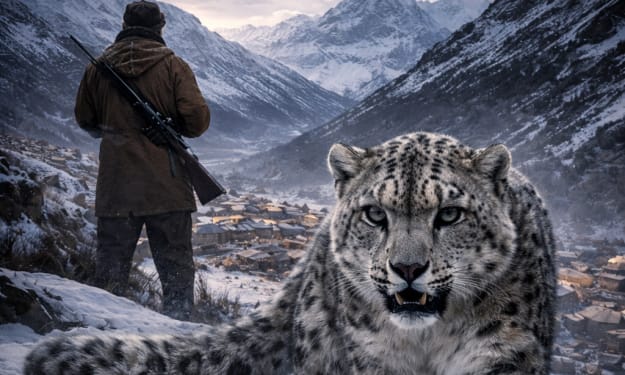
Human Revenge: A Hidden Cause Behind the Decline of Snow Leopards
High in the rugged mountains of Central and South Asia lives one of the world’s most mysterious and beautiful big cats—the snow leopard. Known for its thick grey-white fur, long tail, and incredible ability to blend into rocky landscapes, this elusive predator has fascinated scientists and wildlife lovers for decades. Yet despite its beauty and ecological importance, the snow leopard faces a growing threat: human revenge.
By Irshad Abbasi 5 days ago in Earth



Comments
There are no comments for this story
Be the first to respond and start the conversation.