
The Ferret’s Secret Life: What Most People Don’t Know About These Playful Creatures
Curious, quirky, and surprisingly complex — here’s what truly makes ferrets fascinating.

It all begins with a pair of beady eyes, a twitching nose, and a slinky body that seems made for mischief.
To many, ferrets are just adorable pets — like elongated kittens with a thirst for fun. But under their playful exterior lies a world of surprising biology and lesser-known truths that even some seasoned animal lovers have never heard of.
Let’s dive into the unexpected world of the ferret.
A Fatal Hormonal Fact
Perhaps the most shocking fact about female ferrets is tied to their biology. A female ferret, once she goes into heat, must mate — or else she risks her own life.
This isn’t just a myth.
Unlike most animals, a female ferret’s estrogen levels remain dangerously high throughout her entire heat cycle if she doesn’t breed. This prolonged exposure to estrogen can suppress the production of red and white blood cells, eventually leading to a condition known as aplastic anemia. Left untreated, it can be fatal.
This is why ferrets in captivity are often spayed if they’re not intended for breeding. It's not just a lifestyle choice — it's a medical necessity.
Ferrets Don’t Exist in the Wild
Here's another curveball — the ferret you may have seen in someone’s home doesn’t have a wild cousin running freely in nature.
Ferrets are fully domesticated animals. They are believed to have been domesticated around 2,500 years ago, likely to help control pests in granaries or homes. While their wild relatives include polecats, minks, and weasels, ferrets themselves are not found naturally in the wild.
In fact, if a pet ferret were to escape into the woods, it likely wouldn’t survive very long on its own.
They Sleep… A Lot
Don’t be fooled by their boundless energy during playtime — ferrets are professional nappers. Most ferrets sleep between 14 to 18 hours a day.
It may seem extreme, but that long rest period fuels their sudden bursts of hyperactivity. When they're awake, they’re constantly climbing, hiding things, and scurrying around like tiny adventurers on a mission.
If you've ever owned a ferret, you’ll know they can disappear into furniture or laundry baskets with the skill of a trained spy.
Ferrets Are Masters of Theft
Ask anyone who has spent time around ferrets, and they’ll confirm this: ferrets are thieves.
They have a strange obsession with collecting things and hiding them in secret places. From socks to car keys to shiny jewelry — if a ferret can carry it, it's fair game.
This behavior is deeply rooted in their instinct. In the wild, mustelids (their family) are known for caching food and supplies. Your missing earbuds? Probably in the ferret’s personal stash under the couch.
They Communicate with “Dooking”
Ferrets have a peculiar little sound called a “dook.” It’s a kind of chuckling noise they make when they’re excited, exploring, or in a playful mood. If you hear it, it usually means they’re happy and engaged.
On the flip side, if they hiss — back off. That’s their way of saying, “I need space.”
Some ferrets even learn to wag their tail or puff up like a bottle brush when they’re overly excited or curious. Every ferret seems to have its own quirky communication style.
Their Smell Isn’t What You Think
Ferrets have a reputation for being smelly — and while it’s not entirely wrong, it’s often misunderstood.
They do have scent glands, and they do produce a musky odor. But most of that smell comes from their skin oils, not just their glands. Even ferrets that have been “descented” (a controversial procedure) still carry their unique scent.
Regular bathing can actually make it worse by drying out their skin and causing it to overproduce oils. Instead, keeping their bedding clean and brushing them often is a more effective way to manage their smell.
Ferrets Have Incredible Flexibility
That long body isn’t just for show — ferrets are incredibly flexible. Their spine allows them to twist, turn, and fit into spaces you wouldn’t believe were possible.
This is why ferret-proofing a home is a serious challenge. If their head fits through a gap, their body usually can too. Many ferret parents have had to rescue their curious companions from tight corners, cabinet backs, and once in a while, inside sofas.
Final Thought: There’s More Than Meets the Eye
Ferrets are proof that the most unassuming creatures often hide the wildest truths. They’re not just pets — they’re ancient companions with fascinating biology, peculiar behaviors, and personalities that can light up a room.
They teach us curiosity, joy, and the art of living fully in short bursts. Behind every twitch of the nose and playful pounce is a little creature with a history that dates back millennia and a biology that’s unlike anything else.
Hungry for More?
Animal facts can be strange, surprising, and even a little unbelievable — but that’s the beauty of nature. If this journey into the world of ferrets piqued your interest, just wait till you learn what other creatures are hiding. Stay curious, and remember: the world is full of stories, even in the smallest beings.
About the Creator
Homeowners Don’t Want to Move: The Big Deal About Shrinking Backyards
In neighborhoods across the country, a subtle but growing trend is taking root: homeowners aren’t moving, and it’s not just because of the housing market. Many are staying put because their backyards—once spaces for relaxation, gardening, and family fun—are shrinking, either physically due to new development or symbolically as life priorities shift. What may seem like a minor detail—an ordinary backyard—is, for many, a defining feature of home life. Losing it can change how people live, play, and even feel about their communities. This shift has consequences for families, urban planning, and even the way cities are designed. It also sheds light on why homeowners are willing to compromise on size, style, or even location rather than give up their outdoor space. Why Backyards Matter More Than Ever Backyards are more than just patches of grass. They are extensions of our living space, providing: Personal outdoor retreats for reading, gardening, or hosting friends. Safe spaces for children and pets to play. Social hubs for barbecues, birthdays, and neighborhood gatherings. Mental and physical health benefits, including fresh air, sunlight, and exercise. For families who have invested years into landscaping, planting trees, or building decks and patios, the backyard is an emotional asset. Moving to a new home often means losing these personal touches—and many homeowners aren’t willing to take that step. “Backyards are part of our identity,” says Laura Jennings, a landscape designer in suburban Chicago. “People have memories tied to them—first steps, garden harvests, family barbecues. That’s why so many homeowners are staying put, even if it’s tempting to relocate for a bigger house or a better neighborhood.” The Trend of Shrinking Yards Urban densification and suburban development have slowly eaten into traditional backyard space. In many cities, large lots are being replaced with townhomes, duplexes, or small-lot single-family homes. Even in suburban neighborhoods, new constructions often prioritize indoor square footage over outdoor space. The shrinking backyard trend has several effects: Less room for recreation: Families may struggle to fit a swing set, pool, or garden into a smaller yard. Increased desire to stay put: Homeowners prefer maintaining a familiar outdoor space rather than trading it for a slightly larger indoor area. Higher emotional attachment: As yards become more limited, the significance of every tree, patch of grass, or vegetable garden grows. For many, the choice isn’t just about square footage—it’s about quality of life. Homeowners Are Making Trade-Offs As a result, more homeowners are staying in place longer, even if it means: Skipping a bigger kitchen or extra bedroom. Living in a less “trendy” neighborhood. Paying more in maintenance or property taxes to keep a cherished yard intact. Some have embraced innovative backyard solutions to maximize smaller spaces: Vertical gardens and container planting. Multi-functional patios that serve as dining, lounging, and play areas. Creative landscaping, including raised beds, pergolas, and tiny ponds. These adaptations allow homeowners to maintain the sense of space and enjoyment they’ve built over years without relocating. Emotional and Social Dimensions Beyond practical reasons, the backyard has a symbolic meaning. It represents: Continuity and stability: Homeowners see staying put as preserving a lifestyle. Family history: Many yards hold stories—graduations, summer afternoons, first bike rides. Community connection: Long-term residents know neighbors, local schools, and nearby amenities. Moving often means giving up these ties. A survey by the National Association of Home Builders found that over 60% of homeowners aged 35–55 preferred staying in their current homes, citing yard size and outdoor enjoyment as key factors. For these individuals, giving up a backyard is not a small inconvenience—it’s a major life decision. The Impact on Neighborhoods and Cities The trend of staying put also affects broader urban and suburban planning. Fewer homeowners moving means: Less turnover in neighborhoods, which can reduce housing market fluidity. Pressure on developers to include quality outdoor space in new builds. Greater demand for parks and community green spaces, as private yards shrink. Urban planners and developers are noticing the importance of outdoor space in retention and satisfaction metrics. Homes with usable yards, green roofs, or communal gardens often have higher value and attract long-term residents. The Future of Backyard Living As city lots shrink and suburban sprawl continues, homeowners are adapting: Smaller, highly curated gardens instead of sprawling lawns. Multi-functional backyards designed for work, play, and entertainment. Investment in outdoor amenities such as fire pits, decks, or small pools. Some communities are exploring shared backyard concepts, like community gardens and pocket parks, to supplement shrinking private spaces. While these aren’t a complete replacement for personal yards, they provide social and environmental benefits and may encourage homeowners to stay in their homes longer. Conclusion: More Than Grass and Trees Shrinking backyards might seem like a minor design issue, but for homeowners, it’s deeply tied to lifestyle, family life, and personal identity. The reluctance to move is not just a reaction to the housing market; it reflects an emotional, social, and practical connection to outdoor space that indoor square footage alone can’t replace. As urban density grows and lot sizes shrink, the importance of backyards will continue to shape homeowner decisions, neighborhood design, and community dynamics. Families are showing that a yard is not just grass and trees—it’s a place of memory, freedom, and connection. In a world where real estate trends often prioritize indoor luxury, the backyard remains a powerful symbol of home, anchoring families to the places they love—and keeping many from moving at all
By Muhammad Hassana day ago in Earth
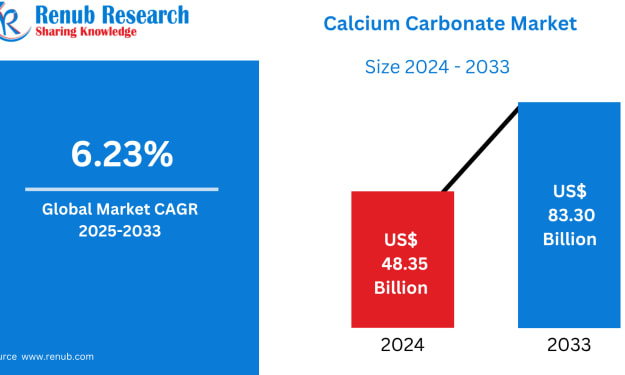
Global Calcium Carbonate Market Size & Forecast 2025–2033
Introduction: A Quiet Giant of Global Industry Calcium carbonate may not be a headline-grabbing material, but it is one of the most indispensable compounds in modern industrial life. Found naturally in limestone, marble, and chalk, this humble mineral underpins everything from the buildings we live in to the paper we write on and the plastics we use every day. Its low cost, wide availability, and remarkable versatility have made it a cornerstone raw material across multiple industries worldwide.
By jaiklin Fanandishabout 23 hours ago in Earth



Comments
There are no comments for this story
Be the first to respond and start the conversation.