
The Birth of a New Ocean: Africa's Geological Transformation and Its Implications
As tectonic forces reshape the continent, what does the future hold for Africa and its ecosystems?
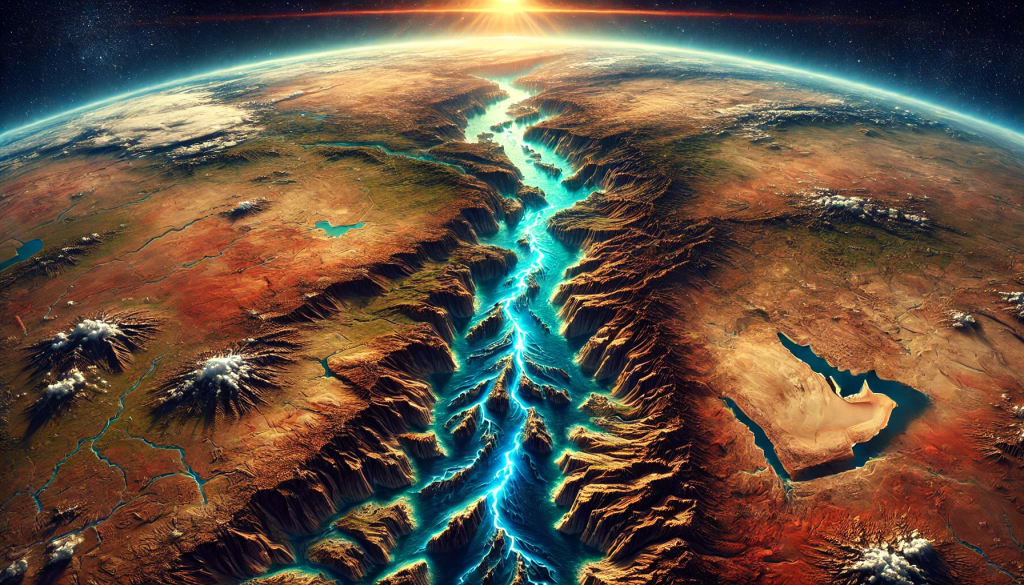
The African continent is on the brink of a monumental transformation, driven by the dynamic forces of tectonic activity. The East African Rift System, a vast network of geological faults stretching from Mozambique to the Red Sea, is undergoing rapid changes that could lead to the formation of a new ocean. This article delves into the implications of this geological upheaval, exploring both the scientific significance and the potential socio-economic impacts on the region.
Understanding the East African Rift System
The East African Rift is one of the most fascinating geological features on Earth. It represents a divergent boundary where the African and Somali tectonic plates are slowly drifting apart at an estimated rate of 0.8 centimeters per year. This movement is not merely a slow geological process; recent studies suggest that it is accelerating, potentially allowing for significant changes within a timeframe of just one million years—or even sooner.
Geoscientist Cynthia Ebinger from Tulane University highlights this urgency, stating that “we’ve reduced the timeframe to about 1 million years, possibly even half that.” Such rapid changes challenge our understanding of geological timescales and emphasize the need for ongoing research in this area.
The Mechanisms Behind Ocean Formation
The ongoing rifting process in East Africa is comparable to historical events that led to the creation of other oceans, such as the Atlantic Ocean. This unique geological setting allows scientists to witness firsthand how continental crust transitions into oceanic crust. The implications are profound: as tectonic forces continue to shape the landscape, they also create opportunities for scientific exploration and discovery.
In 2005, a significant seismic event in Ethiopia underscored the volatility of this region. Over 420 earthquakes occurred in rapid succession, resulting in a large fissure in the Afar region. This event demonstrated how quickly geological processes can unfold, challenging long-held assumptions about how tectonic activity operates over time.
Potential Impacts on Africa's Geography
The formation of a new ocean has far-reaching implications for Africa's geography. Countries like Zambia and Uganda, currently landlocked, may find themselves with new coastlines as rifting progresses. This shift could reshape not only their physical geography but also their economic landscapes.
Geographical Changes
- New Coastlines: Landlocked nations may gain access to marine resources and trade routes.
- Altered Landscapes: The splitting of land could create new habitats and ecosystems.
Economic Implications
- Trade Opportunities: Newly formed coastlines may facilitate trade and tourism.
- Resource Access: Coastal nations could exploit marine resources previously inaccessible.
Ecosystem Shifts
- Marine Habitats: The emergence of new ocean basins will create diverse marine environments.
- Biodiversity Changes: Alterations in habitat could lead to shifts in local biodiversity.
Infrastructural Challenges
- Land Management: Countries will need to adapt their land management practices to accommodate new geographical realities.
- Coastal Infrastructure: Investment will be necessary to develop infrastructure along new coastlines.
A Different Perspective: Environmental Concerns
While the formation of a new ocean presents exciting opportunities, it also raises significant environmental concerns. The rapid geological changes could disrupt existing ecosystems and threaten biodiversity in ways that are not yet fully understood. Additionally, increased human activity associated with new trade routes and resource exploitation could exacerbate these challenges.
Environmentalists warn that without careful planning and sustainable practices, countries may face ecological degradation as they rush to capitalize on newfound resources. The potential for oil spills, overfishing, and habitat destruction looms large if proper safeguards are not implemented from the outset.
Innovative Research Approaches
To navigate these complexities, researchers are calling for innovative approaches to studying tectonic activity and its consequences. As scientists refine models of plate movement and seismic activity, they aim to better predict future changes and their impacts on both natural systems and human communities.
Ebinger emphasizes that “the new ocean forming in East Africa serves as a powerful reminder of Earth’s ever-changing nature.” By fostering interdisciplinary collaboration among geologists, ecologists, and policymakers, researchers can develop comprehensive strategies that balance economic growth with environmental sustainability.
Conclusion: Embracing Change
The emergence of a new ocean in East Africa is not merely a geological curiosity; it represents a pivotal moment in our understanding of Earth's dynamic processes. As tectonic forces reshape the continent's landscape, they also offer opportunities for economic development and scientific discovery.
However, this transformation comes with responsibilities. It is crucial for nations affected by these changes to approach them with foresight and care. By prioritizing sustainable practices and environmental protection alongside economic growth, Africa can navigate this monumental shift while preserving its rich natural heritage for future generations.
As we stand on the brink of this unprecedented geological event, one thing is clear: Africa's landscape is evolving rapidly, and how we respond will determine not only the continent's future but also our relationship with our planet as a whole.
About the Creator
mayta emily
Hi! I'm a curious explorer of science, earth, politics, and fiction. I delve into scientific discoveries, complex ecosystems, and political dynamics, while also weaving speculative tales that challenge perspectives and spark imagination.
Keep reading
More stories from mayta emily and writers in Earth and other communities.
The Rare Black Moon: A Celestial Phenomenon Worth Observing
In the realm of astronomy, celestial events often capture our imagination and spark curiosity. Among these events, the occurrence of a "black moon" stands out as a rare phenomenon that not many people are familiar with. While many have heard of a "blue moon," which refers to two full moons in a single calendar month, the black moon is defined as the second new moon occurring within the same month. This article delves into the significance of black moons, their rarity, and what they mean for both casual stargazers and serious astronomers alike.
By mayta emilyabout a year ago in Earth
Chameleon: Nature’s Master of Disguise
Few creatures in the animal kingdom capture the imagination quite like the chameleon. Known for its ability to change color, its slow, deliberate movements, and its incredible eyes that move independently, the chameleon is one of nature’s most extraordinary reptiles. These small but remarkable creatures have inspired scientists, photographers, and animal lovers for centuries.
By Aarif Lashari6 days ago in Earth
World Spends $30 Destroying Nature for Every $1 Spent Protecting It
The world is at a crossroads when it comes to environmental protection. A shocking new analysis reveals that for every $1 spent protecting nature, humanity spends roughly $30 destroying it. This staggering imbalance underscores a harsh reality: economic development, industrial growth, and resource exploitation continue to take precedence over the planet’s ecological health.
By Muhammad Hassanabout 17 hours ago in Earth




Comments
There are no comments for this story
Be the first to respond and start the conversation.