
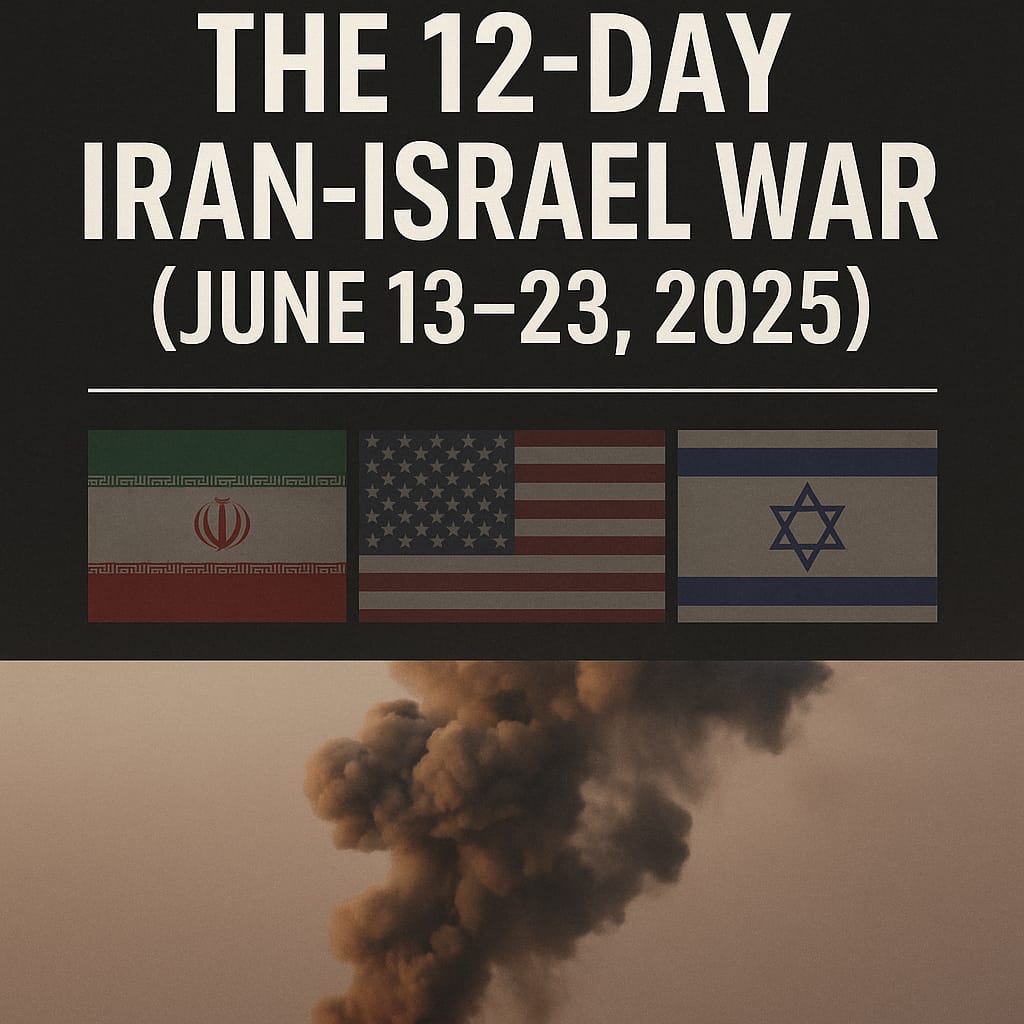
The 12 days iran israel war and america role.
Unraveling U.S influencer in the middle east most dangerous conflict.

1. Outbreak & Escalation
June 13: Israel launched preemptive airstrikes on Iranian nuclear and military sites, including key figures like nuclear scientists and IRGC commanders .
Iran retaliated with approximately 400 ballistic missiles and 1,000 drones aimed at Israel, killing 28 people on the Israeli side and injuring hundreds .
2. U.S. Intervention
June 21–22: The United States entered the fray with "Operation Midnight Hammer," deploying B‑2 bombers and Tomahawk missiles to hit three critical Iranian nuclear facilities (Fordow, Natanz, Isfahan) .
President Trump described the strikes as "completely and totally obliterated," though U.S. intelligence later assessed the setback was limited to a few months .
3. Iran’s Counterstrike
June 23: Iran launched "Operation Glad Tidings of Victory," targeting Al Udeid Air Base in Qatar (a major U.S. and coalition hub) with missiles—most were intercepted, with no casualties reported .
Supreme Leader Ayatollah Khamenei claimed it was a “heavy slap to the U.S.” and threatened further action against American bases if provoked .
4. Ceasefire & Aftermath
Ceasefire took effect on June 23, brokered by President Trump and Qatar. Both Iran and Israel claimed they achieved their respective objectives .
Casualties: ~627 killed in Iran (including scientists and commanders); ~28 killed in Israel .
The IAEA warned Iran could resume uranium enrichment soon, raising worries about renewed nuclear escalation .
Human rights groups raised alarms after Israel struck Evin Prison in Tehran on June 23, killing 71 prisoners and intensifying domestic repression .
5. Political & Regional Impact
U.S.–Israel ties strengthened: The White House praised the strikes and diplomatic coordination under Trump .
In Congress and among Republicans, debate surged between hawkish interventionists and isolationist populists .
Gulf states remain anxious: Iran’s capabilities persist, and many fear a regional appetite for nuclear arms is re-triggered .
🇺🇸 America’s Role in Focus
Role Summary
Military Ally The U.S. took active combat role for the first time, bombing Iran's nuclear sites alongside Israel.
Ceasefire Broker Trump, with Qatari mediation, negotiated the June 23 ceasefire, pushing both sides to stand down.
Geopolitical Signal The engagement was a strong demonstration of U.S. commitment to Israel—but it stirred domestic debate and regional tension.
Nuclear Check U.S. intervention aimed to delay Iran’s nuclear timeline, though assessments say only temporarily successful.
In essence, the recent conflict marked a historic moment—America went beyond diplomatic support and directly entered military action. However, questions remain:
Diplomacy vs. Warfare: Will this military surge strengthen long-term stability?
Nuclear Concerns: With Iran able to resume enrichment soon, where does non-proliferation go next?
Regional Fallout: Gulf nations are watching closely, rethinking their own security and diplomatic paths.
Could the Iran-Israel Conflict Restart?
The tension between Iran and Israel has been ongoing for decades, fueled by political, religious, and regional rivalries. While there has been no full-scale war recently, skirmishes, cyber attacks, and proxy conflicts have continued beneath the surface. The possibility of the Iran-Israel conflict restarting in a more direct and violent way remains a significant concern for global security.
Several factors could trigger a renewed conflict. Iran’s nuclear program is a major point of contention, as Israel views a nuclear-armed Iran as an existential threat. Additionally, Iran’s support for groups like Hezbollah in Lebanon and Palestinian militants increases tensions. On the other hand, Israel’s military operations against Iranian targets in Syria and elsewhere heighten the risk of retaliation.
Diplomatic efforts and international pressure aim to prevent escalation, but mistrust runs deep on both sides. Changes in regional alliances, political shifts in the US or Middle Eastern countries, or an unexpected incident could spark open hostilities.
In summary, while no one wants a full-scale war, the unresolved disputes and ongoing proxy battles mean the Iran-Israel conflict could reignite. The international community watches closely, hoping diplomacy will prevail over violence.
About the Creator
USA daily update
News, Politics, Technology Updates
Keep reading
More stories from USA daily update and writers in Earth and other communities.
Magnetic Magma earth
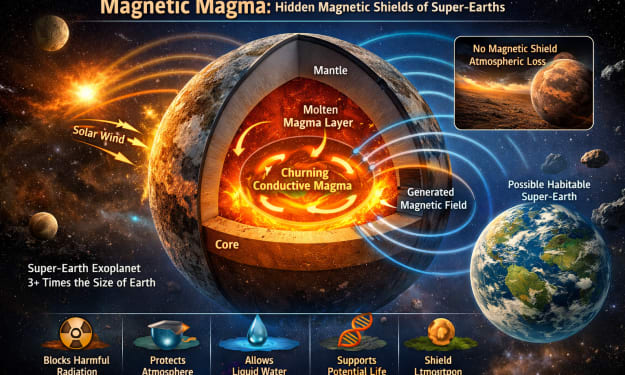
Super-Earths are rocky exoplanets more than three times the size of our planet, with far greater internal pressures and temperatures. For years, scientists assumed that if these worlds had magnetic fields, they would form the same way Earth’s does — through movement in a molten iron core. However, new laboratory experiments suggest something very different may be happening deep inside these massive planets. Under extreme pressure, certain molten rocks become electrically conductive. When these materials churn and circulate between the core and the mantle, they can generate magnetic fields on their own. This means a super-Earth might not rely solely on its core for protection. Instead, a thick, dynamic layer of magma could act as a natural magnetic shield, powered by internal heat and motion.
By USA daily update 2 months ago in Earth
Astronomers Capture Rare Evidence of Two Planets Colliding
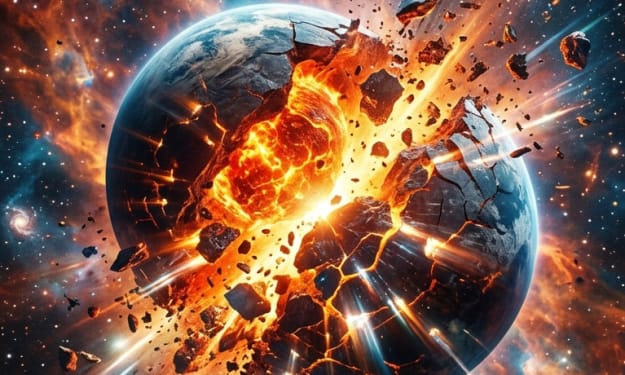
Astronomers have gathered rare and compelling evidence suggesting that two planets collided in a distant star system, producing a dramatic cosmic event that has fascinated scientists around the world. Planetary collisions are believed to have played a major role in shaping many solar systems, including our own, but witnessing the aftermath of such a violent event is extremely rare. The new discovery offers valuable clues about how planets grow, change, and sometimes destroy each other during the chaotic early stages of planetary formation.
By Irshad Abbasi 4 days ago in Earth
A Transparent Look at Vocal Challenges and Top Stories
Almost three years ago, we shared a resource article that served as a place for people to suggest new challenge prompts. We thought it would be a good idea to refresh that thread, and take the opportunity to answer a few common questions about top stories, how challenges are judged and how submissions are reviewed.
By Vocal Curation Team4 days ago in Resources


Comments
There are no comments for this story
Be the first to respond and start the conversation.