
The 10 most active volcanoes on Earth — do they pose a threat?
Where in the world are there active volcanoes and do they really pose a real threat? Let’s find out.

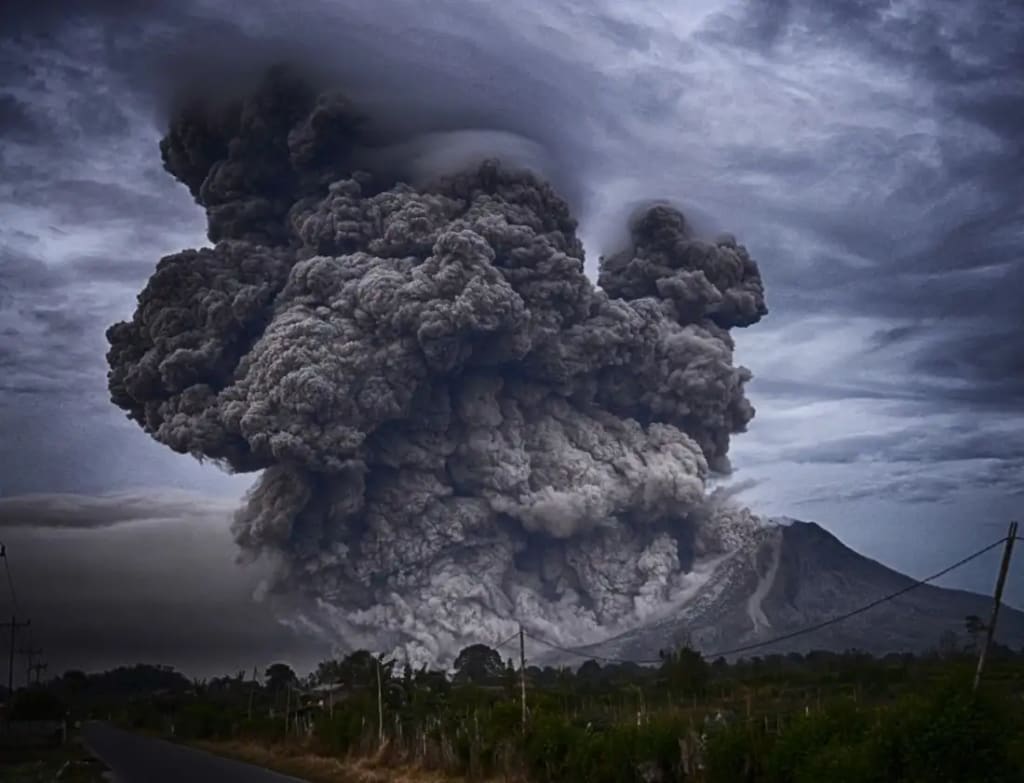
The world’s active volcanoes are the biggest attraction in the places where they occur. Majestic cones, massive shields, and huge calderas create an eerie landscape around which there is an unsettling aura. Ominous smoke constantly rises from many of the peaks, seeming to communicate impending disaster. This makes it difficult to get rid of the feeling of anxiety, intertwined with the thrill of excitement, when admiring the power of volcanoes. Is there really anything to be afraid of?
Active volcanoes have two faces. On the one hand, they should be considered as one of the most delightful natural phenomena, while on the other — as one of the most frightening. They are scattered all over the world, and more and more of them manifest their activity with dangerous phenomena. Some of them have not made their presence known for thousands of years, which means that this may soon change.
How many active volcanoes are there in the world? It is estimated that their number exceeds 800. Most are located in the Pacific Ring of Fire, but many occur outside this area as well.
Popocatepetl
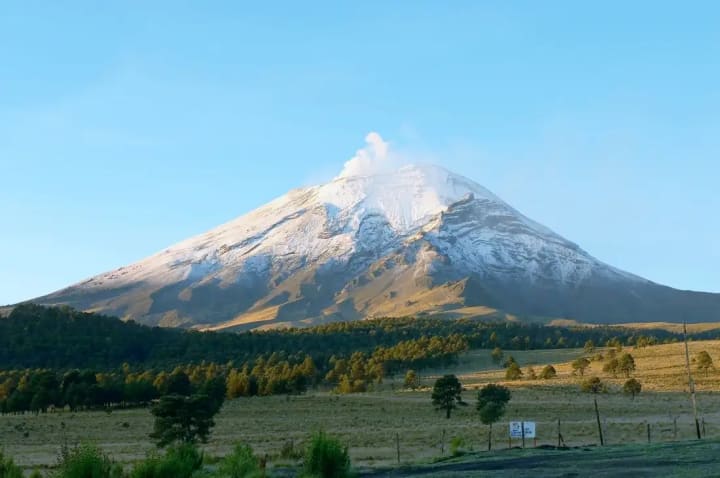
We begin with a volcano located in the Mexican Highlands, in the Volcanic Cordillera. Popocatepetl means “smoking mountain” in the Aztec language. After the dormant Pico do Orizaba volcano, it is the second highest peak in Mexico, reaching 5452 meters above sea level.
The first recorded eruption of this colossus took place in 1347. Since then, the volcano has erupted 20 times. The last eruption took place in 2007.
Volcán de Fuego
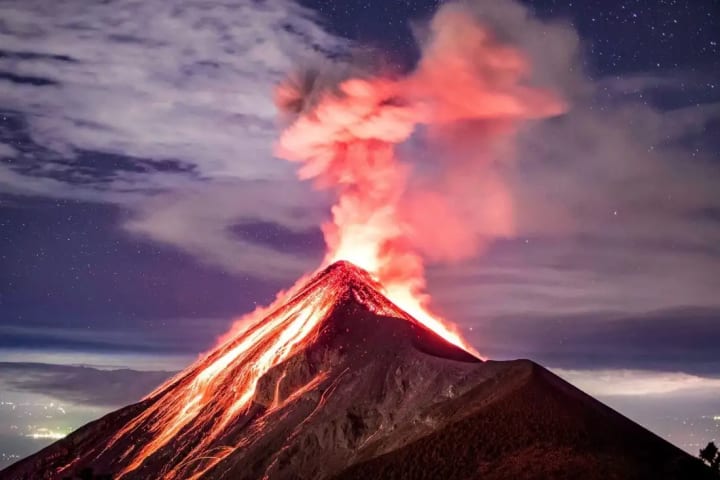
Next on the list is the most active volcano in Central America. Volcán de Fuego is located in the southern part of Guatemala (in the Sierra Madre mountain range), where together with the nearby Acatenango volcano it forms the La Horqueta complex.
Since 1524, Fuego has erupted 59 times. In 1773, there was an eruption that triggered a strong earthquake. Following this disaster, the town of Antigua Guatemala was completely destroyed. The last major explosion of the volcano is dated to 1979. Since 2017, Fuego’s activity has gradually increased.
Pavlov Volcano
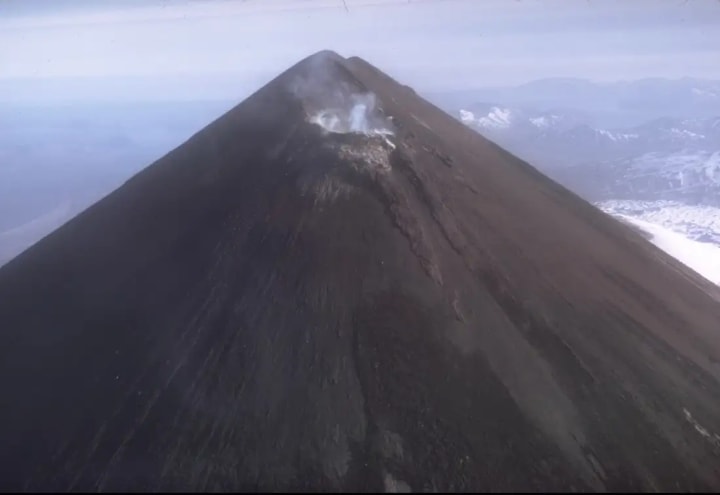
Back to North America. In the state of Alaska, in the Aleutian Mountains, lies one of the most active volcanoes on the continent. It is the 2714 m high Pavlov Volcano. Since 1790 there have been 40 eruptions. The last one took place in 1997.
Mauna Loa
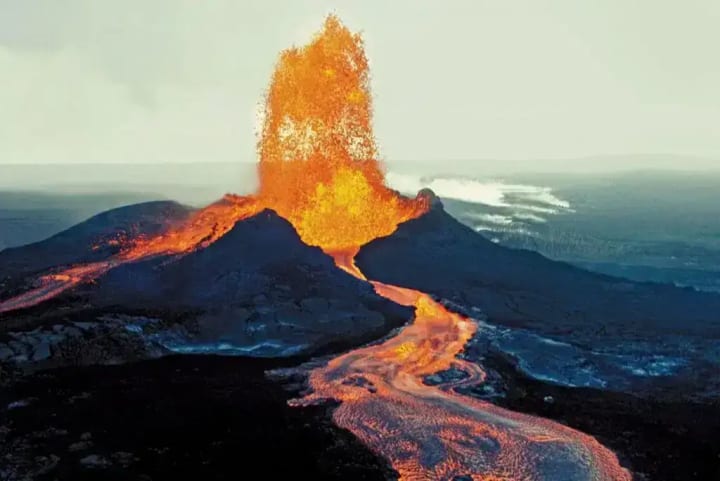
From Alaska we move to Hawaii. Reaching 4170 m above sea level, Mauna Loa is the highest active shield volcano in the world and at the same time — the largest active volcano on Earth.
The underwater part of the colossus located on the island of Hawai’i is 4975 m, which gives it a total height of 9145 m. It is also one of the world’s most active volcanoes. It has erupted 40 times since 1750. The last eruption was recorded in 1995.
Yellowstone caldera
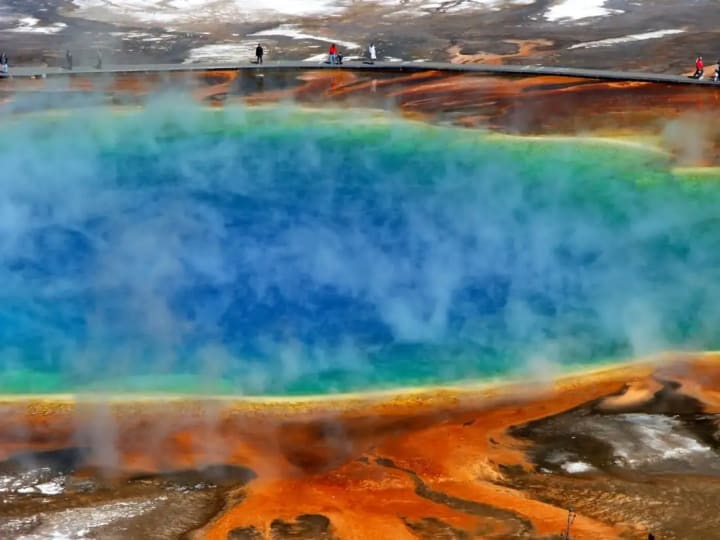
Mentioning active volcanoes of the world, we cannot omit the most famous one. The caldera located in Yellowstone National Park (USA, Wyoming) has dimensions of 55x80 km.
It is one of the most active supervolcanoes. So far, it has erupted three times — 2.1 million, 1.3 million and 640,000 years ago. Each of these explosions reached the 8th (highest) degree on the VEI scale.
Cotopaxi
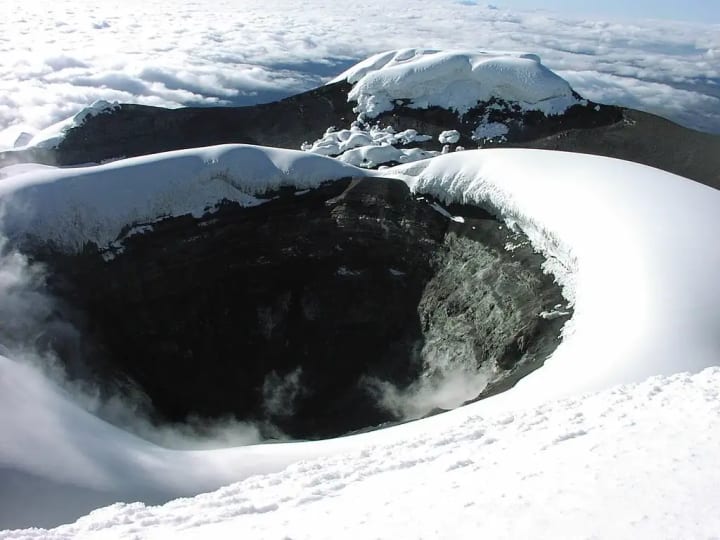
We move to the South American continent. In Ecuador, in the Cordillera Central range in the Andes, this beast is really tall, one of the tallest in the world — reaching 5897 m above sea level — and is called Cotopaxi.
The crater of this giant itself has a diameter of 700 m from west to east and 500 m from north to south. Its depth exceeds 360 m. The strongest eruption of the great volcano took place in 1532. As a result of this disaster, the city of Tacunga was completely destroyed. The last significant eruption was recorded in 2015.
Llullaillaco
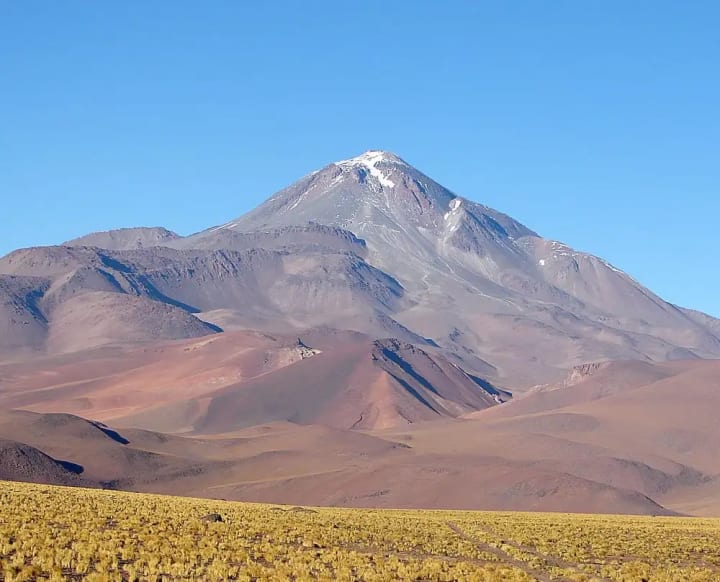
It’s time for the highest active volcano on Earth. Lying on the border between Chile and Argentina, Llullaillaco reaches as high as 6739 meters above sea level. Above 6000 meters above sea level is the perpetual snow boundary, the highest in the entire world. To date, the volcano has erupted three times — in 1854, 1868 and 1877.
El Misti
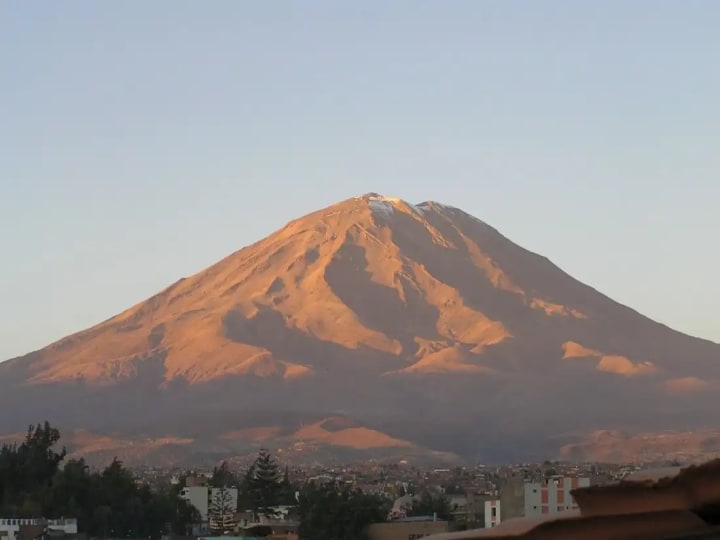
Another interesting volcano that is still active lies in Peru, in the Western Cordillera of the Central Andes. El Misti, located near the city of Arequipa, reaches an altitude of 5825 meters above sea level. Since 1434, 11 eruptions of this volcano have been recorded. The last one took place in 1878.
Etna
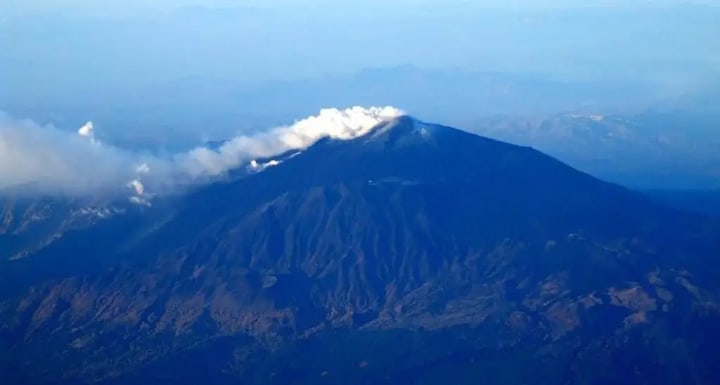
Time for active volcanoes in Europe. The highest and largest is Etna, located in Sicily. One of the most active volcanoes in the world reaches 3357 m above sea level, but as a result of frequent eruptions this value is constantly changing.
The first eruption of Mount Etna took place in 6190 BC. Since then, the volcano has erupted more than 200 times. In 2021, there was a significant increase in its activity.
Hekla
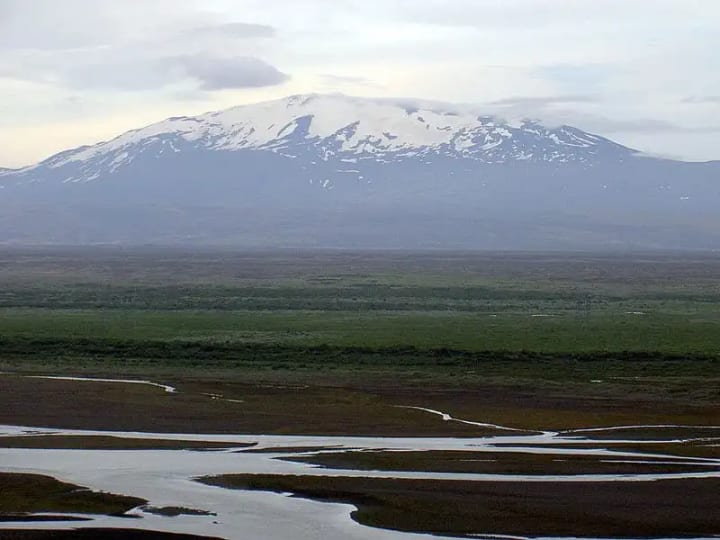
From the Apennine Peninsula, we move to Iceland. Reaching 1491 m above sea level. Hekla is located about 115 km from Reykjavík. It is the highest active volcano on the island and by the way — one of the most active.
The powerful stratovolcano has erupted many times in prehistoric and historical times. The last major eruption was recorded in 2000.
Do active volcanoes pose a threat?
Media reports of more eruptions of active volcanoes are becoming more frequent. We saw the consequences of such phenomena in 2010, when the Eyjafjallajökull volcano located in Iceland erupted (or rather — a series of eruptions). At that time, the volcanic ash cloud ejected into the atmosphere significantly disrupted air traffic in a large area of European airspace.
The eruptions of smaller volcanoes can lead not only to the disruption of aviation, but also communication and trade, which in the current economic reality can have serious consequences. In addition, earthquakes, mudslides and tsunamis can occur in favorable areas. All of these will affect disruptions in the area of sea lanes, pipeline installations and power generation. As a result, disruptions could affect global financial systems and the global supply chain.
About the Creator
Major Scientific Milestones of 2017
The year 2017 was an extraordinary period for scientific progress. Researchers across the world achieved remarkable breakthroughs in space exploration, medicine, technology, and environmental science. These discoveries not only expanded human knowledge but also opened new possibilities for the future. From observing gravitational waves to advances in gene editing and artificial intelligence, 2017 demonstrated the powerful role science plays in shaping modern society.
By Irshad Abbasi 6 days ago in Earth
TUS NUA - ch 53
TUS NUA – ch 53 New Beginnings – Mia and Midnight (*)(*)(*) Finola knew Ali’s brother-in-law needed to put his mind at rest. She fed her arm through his and led him outside. “We’ll sit here. If you like, I can put a block around us so our conversation will be private.”
By Margaret Brennan5 days ago in Fiction


Comments
There are no comments for this story
Be the first to respond and start the conversation.