
5 known super volcanoes — how did they form?
How are super volcanoes formed? Where are they located? These and other questions are answered below.

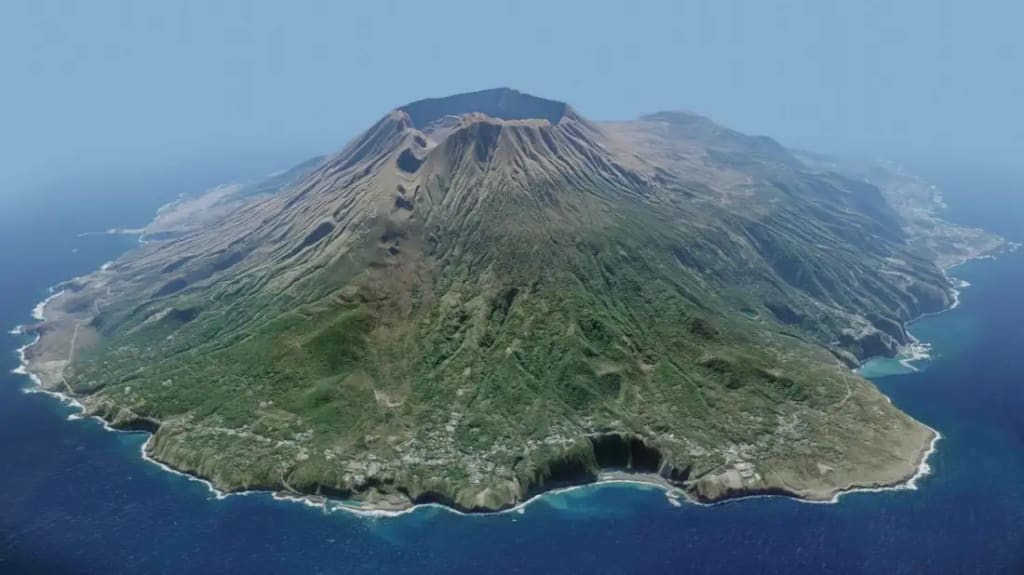
Scientists believe that the super volcano is the greatest threat to humanity. Geological studies confirm the destructive power of the eruption of such an entity, the consequence of which is global climate change. There is no doubt that a powerful eruption could threaten a significant portion of the population and even contribute to the end of the era of human dominion, perhaps to the annihilation of life on our planet.
Thinking man appeared on Earth roughly 190,000 years ago. This means that our species has already encountered several supervolcano eruptions. The last known eruption to science involved the Taupo super volcano 26,500 years ago (New Zealand). On average, supervolcanoes erupt every 50–100 thousand years.
Can we expect an increase in the activity of any of them in the near future? Scientific research shows that this is already happening. Increased geologic activity has been noted within Yellowstone National Park for some time, but the accompanying phenomena should be considered normal and typical.
More disturbing is the fact that the most powerful of all super volcanoes last woke up from sleep 640,000 years ago. This allows us to assume that another eruption will occur soon. It should be clearly emphasized that the word “soon” was used here in the context of the history of the earth, not mankind.
What does this mean in practice? Yellowstone may flood the Earth with lava and obscure the sky with ash in a few thousand years.
What are supervolcanoes?
What exactly are destructive supervolcanoes and why are they so very dangerous? To be able to explain this, we must first answer the key question — how does a volcano form?
When rocks in the lithosphere liquefy, magma is formed and moves upward. A kind of reservoir is formed in the fissures of the rocks, accumulating liquid material. Magma usually solidifies, changing its state of aggregation to solid. Sometimes, however, it remains in a liquid state, thus forming a magma focus. These processes are referred to as plutonism.
In places where the Earth’s crust is quite thin, the crust may break. As a result, volcanic products rise to the surface, forming a volcano. We are talking about volcanism, or phenomena occurring on the surface of the Earth.
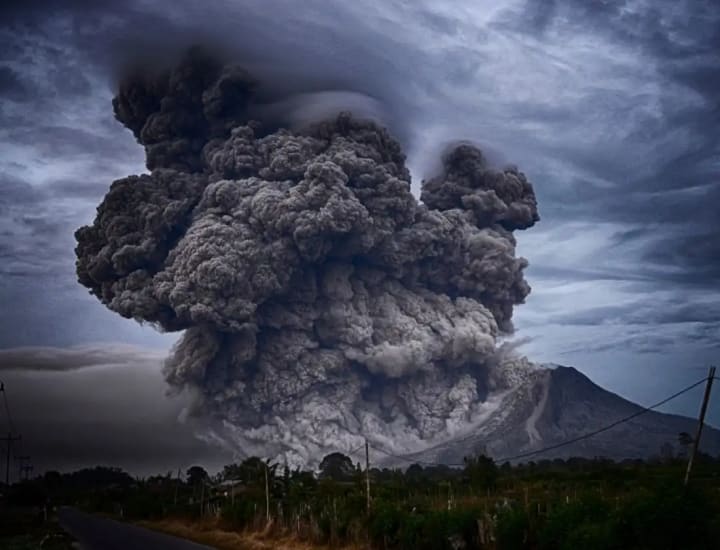
On our planet there are places where huge deposits of magma accumulate, thousands of times larger than other magma foci. By super volcano we mean a volcano that was formed as a result of a massive explosion of magma accumulated in a huge reservoir, the volume of which can reach several thousand cubic kilometers. Such an eruption leaves behind a trace in the form of a giant caldera (its average diameter is several dozen kilometers).
While the classification grouping such places by shape takes into account different types of volcanoes, supervolcanoes have a flat form. Where they occur, specific geothermal phenomena can be observed, such as geysers, solfatars or fumaroles.
Why are super volcanoes presented as the greatest threat to humanity? This is because a powerful eruption can spew more than a thousand cubic kilometers of magma and pyroclastic materials to the surface. An eruption of a supervolcano usually reaches the highest level of VEI 8 on the Volcanic Explosivity Index scale.
Unimaginable destruction occurs within a radius of hundreds or even thousands of kilometers. The enormous amount of sulfur oxides that enter the atmosphere during the explosion form a layer that reflects the sun’s rays, the result of which could be global climate change. We are talking about the onset of an ice age.
About 20 supervolcanoes have been discovered so far, but there is no doubt that there are many more. The most famous ones are listed below.
Yellowstone caldera
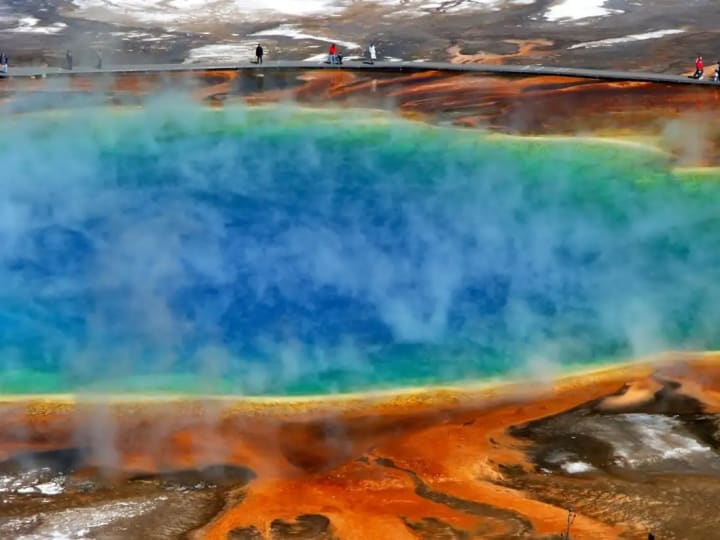
We start with the most famous of all super volcanoes. Yellowstone caldera is located in the USA, in the state of Wyoming. It is a remnant of three gigantic explosions that took place 2.1 million, 1.3 million and 640,000 years ago. During the last eruption, more than a thousand cubic kilometers of pyroclastic material leaked into the atmosphere.
Following this event, the volcanic chamber beneath Yellowstone National Park collapsed, forming a giant caldera. Its size is 55x80 km.
Yellowstone is a real giant, but it is not the largest volcano in the world. Nevertheless, its activity causes great concern. Scientists are of the opinion that a powerful eruption may lead to the destruction of a large area of the United States, but the effects of the eruption of this super volcano will not be limited only to the US territory. A huge cloud of volcanic ash will obscure the sun, which will lead to a spike in climate cooling. The consequence may be another glaciation.
Super volcano Taupo
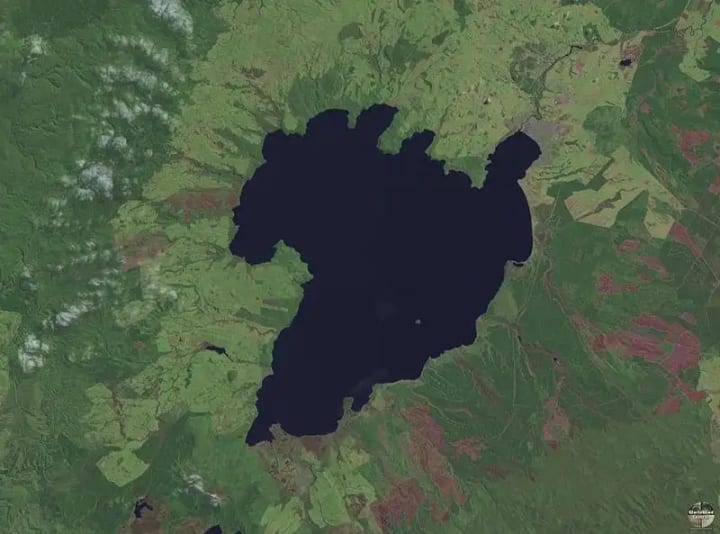
From the USA we move to New Zealand. In the center of the North Island is Taupo, the largest non-desiccating lake in Oceania. Its beauty, however, turns out to be illusory, as under the bottom of the huge body of water (616 sq km) lies a dormant colossus. The last eruption of Taupo super volcano took place 26.5 thousand years ago. On the VEI scale, it reached level 8 (the highest).
At that time, 1170 cubic kilometers of pyroclastic material was released into the atmosphere. In the aftermath of the eruption, a volcanic chamber collapsed and a huge caldera formed. The eruption ushered in a period known as the glacial maximum, during which the already icy climate cooled.
Toba Supervolcano
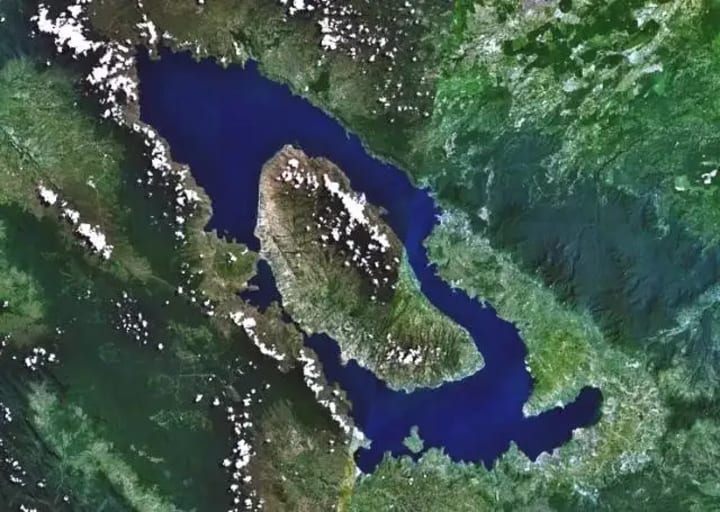
Another super volcano is located in Indonesia, in Sumatra. The Toba volcano last erupted 75,000 years ago. Scientists believe that the aftermath of this catastrophe was a global volcanic winter that could last up to 10 years. It was followed by a 1,000-year cooling of the climate. In the aftermath of the eruption, a 100x30 km caldera was formed, which is filled with water today.
Noteworthy, the volcano’s activity has been indicating a slow awakening for some time now. In 2013, geologists found an increase in the filling of the magma chamber. In 2016, millions of dead fish floated on the surface of the lake and the water became murky. This followed an increase in bottom temperature. In June 2021, a magnitude 5.0 tremor was recorded in the caldera area.
Phlegrean Fields
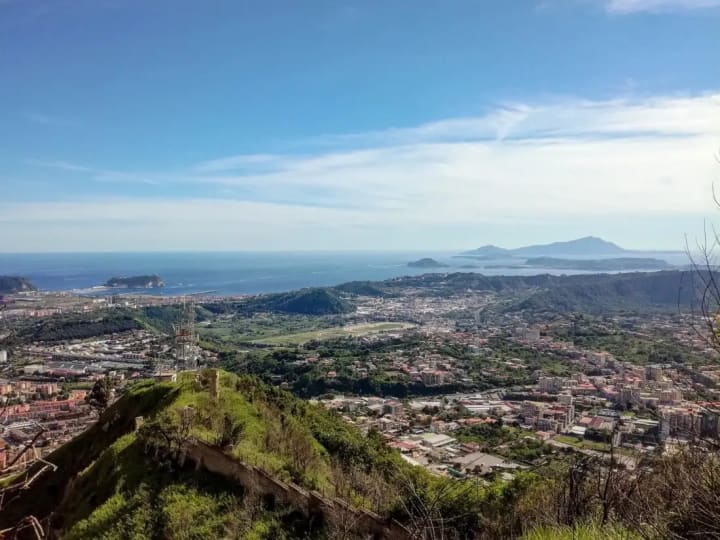
Super volcanoes are also located on the Old Continent. One of the largest is located near Naples. The caldera named Fields of Phlegreis has a diameter of 13 km. In the center of the supervolcano is located Pozzuoli town.
The last major volcanic eruption took place about 40,000 years ago. The powerful eruption spewed 300 cubic kilometers of volcanic material into the air, and an area of 200 cubic kilometers was flooded with lava.
Long Valley Caldera
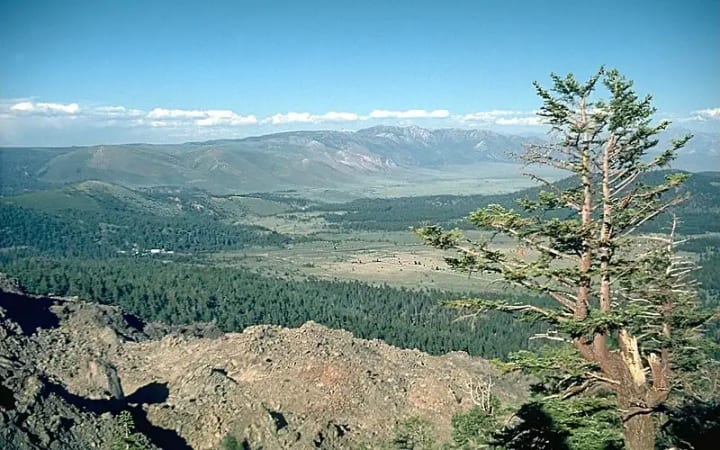
Finally, let’s return to the USA. In the state of California, near the border with Nevada, there is the Long Valley caldera measuring 16x32 km. It was formed more than 760,000 years ago, when a gigantic eruption led to the collapse of a magma chamber.
While the Yellowstone super volcano is presented as one of the greatest threats to humanity, scientists have no doubt that the eruption of the Long Valley caldera could have even more serious consequences. Studies show that the supervolcano’s magma reservoir holds more than 1,000 cubic kilometers of magma, and its volume is steadily increasing. This may suggest that the next major eruption will occur within a few thousand years.
About the Creator
The Canals of Phoenix: How Waterways Made Life Possible in the Desert
In the heart of the Sonoran Desert, where summer temperatures regularly climb above 110°F (43°C), the existence of a sprawling metropolitan city like Phoenix, Arizona, may seem almost impossible. Yet Phoenix thrives, home to millions of residents, vast suburbs, and a growing economy. The secret behind this unlikely success lies in a remarkable system of canals that carry life-giving water across the desert landscape.
By Irshad Abbasi 2 days ago in Earth



Comments
There are no comments for this story
Be the first to respond and start the conversation.