Humanity
It’s Time We Reconnect Our Bodies With Mother Earth
My feet were sore from having cycled for the last two hours in shoes meant for looking good. It was the first time I had stepped out of my house to meet a friend after five months of a nationwide lockdown. After being cooped up indoors for so long, I was ready to try anything to make me feel alive again — even if it involved a spontaneous decision to cycle in an expensive blouse, tight jeans, and heels. Anything to get the blood flowing.
By Eshal Rose4 years ago in Earth
A Circadian Rhythm Resolve for the New Year
Nature can a be such a resource for us to learn our own natural rhythms. In daily life we can at times pick up the pace or rhythm of the life around us. It's natural to meet the day during life with what we have available to offer. We might have a schedule to keep and it might have a pace that varies.
By Virginia McGuire4 years ago in Earth
I Saved the World
How Humanity Saves Itself No matter who we are. We all want to feel better. We want to express ourselves to our emotions. We often externalise these impulses rather than changing ourselves first. This emotional or spiritual need is experienced by most, even by those who don't make a formal religious commitment. Yes, 'we' is the collective experience of all of us. Yet there is no escaping our individual egos and the experience of the "I".
By William Bamberg4 years ago in Earth
Red Rose Country
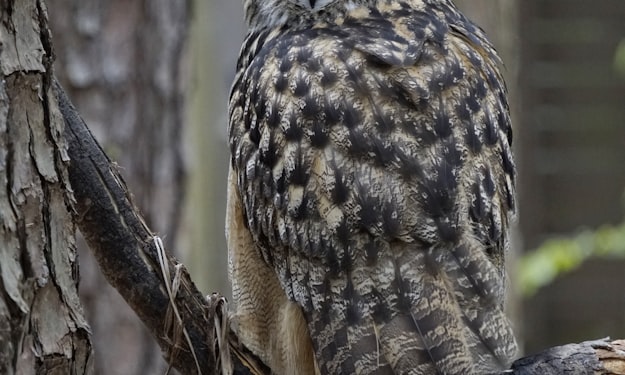
They say owls are some of the smartest birds in the planet, able to give sage advice or guide their watchers from imminent danger. Hunters in the night, their large eyes miss nothing that happens around them, always on the alert for danger or their next meal. But a new menace has come to face the owls; the threat of human settlements being built over demolished forests that used to be home for the nocturnal birds. Sprawling roads connected hundreds of new houses and townhomes in Fort McMurray, where oil sands development has literally created the
By Jesse Leung4 years ago in Earth
Charley
Friday, August 13, 4:10pm “Babe, don’t listen to them. Look at the TV screen, but don’t look at them. Look at the upper left corner. Look at the coordinates!” my husband said anxiously. He stood there, in the center of the living room, but down here in Florida, it’s called the great room. He was mesmerized, his eyes wide with shock, looking as though he was too frightened to move. I’d never seen him look so worried. No not worried! Scared! I never thought my husband to be afraid of anything.
By Margaret Brennan4 years ago in Earth
Medicine Wheel
Chapter One: In Which Our Hero Leaves the Barn he woke, a snowy white owl with fluffy silken feathers speckled in the colors of earth and soil. he leapt from his perch and flew through the jagged boards composing the barn, landing in an inch of watery snow. he shook his wings and settled them, letting them fall to his sides in tranquil surrender.
By Brijit Reed4 years ago in Earth
Revisiting the "Pale Blue Dot"
Carl Sagan was a historic American scientist, Pulitzer winning novelist and a popular TV show host, who coined the term ‘Big questions’. This term refers to the questions that would potentially explain the origin of our universe and life as we know it. These questions are generally on the lines of “How did our universe come into existence?” Sagan, in his award winning book and show, ‘The Cosmos’ talks about the vastness of our entire universe. He tells us how the urge to answer these questions about the beginning of our lives is almost a primal need that has driven us to major scientific discoveries and theories, like The String Theory. A recurring theme in Sagan’s ‘Cosmos’ is the insignificance of the human race in our infinite universe. He often talks about how the seven billion people on this planet do not even make up for a percent of our universe, and our minds still comprehend ‘trivial’ issues in our daily lives to be significant. Sagan urges our minds to stretch beyond their limits and find an answer to these ‘Big Questions’, as it is important that there should be an answer to the mystery of our existence.
By Partha Singh4 years ago in Earth
"Their Very Own Saint"
My new novel-in-progress begins at the end of May, where a family who trace their roots back to Romani caravans disagree about how best to honour the little lady the Roma count as "Their Very Own Saint" - Sainte Sara-la-Kali, protege of Les Saintes Maries de la Mer - a pair of matriarchs who give their names to a town in the south of France, where Roma and their related Traveller tribes gather in pilgrimage by the sea every year.
By Steph Cole4 years ago in Earth