Humanity
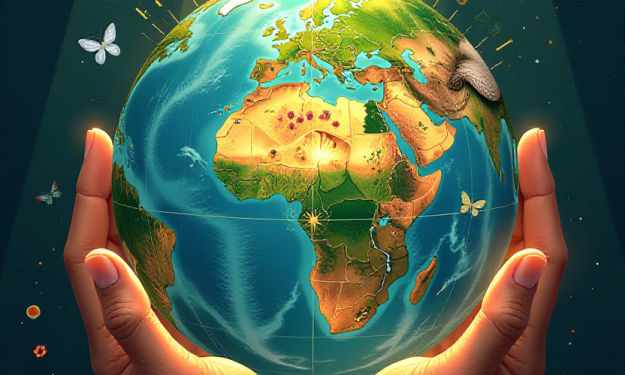
"Biodiversity: The Beauty of Life on Earth and Our Shared Responsibility"
Introduction Earth is home to an estimated 8.7 million species, yet human activity drives approximately 150 of them to extinction daily. This staggering loss isn’t just a statistic—it’s an unraveling of the intricate web of life that sustains us all. Biodiversity, the dazzling variety of life on our planet, is both a masterpiece of evolution and a lifeline for humanity. From the depths of coral reefs to the canopies of rainforests, every species plays a role in Earth’s grand symphony. This article explores the irreplaceable beauty of biodiversity, the existential threats it faces, and the collective action needed to safeguard our shared home.
By Shamshair Khan Hasan Zai8 months ago in Earth
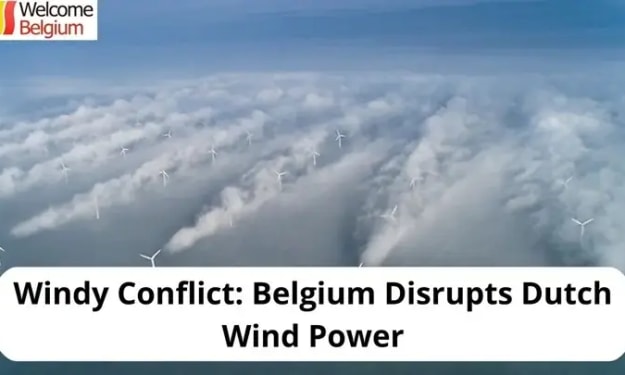
Belgium’s Wind Turbine Controversy: A Perfect Storm of Politics, Power, and Priorities
What began as a technical proposal to expand Belgium’s offshore wind energy capacity has quickly evolved into a political maelstrom, exposing fault lines not only between regional and federal governments, but also between environmental goals and local interests. In a country where compromise is the norm and political complexity is baked into the system, this wind turbine debate is shaping up to be one of the most divisive green energy issues in recent memory.
By Ретро Мания8 months ago in Earth
Trump confronts South African leader with baseless claims of the systematic killing of white farmers
In a move that sparked international controversy and drew widespread condemnation, former U.S. President Donald Trump reignited a debunked conspiracy theory involving South Africa, accusing its government of allowing or even orchestrating the “systematic killing of white farmers.” The claims, widely criticized as misleading and racially charged, surfaced during a diplomatic interaction with South African leadership and have since raised concerns about the spread of misinformation, the misuse of international platforms for domestic political gains, and the potential to inflame racial tensions. Trump’s remarks echoed a narrative long propagated by far-right groups both in the United States and abroad. During his presidency in 2018, Trump tweeted that he had asked then-Secretary of State Mike Pompeo to “closely study the South Africa land and farm seizures and expropriations and the large scale killing of farmers,” citing a segment from Fox News host Tucker Carlson. The statement, which aligned closely with white nationalist rhetoric, was made without consulting the U.S. Embassy in South Africa or checking with intelligence officials. It was immediately met with strong rebuttals from both the South African government and independent fact-checkers. The South African government responded at the time via Twitter, stating, “South Africa totally rejects this narrow perception which only seeks to divide our nation and reminds us of our colonial past. South Africa will speed up the pace of land reform in a careful and inclusive manner that does not divide our nation.” President Cyril Ramaphosa’s office later clarified that Trump had not contacted him directly before making the statement. More recently, Trump has revived these assertions during campaign events and interviews, again referring to alleged violence against white farmers as part of what he called a “genocide.” However, independent data from South Africa’s government and civil society organizations continues to contradict these claims. The South African Police Service (SAPS) tracks farm attacks and murders, and the data consistently shows that while rural crime is a serious issue, it affects both black and white farmers. Furthermore, white South Africans, though a minority, still own the vast majority of agricultural land in the country—a legacy of apartheid-era dispossession. Experts argue that Trump’s statements are not rooted in genuine concern for South African farmers but rather serve to stoke racial fears among his political base. The narrative fits into a broader pattern of white grievance politics, in which Trump has repeatedly portrayed white people as victims of discrimination or violence, both in the United States and abroad. This rhetoric, critics warn, risks legitimizing extremist ideologies and encouraging racial paranoia. “Trump’s remarks are not just inaccurate, they are dangerous,” said Dr. Mandisa Malinga, a political scientist at the University of Pretoria. “They import a foreign narrative of racial victimhood that is not supported by evidence and ignores the complex socio-economic realities of rural South Africa. Worse, they undermine the legitimate land reform efforts of a country still grappling with the legacy of apartheid.” Trump’s claims also come amid rising global concern over disinformation in politics. By leveraging unfounded allegations on a global stage, Trump reinforces his broader political strategy of deflecting attention from domestic controversies and energizing his support base through outrage. Critics argue that such tactics erode the credibility of international diplomacy and further isolate the U.S. from African allies. South African observers note that the country’s land reform process—aimed at addressing deep-seated inequality from decades of institutionalized racial segregation—is fraught with challenges but is being handled within a legal and constitutional framework. No credible evidence has emerged to support claims of a government-sponsored campaign to murder white farmers. The persistence of this myth—bolstered by social media echo chambers, fringe news outlets, and opportunistic political figures—illustrates the enduring power of racially charged disinformation. For South Africa, it is yet another reminder of how its complex internal issues are vulnerable to distortion and exploitation by foreign actors. As Trump continues his political campaign in the U.S., observers warn that such baseless narratives may not only further inflame domestic divides but also strain international relationships, especially with nations like South Africa that are striving to overcome their troubled pasts through difficult but necessary reform. In a world already grappling with rising nationalism and political polarization, the use of debunked foreign conspiracy theories for political gain serves as a stark warning of the dangerous intersection between disinformation, race, and power.
By Md Abdulla8 months ago in Earth
Gaza on the Brink
Gaza on the Brink: A Deepening Humanitarian Crisis Amid Escalating Conflict The crisis in Gaza continues to escalate, with the Israel-Palestine conflict plunging into an increasingly devastating phase. As of May 2025, the region faces intensified Israeli military operations, a worsening humanitarian catastrophe, and mounting international concern. Global leaders are calling for urgent action to stem civilian suffering amid these grim developments.
By jubair hossain8 months ago in Earth
Where Should We Focus in 2025?
As climate change accelerates, 2025 marks a pivotal moment in our response to a warming world. From rising sea levels and record-breaking heatwaves to floods and wildfires, the consequences of climate change are no longer abstract predictions—they are part of our everyday reality. In this context, policymakers, scientists, and communities are faced with a crucial dilemma: Should we focus more on adapting to the effects of climate change or on mitigating its root causes?
By Iftekhar Islam Jihad8 months ago in Earth
5 Tech Innovations That Could Reshape Global Power Dynamics by 2030
Our ability to make things has always shaped human civilization. Productivity has been a key component in changing society from the agrarian age to the industrial revolution and the age of advanced technology.
By sabbir Ahmed8 months ago in Earth