
Where Is the Hottest Place in the Universe?
To find the hottest point ever, we need to go back in time—to the birth of the universe itself
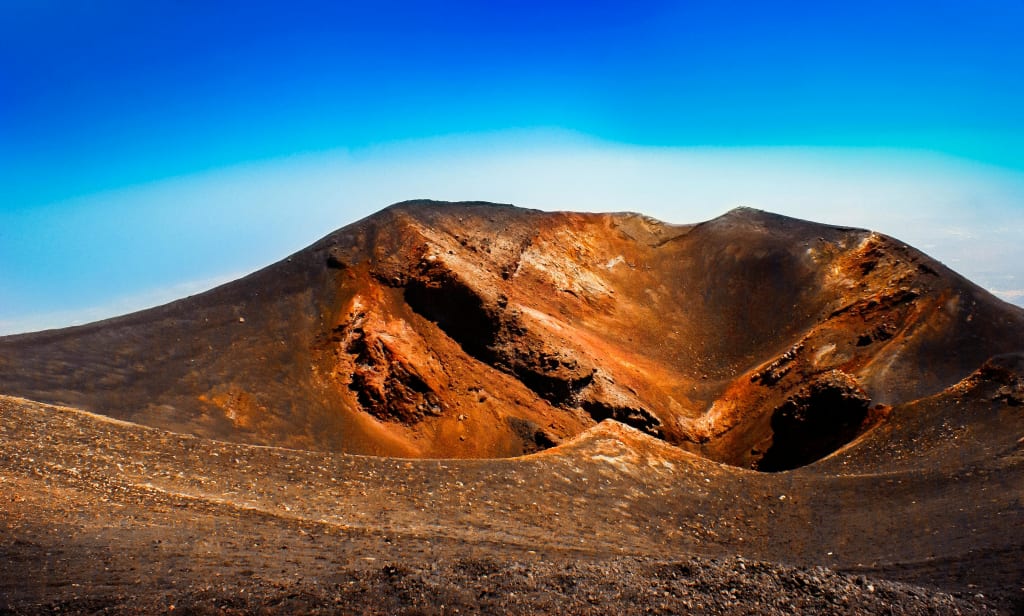
Have you ever wondered what the hottest place in the universe is? And what the actual temperature is—or was—at that location?
When I used to hear that the fuel of Hell would be stones and humans, it left me puzzled. We’re used to thinking that fire needs wood to burn, so how could stones possibly ignite? How could rocks become fuel for fire?
But once I began studying the universe, this mystery unraveled in the most astonishing way. I realized that the heat of burning stones can far surpass that of any wood-based fire. If you’re skeptical, like I once was, then this article is especially for you.
Let’s begin with the basics.
We know that water freezes at 0°C (32°F)—this is the freezing point for water, not for all substances. If something contains water molecules, it will solidify at this temperature. Now consider the average room you’re in right now—its temperature is probably around 25°C. The normal human body temperature is 37°C, and even a slight fluctuation can cause health issues, because our bodies are finely tuned to operate at this range.
The highest temperature ever recorded on Earth's surface is 56.7°C (134°F), and water boils at 100°C. These are familiar figures—but the temperatures we’re about to explore go far beyond anything we encounter in daily life.
Let’s venture beyond Earth.
The closest planet to the Sun is Mercury. Thanks to NASA’s space missions, we now know that Mercury can reach temperatures of up to 427°C. However, it's Venus, the second planet from the Sun, that holds the title of the hottest planet in our solar system, with surface temperatures around 462°C. This is due to its thick atmosphere, which traps heat through a runaway greenhouse effect.
Let’s go hotter.
Molten lava, which emerges from Earth’s volcanoes, can reach temperatures of around 1,200°C. That’s hot enough to melt many metals. For instance, iron melts at 1,538°C, and beyond that, it can vaporize into gas. Imagine temperatures where solid metals behave like steam.
Now let’s look at our Sun. The surface of the Sun burns at approximately 5,500°C, while the core—the heart of the Sun where nuclear fusion takes place—reaches a staggering 15 million°C. That’s fifteen million degrees Celsius. Hard to imagine, right?
But the universe still has more surprises.
When a massive star reaches the end of its life, it undergoes a supernova explosion—a violent burst of energy that marks the star's death. During this cataclysmic event, temperatures can soar up to 550 million°C. That’s 550,000,000 degrees Celsius. To put this in perspective, we humans struggle with 50°C weather, and here we’re talking about over ten million times hotter.
Yet the story doesn’t end here.
Next comes the neutron star—one of the densest and most mysterious objects in the universe. When a massive star collapses under its own gravity after a supernova, it can form a neutron star. The heat generated during this process is almost unimaginable: 12 billion°C (12,000,000,000 degrees Celsius). That’s billion with a ‘B’—making neutron stars some of the hottest known objects in the current universe.
And still, we’re not at the ultimate temperature.
To find the hottest point ever, we need to go back in time—to the birth of the universe itself.
According to the Big Bang theory, all matter, energy, time, and space were compressed into an infinitely small, dense point known as a singularity. The universe as we know it began from this singularity in a colossal burst around 13.8 billion years ago.
Now, brace yourself.
Scientists estimate that at the exact moment of the Big Bang, the temperature of this singularity reached an incomprehensible 142 nonillion°C. That’s 142 followed by 30 zeros:
142,000,000,000,000,000,000,000,000,000,000°C
This is called the Absolute Hot—the highest possible temperature in theoretical physics. At this point, our current laws of physics break down. Temperatures beyond this are not just unknown—they are unknowable with current science.
This figure marks the upper limit of thermal energy. Beyond this, our equations, our theories, and our understanding cease to function. No object or environment in our universe—or any universe we can currently theorize—has ever reached a temperature higher than this.
Final Thoughts
What began as a simple curiosity about how rocks can burn led us on a breathtaking journey through space, time, and science. From volcanic lava to supernovae, from neutron stars to the very origin of the cosmos, the range of temperatures in our universe is staggering.
So the next time you feel the heat of a summer’s day, remember—you’re only scratching the surface of what the universe is capable of.
The hottest place in the universe isn’t a planet or a star. It’s a moment—a flashpoint in time when everything began. And that moment burned hotter than anything we can truly comprehend.
---
About the Creator
Keep reading
More stories from Umair Khan and writers in Earth and other communities.
Gilgit: Where the Earth Touches Heaven and Whispers in Waterfalls
--- Have you ever stood somewhere so overwhelmingly beautiful that your breath caught in your throat, your mind went silent, and your soul just listened? That’s Gilgit. Tucked in the northern folds of Pakistan, Gilgit is not just a valley—it’s a wonder carved by glaciers, blessed by rivers, guarded by mountains, and alive with stories whispered through pine needles and the tumbling cascade of waterfalls.
By Umair Khan10 months ago in Earth
Amid European Energy Fears, Coal Creeps Back Into Favour
Europe’s energy landscape is shifting as fears over supply security and rising costs drive some countries back toward coal, a fossil fuel many had hoped to phase out entirely. The resurgence comes amid heightened tensions over energy imports, particularly natural gas, as the war in Ukraine and geopolitical friction with Russia have exposed vulnerabilities in the continent’s energy systems. Germany, long seen as a leader in renewable energy adoption, recently announced plans to keep several coal-fired power plants online longer than initially scheduled. Officials cited winter energy demands and the need to maintain a reliable baseload while natural gas supplies remain constrained. Similar considerations are emerging in Poland, the Czech Republic, and other nations that rely heavily on imported energy. “The energy crisis has forced governments to make difficult choices,” said Dr. Klaus Weber, an energy policy analyst at European Energy Institute. “While the climate goals remain important, ensuring citizens have access to electricity and heat this winter has become a more immediate priority.” The return to coal is not simply a response to price spikes. Energy security has become a pressing concern after European reliance on Russian gas pipelines was disrupted, prompting countries to diversify sources and store reserves. Coal, abundant in Europe and globally traded at competitive prices, provides a short-term buffer against shortages. At the same time, rising electricity costs have placed enormous pressure on households and industries. According to recent statistics from the International Energy Agency, European electricity prices surged by nearly 40% in the past year, prompting governments to subsidize energy bills and rethink fuel strategies. Coal-fired generation, though more polluting, offers predictable output and can be ramped up quickly to stabilize grids. Renewable energy advocates have expressed concern that this shift could undermine Europe’s climate leadership. Coal emits roughly twice the CO₂ per unit of energy compared to natural gas, posing challenges to achieving net-zero targets. Critics warn that extending coal use—even temporarily—risks locking in infrastructure that is inconsistent with long-term decarbonization goals. “Every megawatt-hour produced from coal is a step backward for Europe’s climate ambitions,” said Maria López, senior campaigner at Greenpeace Europe. “Governments need to pair any temporary measures with accelerated renewable deployment to avoid backsliding on emissions reductions.” Some nations are attempting to balance these pressures by deploying cleaner coal technologies. Advanced coal plants with carbon capture and storage (CCS) can reduce emissions by capturing a significant portion of CO₂ before it enters the atmosphere. Germany and the Netherlands are investing in pilot projects to integrate CCS into existing power plants, though critics note that large-scale implementation remains costly and complex. Analysts suggest that Europe’s return to coal is likely to be temporary. Once gas supplies stabilize and renewable infrastructure expands, reliance on coal is expected to decline. Yet the episode has highlighted the fragility of energy systems in the face of geopolitical shocks and the tension between short-term energy security and long-term climate goals. Meanwhile, citizens and businesses are feeling the immediate impact. Many households in Eastern and Central Europe face sharply higher heating costs this winter, and industrial manufacturers are warning that energy-intensive production could be scaled back if prices remain high. Policymakers are caught between the urgent need to maintain supply and the imperative to meet climate commitments. The European Union is working on strategies to mitigate these challenges. Measures include expanding LNG import terminals, investing in cross-border electricity interconnectors, and boosting renewable energy capacity. However, the gap between energy supply and demand, exacerbated by geopolitical tensions, means coal may remain a stopgap solution for months to come. Europe’s cautious return to coal underscores a broader reality: energy transitions are never linear. Even as governments and citizens push toward a greener future, external shocks—conflict, supply disruptions, and price volatility—can temporarily alter priorities. The key challenge for policymakers will be ensuring that short-term reliance on fossil fuels does not derail long-term climate ambitions.
By Fiaz Ahmed 6 days ago in Earth
Becca
"Everything is so... flat." Denille said stupidly as she looked around her new neighborhood. She looked around at the muted desert where even the smallest sign of life seemed to have given up. The plant life was shrubs that were half cooked by the heat and where there should have been a lawn, a mess of white rocks laid glistening in the sun. Even the sky looked stretched thin, like the sun had ironed it smooth. She’d moved from Riverside, where at least there were hills, but here in Barstow, everything felt baked and brittle.
By Sara Wilson8 days ago in Fiction



Comments
There are no comments for this story
Be the first to respond and start the conversation.