
Belgium’s Wind Turbine Controversy: A Perfect Storm of Politics, Power, and Priorities
Windy Conflict: Belgium Disrupts Dutch Wind Power
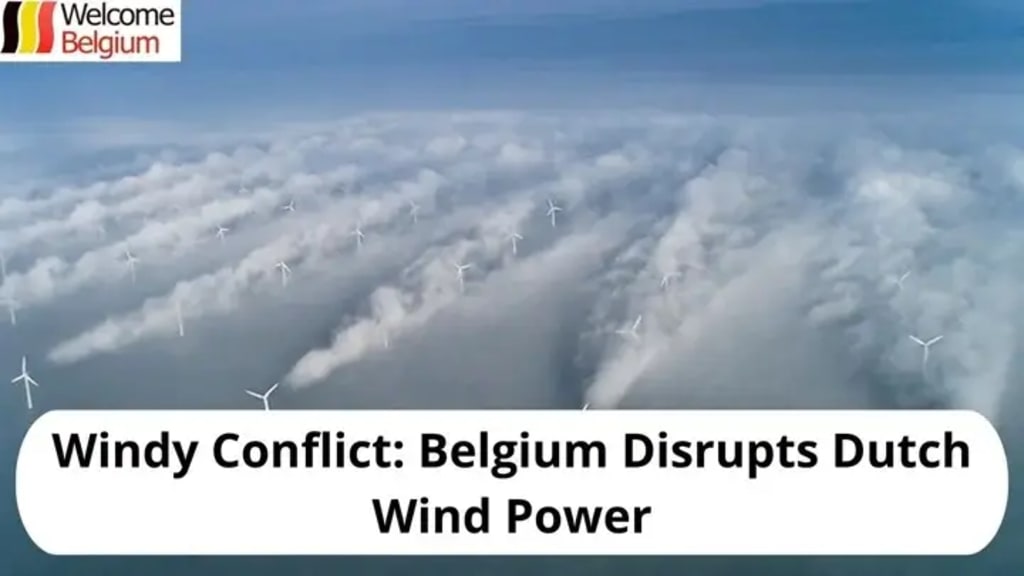
What began as a technical proposal to expand Belgium’s offshore wind energy capacity has quickly evolved into a political maelstrom, exposing fault lines not only between regional and federal governments, but also between environmental goals and local interests. In a country where compromise is the norm and political complexity is baked into the system, this wind turbine debate is shaping up to be one of the most divisive green energy issues in recent memory.
At the center of the storm is a federal initiative to construct new wind turbines in the North Sea, significantly increasing the country’s renewable energy output. But what the federal government hails as a vital step toward climate responsibility, regional leaders — particularly in Flanders — are calling an overreach, both politically and environmentally.
The North Sea Wind Expansion Plan
Belgium’s current offshore wind farms already contribute significantly to its renewable energy mix, but the federal government has laid out a plan to double, or even triple, the capacity by 2030. This would mean the installation of dozens of new turbines in the North Sea, creating one of the densest wind farm networks in Europe.
The rationale is solid on paper: reduce carbon emissions, lower dependence on gas imports (especially critical in the post-Ukraine-invasion energy landscape), and meet EU climate targets. The plan is also tied to billions in potential EU funding earmarked for green infrastructure.
But where the government sees opportunity, others see risk.
Flemish Reistance: “Consultation or Confrontation?”
Flemish leaders have emerged as the most vocal opponents of the expansion. Minister-President Jan Jambon has accused the federal authorities of acting unilaterally, bypassing the consultation processes typically required in Belgium’s layered political framework.
The Flemish government argues that expanding offshore wind without a detailed environmental impact study — and without listening to the concerns of local communities — is irresponsible. Fishermen in Ostend, coastal tourism operators, and even some environmental NGOs have raised alarm over the potential disruption to marine ecosystems and the visual transformation of the coastline.
Jambon didn’t mince words in a recent press conference: “This is not how decisions of national importance should be made. The North Sea is not the exclusive playground of the federal government.”
Behind the rhetoric lies a deeper frustration with how energy policy is being centralized, especially in a country where regions traditionally hold significant sway.
Wallonia: Supportive, But Cautious
Interestingly, Wallonia — the French-speaking southern region — has taken a more neutral stance. While regional officials have expressed support for renewable energy expansion, they are equally wary of federal overreach.
“There needs to be a balance between ambition and cooperation,” one Walloon official stated. “We support green energy, but not at the cost of democratic process.”
The difference in tone reflects differing regional priorities. Wallonia is more focused on land-based wind and solar projects, while Flanders is sensitive to maritime issues, fishing rights, and coastal development. The absence of unified messaging further muddies the waters, both literally and figuratively.
Local Voices Feel Ignored
Beyond the corridors of government, local stakeholders are increasingly frustrated. Coastal communities, which have already adapted to the first wave of offshore turbines, now fear that a second — much denser — phase will overwhelm their environment and livelihoods.
Fishermen say they are being driven out of traditional zones, without any real compensation or alternative. “We’re not against renewable energy,” said one veteran from Zeebrugge. “But they’re treating the sea like it’s empty, like nobody works here.”
Tourism operators, meanwhile, fear the aesthetic impact. “Belgium’s coastline is short. If you turn every view into a forest of steel towers, why would anyone want to vacation here?” one hotel manager in De Haan asked.
Even some conservation groups are split. While they welcome the shift away from fossil fuels, they caution against rushing into projects that could damage fragile marine biodiversity. The lack of recent impact assessments has only fueled their concerns.
Climate Commitments vs Political Gridlock
Belgium, like all EU member states, has pledged to slash emissions dramatically by 2030. Offshore wind is a crucial part of that plan. But political gridlock threatens to slow — or even derail — progress.
Experts warn that failure to move quickly will not only jeopardize climate targets, but could also cost the country billions in lost EU funds. The European Commission has made it clear: member states that cannot implement their green strategies risk losing access to recovery and resilience funding.
To complicate matters further, Belgium faces a general election in 2026. That means any long-term project started now will soon fall into campaign territory — a dangerous place for complex, controversial initiatives. Politicians may be tempted to delay or dilute action to avoid alienating voters.
A Deeper Crisis of Governance
This wind turbine dispute reveals a more profound challenge: Belgium’s chronic inability to make timely decisions on national issues.
The country’s famously intricate governance model — built to ensure regional balance and avoid domination by any one group — often ends up paralyzing action altogether. Whether it’s migration, taxation, or climate, the pattern is familiar: initiative by one level of government, resistance by another, and endless negotiations that water down ambition.
This time, the stakes are particularly high. Europe is in the midst of an energy revolution, and countries that can’t keep pace risk falling behind in everything from technology to investment to geopolitical relevance.
As one energy analyst put it: “Belgium has the brains and the resources to be a leader in offshore wind. But it also has the bureaucracy and the politics to waste the opportunity.”
What Happens Next?
So far, neither side appears ready to budge. The federal government insists the expansion must proceed if Belgium is to meet its obligations. Regional leaders demand more say in how and where turbines are placed. Local voices grow louder, but continue to feel unheard.
Some see hope in the Council of State or even the Constitutional Court, which could be asked to rule on the federal government’s authority in this matter. Others call for a national summit on energy policy, bringing all parties to the table in the hope of finding common ground.
But until that happens, Belgium remains caught in a perfect storm — trying to harness the power of the wind while being battered by the winds of its own political divisions.
For the original article and continued updates on this story, check out this page.
About the Creator
Keep reading
More stories from Ретро Мания and writers in Earth and other communities.
How Belgium Faces Climate Change: Government Response and Climate Policy in Action
Belgium, a densely populated and highly developed European country, is facing an increasing number of challenges linked to climate change. From devastating floods and prolonged heatwaves to changing precipitation patterns and risks to biodiversity, the country has been forced to reassess its approach to environmental sustainability and climate action. While Belgium contributes a relatively small share to global greenhouse gas emissions, its vulnerability to climate impacts—especially flooding and extreme heat—places it at the forefront of Europe’s adaptation and mitigation efforts.
By Ретро Мания8 months ago in Earth
“If You’re Flushing the Toilet with Grey Water, People Should Know”: How China Turned Rain into an Asset
Water scarcity is one of the most pressing challenges facing the world today, and China is confronting it with bold, large-scale innovations. From sprawling cities to rural communities, the country has been transforming rainwater and grey water — wastewater from baths, sinks, and washing machines — into usable resources, addressing shortages while boosting sustainability. The approach is as much about engineering ingenuity as it is about public transparency and social trust. As one Chinese water engineer put it: “If you’re flushing the toilet with grey water, people should know.” This candid acknowledgment captures the essence of China’s strategy: utilize every drop of water efficiently while educating and involving the public. The Scale of China’s Water Challenge China faces a unique set of water challenges: Rapid urbanization, leading to increased demand for potable water Uneven distribution of water resources, with the north of China significantly drier than the south Industrial expansion, which consumes enormous quantities of freshwater Traditional water systems, reliant solely on rivers, lakes, and underground aquifers, are increasingly inadequate. Water shortages threaten agriculture, public health, and economic growth. Enter grey water and rainwater recycling, which turns previously discarded or seasonal water into a strategic asset. Grey Water: From Waste to Resource Grey water refers to domestic wastewater from sinks, showers, and washing machines — excluding sewage. While not suitable for drinking, it can be treated and reused for: Flushing toilets Irrigating gardens and parks Industrial processes requiring non-potable water China has implemented city-wide grey water recycling systems, often in high-rise residential blocks and industrial complexes. These systems involve: Collection: Grey water from sinks, showers, and laundry is routed through a separate piping network. Treatment: Basic filtration, chemical treatment, or UV sterilization removes contaminants. Reuse: Treated water is stored and reused for flushing toilets or irrigation, drastically reducing fresh water demand. In some cities, nearly 30–40% of household water consumption can be offset by grey water reuse, easing pressure on municipal water supplies. Rainwater Harvesting: Turning Precipitation into Opportunity Rainwater is another crucial asset, especially in regions where seasonal rains are abundant but water storage is limited. China’s rainwater harvesting initiatives include: Rooftop collection systems in urban and rural buildings Underground cisterns and reservoirs for storage Integration into public parks and community irrigation networks Collected rainwater can be used for irrigation, cleaning streets, or replenishing urban lakes — effectively reducing reliance on potable water while enhancing urban greenery. Cities like Beijing, Shanghai, and Shenzhen have led the way, embedding rainwater storage tanks and treatment units directly into infrastructure planning. This holistic approach turns rainfall from a transient resource into a stable, managed supply. Urban Integration and Smart Technology China’s approach goes beyond simple collection. Smart sensors, IoT devices, and AI analytics are being used to: Monitor grey water quality in real time Optimize rainwater collection and storage based on weather forecasts Reduce overflow and contamination risks By integrating these technologies, water managers can balance supply and demand dynamically, ensuring that recycled water is safe, efficient, and reliable. Public transparency is central. Residents are clearly informed when grey water is being used, often through visible signage in buildings or public awareness campaigns. This trust-building is essential to encourage adoption and avoid resistance. Environmental and Economic Benefits China’s grey water and rainwater initiatives yield substantial environmental and economic dividends: Conservation of freshwater: Reduces extraction from rivers, lakes, and aquifers, helping ecosystems survive droughts. Lower energy costs: Treating grey water locally uses less energy than pumping and purifying municipal water. Flood mitigation: Rainwater storage helps manage urban runoff during heavy rainfall, reducing flood risk. Economic savings for residents: Households using recycled water can reduce water bills significantly. By aligning environmental stewardship with cost-effectiveness, these projects illustrate a sustainable model for densely populated nations. Cultural Shifts and Public Perception Using recycled water for toilets or irrigation required a shift in public perception. Initially, residents expressed skepticism about safety and hygiene. China addressed this by: Implementing stringent water quality standards Educating the public through campaigns and signage Demonstrating transparency about treatment methods Over time, grey water reuse became normalized, particularly in new urban developments, where residents take pride in contributing to water conservation. Lessons for the World China’s water recycling strategy offers valuable lessons for other countries facing water scarcity: Urban planning must integrate water recycling from the start Technology can optimize efficiency, but transparency builds public trust Multiple water sources — grey water, rainwater, and municipal supply — can be combined strategically Community engagement is essential, especially when water reuse intersects with everyday routines Countries in the Middle East, Africa, and parts of the U.S. have already looked to China for insights on urban grey water and rainwater management. Challenges Ahead Despite progress, challenges remain: Infrastructure costs are high for retrofitting existing buildings Maintenance and monitoring are crucial to prevent contamination Public skepticism persists in some regions, requiring ongoing education and outreach Scaling these systems nationally requires both financial investment and cultural adaptation, but China’s experience shows it is achievable. Looking Forward China’s ambitious water recycling projects illustrate a paradigm shift in urban water management. Grey water and rainwater are no longer seen as waste or nuisance; they are valuable resources that can sustain cities, agriculture, and industry. As global water scarcity intensifies, lessons from China may inspire other nations to rethink how they treat water — not as a disposable commodity, but as a precious asset to manage wisely. Final Thoughts The statement, “If you’re flushing the toilet with grey water, people should know,” encapsulates the balance of innovation and transparency that makes China’s approach successful. By turning rain and grey water into assets, the country is conserving freshwater, protecting the environment, and setting a model for sustainable urban living. As other nations look to address water shortages, China’s example proves that with technology, planning, and public engagement, cities can transform perceived waste into a strategic resource for the future.
By Muhammad Hassan4 days ago in Earth
Wild Card Weekend Recap: What Happens Now?
I think I figured out why I love Wild Card Weekend so much. It's because it's the first playoff anything of the calendar year. The NFL season starts in the fall, and once upon a time, the champion was crowned either on or slightly before New Year's. The evolution of the NFL schedule has resulted in the playoffs starting just into the New Year, and currently, the final week of the season falls on the first weekend of the New Year, with Wild Card Weekend coming a week after that. So yes, chronologically, the NFL's Wild Card Weekend serves as the first playoff anything of the calendar year.
By Clyde E. Dawkins7 days ago in Unbalanced




Comments
There are no comments for this story
Be the first to respond and start the conversation.