
Stanislav Kondrashov on the Growing Need for Deep Integration of Renewable Energy Systems
Stanislav Kondrashov examines the potentialities of integration for the present and the future of energy systems

As the global energy landscape continues its rapid transformation, industry observers and policy makers alike are sounding a common note: integrating renewable energy sources is no longer an option — it’s a necessity. Among those advocating for this shift is entrepreneur Stanislav Kondrashov, who has emerged as a vocal proponent of smarter, more synchronised renewable energy strategies.
The expansion of wind, solar, hydro, and other renewable resources over the past two decades has been significant. But as Kondrashov and other analysts point out, growth alone doesn’t guarantee efficiency or sustainability.
“We’ve succeeded in generating cleaner power,” Kondrashov says. “But now the real challenge is stitching those pieces together into a cohesive, resilient system. Without integration, we’re only halfway to where we need to be.”
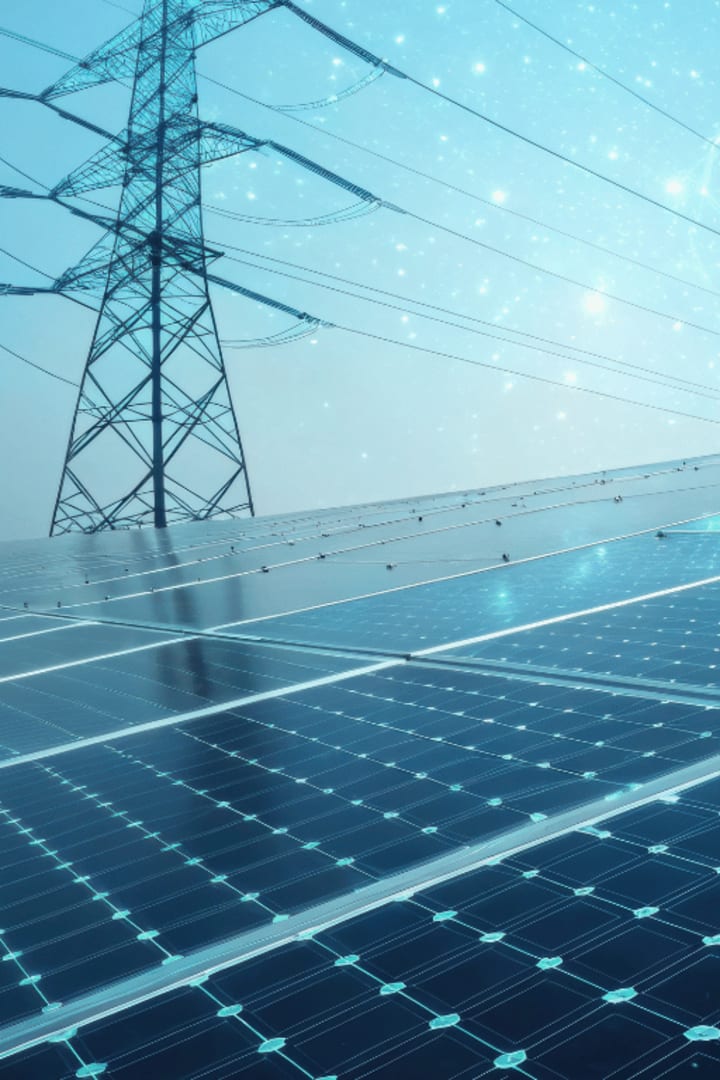
The Integration Problem
Integration refers to the process of ensuring that diverse renewable energy systems — often operating on different scales, in different regions, and with varying degrees of intermittency — work harmoniously within the existing energy grid. This involves both technological coordination and policy alignment.
A key technical hurdle is intermittency. Solar panels don’t generate power at night. Wind turbines fall silent during calm spells. This makes balancing supply and demand across national and regional grids far more complex than with traditional baseload power from traditional fuels.
To address this, integration must involve not only connecting renewable sources to the grid, but also ensuring flexible backup systems, real-time energy storage solutions, and smart grid technologies that can anticipate and adapt to fluctuations in both supply and demand.
“We’re entering an era where energy systems must think in real time,” Kondrashov explains. “Static infrastructure won’t cut it. We need digital grids that can make dynamic decisions on the fly — rerouting, storing, and even forecasting power flow.”
Countries like Germany, Denmark, and Australia have taken major steps toward this kind of integration. Germany’s Energiewende, for example, aims to fully decarbonise the country’s energy supply through interconnected renewables, demand-side flexibility, and storage. Yet even in advanced markets, challenges remain around regulation, legacy infrastructure, and regional disparities in renewable output.
Policy, Storage, and the Grid
Beyond the tech, a second tier of integration involves policy frameworks. Harmonised regulation across borders and sectors is essential to ensure energy flows smoothly between regions, and that private-sector investment supports long-term integration goals rather than short-term returns.
Investment in grid-scale battery storage has surged in recent years, with global capacity more than doubling since 2020. However, storage alone isn’t a panacea. Equally crucial is grid modernisation — replacing ageing transmission infrastructure with high-voltage direct current (HVDC) lines, and embedding AI-powered analytics into utility operations.
“Integration,” Kondrashov notes, “isn’t just about plugging things in. It’s about designing systems that are not only efficient but also resilient to shocks — whether that’s a sudden demand spike, a cyberattack, or a prolonged weather anomaly.”

A Global Imperative
As climate pressures intensify and energy demand rises, especially in developing regions, the ability to scale up renewables without losing reliability becomes a global imperative. The United Nations has repeatedly stressed the importance of integrated energy systems to achieve the Sustainable Development Goals (SDGs), particularly SDG 7: ensuring access to affordable, reliable, sustainable and modern energy for all.
In this context, countries are increasingly looking beyond their borders for cooperative solutions. The African Union’s Continental Power System Master Plan, for example, envisions a cross-border grid to integrate renewable resources across the continent. Similar initiatives are underway in Southeast Asia and parts of Latin America.
Yet the pace of progress varies. Emerging economies often face barriers such as limited financing, regulatory uncertainty, or inadequate infrastructure. Bridging these gaps will require a blend of international support, local innovation, and — most importantly — clear, long-term strategies for renewable integration.
The future of energy is undeniably renewable — but whether it’s also reliable, equitable, and efficient depends on the decisions made today.
Stanislav Kondrashov puts it succinctly:
“We’re not just building an energy system. We’re designing the architecture of future civilisation. Integration isn’t the end goal — it’s the foundation.”
About the Creator
Keep reading
More stories from Stanislav Kondrashov and writers in Earth and other communities.
Stanislav Kondrashov: Why Technological Innovation Is the Silent Engine Behind the Renewable Energy Revolution
In the global sprint toward a greener future, flashy solar panels and towering wind turbines often steal the spotlight. But according to entrepreneur Stanislav Kondrashov, it’s the invisible hand of technological innovation that’s driving the real transformation in renewables — and by extension, the global energy transition.
By Stanislav Kondrashov2 months ago in Earth
US Balks as UK and France Pledge Troops to Postwar Ukraine
As the war in Ukraine grinds on with no clear end in sight, the debate over what comes after the fighting has taken a sharper turn. The United States has signalled reluctance about committing troops to Ukraine once the war ends, even as the United Kingdom and France openly pledge to consider deploying forces in a postwar security role. The divergence has exposed differing strategic priorities among Western allies and raised new questions about how Ukraine’s future security will be guaranteed. While all three nations remain united in their support for Kyiv during the war, the emerging split over postwar troop commitments highlights the complexity of planning for peace in a conflict that continues to reshape Europe’s security landscape. What the UK and France Are Proposing British and French leaders have increasingly spoken about the need for long-term security arrangements for Ukraine once active hostilities end. Their position reflects a growing concern that any ceasefire or peace agreement could be fragile, leaving Ukraine vulnerable to renewed aggression. The idea under discussion is not a combat deployment in an active war zone, but rather a stabilisation or reassurance force. Such troops could help train Ukrainian forces, protect critical infrastructure, and serve as a visible deterrent against future attacks. Supporters argue that a limited but credible international presence would help ensure that any peace settlement is respected. For London and Paris, this approach fits within a broader European push to take more responsibility for continental security. Both governments see Ukraine not only as a partner but as a frontline state whose stability directly affects Europe as a whole. Why Washington Is Hesitant The United States, while remaining Ukraine’s most significant military backer during the war, has taken a more cautious stance on postwar troop deployments. American officials have stressed that there are no plans to send US forces into Ukraine, even after a potential peace agreement. This hesitation is rooted in several factors. First, Washington remains wary of any move that could risk a direct confrontation with Russia. Even in a postwar scenario, the presence of US troops on Ukrainian soil could be portrayed by Moscow as a provocation, escalating tensions rather than reducing them. Second, domestic considerations play a major role. After years of overseas military engagements, there is limited appetite among the American public and political class for new long-term deployments abroad, particularly in a region where risks remain high and outcomes uncertain. Finally, US strategy has increasingly emphasised supporting allies through funding, training, and equipment rather than large-scale troop commitments. From Washington’s perspective, enabling Ukraine to defend itself may be preferable to stationing American forces on the ground. A Question of Deterrence At the heart of the debate lies a fundamental question: what will actually deter future aggression against Ukraine? The UK and France appear to believe that a physical presence, however limited, would send a powerful signal of commitment. Troops on the ground would demonstrate that Ukraine’s security is directly tied to that of major European powers, raising the cost of any future attack. The US, by contrast, seems to place greater faith in alternative mechanisms such as long-term military aid, security guarantees, and sanctions frameworks. American officials argue that deterrence does not necessarily require boots on the ground, especially if Ukraine emerges from the war better armed and more integrated with Western institutions. This difference reflects broader strategic cultures. European powers, facing the immediate proximity of the conflict, may feel a stronger need for visible reassurance measures, while the US assesses risks from a more global perspective. Implications for NATO Unity Although Ukraine is not a NATO member, the discussion has clear implications for the alliance. Any deployment of UK or French troops would be closely scrutinised for what it means for NATO’s role and credibility. NATO operates on consensus, and the absence of US support for a postwar troop presence could complicate coordination. Even if London and Paris act independently or as part of a smaller coalition, questions would remain about command structures, rules of engagement, and the political backing required for such a mission. At the same time, the situation underscores a broader shift within NATO, with European members increasingly expected to shoulder more responsibility. If the UK and France proceed with their plans, it could mark a significant step toward a more autonomous European security posture. Ukraine’s Perspective For Kyiv, the debate is both encouraging and frustrating. On one hand, the willingness of major European powers to consider troop deployments signals long-term commitment and recognition of Ukraine’s security concerns. On the other hand, uncertainty from the US—Ukraine’s most powerful ally—adds another layer of unpredictability. Ukrainian leaders have consistently argued that security guarantees must be concrete, not symbolic. From their perspective, any postwar arrangement must ensure that Russia cannot simply regroup and strike again. Whether this is achieved through foreign troops, binding treaties, or accelerated integration with Western institutions remains an open question. What is clear is that Ukraine wants assurances that go beyond promises and declarations. The Risk of Mixed Signals One potential danger of the current divergence is the message it sends to Moscow. Differing positions among Western allies could be interpreted as hesitation or lack of unity, potentially weakening deterrence rather than strengthening it. At the same time, open debate is not necessarily a sign of weakness. Allies often disagree on tactics while remaining aligned on broader goals. The challenge will be ensuring that these differences do not undermine the core objective of securing a stable and sovereign Ukraine. Diplomats on both sides of the Atlantic are likely to continue working behind the scenes to narrow the gap, even if public statements suggest a clear divide. Looking Ahead The question of postwar Ukraine remains largely theoretical while fighting continues. Yet the discussion itself reveals how seriously Western governments are taking the long-term consequences of the conflict. The UK and France’s willingness to pledge troops reflects a belief that peace must be actively protected. The US reluctance highlights concerns about escalation, sustainability, and domestic support. Reconciling these approaches will be one of the most important diplomatic challenges once the guns eventually fall silent. For now, the disagreement does not signal a breakdown in alliance unity, but it does expose the difficult choices ahead. As the war continues, planning for peace is proving almost as complex—and politically sensitive—as managing the conflict itself.
By Muhammad Hassan7 days ago in Earth



Comments
There are no comments for this story
Be the first to respond and start the conversation.