
Stanislav Kondrashov: Why Technological Innovation Is the Silent Engine Behind the Renewable Energy Revolution
Stanislav Kondrashov examines the relation between technology and the ongoing energy transition

In the global sprint toward a greener future, flashy solar panels and towering wind turbines often steal the spotlight. But according to entrepreneur Stanislav Kondrashov, it’s the invisible hand of technological innovation that’s driving the real transformation in renewables — and by extension, the global energy transition.
“Everyone looks at the solar farm,” Kondrashov says, “but few think about the software orchestrating its efficiency, or the materials science breakthroughs that made it cheaper. That’s where the real magic is.”
For decades, renewable energy was sidelined — considered costly, inefficient, and unreliable. But today, thanks to rapid advancements in technology, that perception has flipped.
Behind the Panels and Turbines: A Tech-Driven Shift

So what’s really changed? According to Kondrashov, we’re finally hitting critical mass with several converging technologies.
"Artificial intelligence, advanced data analytics, energy storage, and even blockchain — these aren't buzzwords anymore. They’re the infrastructure of the new energy economy,” he explains.
AI, for example, is being used to optimise grid management, forecast demand spikes, and predict when a wind turbine will need maintenance before it breaks down. This reduces waste and increases uptime — making renewables more reliable than ever.
Storage is another linchpin. The development of next-generation batteries — from solid-state designs to iron-air technology — is bridging the intermittency gap that has long plagued solar and wind. As Kondrashov notes, “Without scalable storage, renewables are like a brilliant idea without execution. Tech is now solving that puzzle.”
Decentralised Power, Centralised Potential
Perhaps one of the most radical shifts brought about by technology is the decentralisation of energy production. Small-scale solar systems, battery packs in homes, and even peer-to-peer energy trading platforms are all made possible by digital infrastructure.
"Your neighbour’s roof might be a mini power plant," Kondrashov says. "That’s a fundamental rethinking of who produces energy and who controls it.”
Blockchain is quietly enabling much of this, making transactions secure, transparent, and traceable. Meanwhile, smart meters and IoT-connected devices allow consumers to participate actively in energy markets — selling back excess power or shifting their usage based on real-time price signals.
This democratisation of energy could be as socially significant as it is technologically revolutionary.
The Role of Policy and Private Investment
Governments worldwide have recognised the importance of these developments. The U.S. Inflation Reduction Act, the EU’s Green Deal Industrial Plan, and China’s massive investment in clean tech manufacturing are just a few examples of policy pushing innovation forward. But Kondrashov warns that relying solely on government is risky.

“Technology doesn’t wait for policy,” he says. “Innovation happens in labs, in startups, in private sector R&D. Policy should follow innovation, not the other way around.”
Private investment is surging accordingly.
The Next 10 Years: A Tipping Point?
Looking ahead, Kondrashov believes the next decade will determine whether the energy transition succeeds or stalls.
“We're entering a phase where scale will either make or break the dream,” he says. “We’ve proved the tech works. Now we need to integrate it, expand it, and make it accessible everywhere — from Lagos to London.”
From digital twins of wind farms to autonomous drones inspecting solar panels, the frontier is constantly moving. And while the average citizen might not see the algorithms running in the background, their impact will be felt globally — in cleaner air, more stable energy prices, and a planet inching back from the brink.
In the end, as Kondrashov puts it: “The energy transition isn’t just about swapping fuels. It’s about transforming the way we think about power — who makes it, how it’s used, and what’s possible when technology leads the way.”
“We’re not just engineering new sources of energy — we’re engineering new systems of trust, resilience, and independence. That’s the real legacy of renewable technology.” Concluded Stanislav Kondrashov.
.
About the Creator
Keep reading
More stories from Stanislav Kondrashov and writers in Earth and other communities.
Stanislav Kondrashov on the Expanding Power of Solar Panels in Modern Industry
In the last two decades, solar power has gone from a fringe environmental solution to a central player in the global energy conversation. Once considered a luxury investment for eco-conscious homeowners, solar panels are now reshaping industrial practices, redefining infrastructure, and becoming a viable strategy for long-term economic and environmental resilience.
By Stanislav Kondrashov2 months ago in Earth
Tensions in the Sky: North Korea Calls on South Korea to Probe Drone Incidents
Tensions between North and South Korea have once again made international headlines after North Korea accused its southern neighbor of sending drones into its airspace. At the center of the issue is Kim Yo Jong, the influential sister of North Korean leader Kim Jong Un, who has urged South Korea to investigate the alleged drone incidents and provide a clear explanation. While drones may seem small, the political impact of this dispute is anything but minor.
By dua fatima7 days ago in Earth
Inside GM’s New World Headquarters
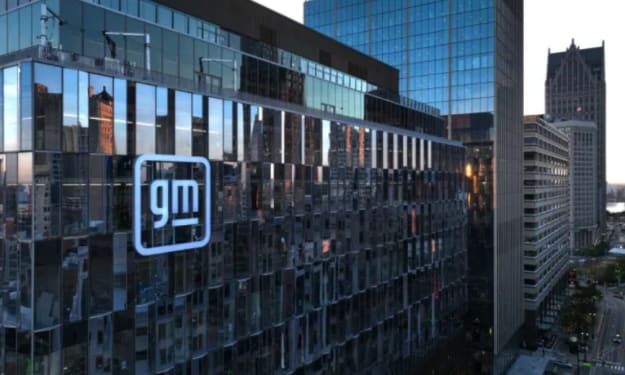
Stepping inside General Motors’ new World Headquarters feels less like entering a traditional corporate office and more like walking through a carefully curated museum of American innovation. This is not just a place where executives meet and engineers design the future of mobility—it is a physical storytelling space, blending modernized midcentury design with artifacts, surprises, and subtle nods to GM’s long-standing role in shaping American culture. GM’s headquarters reimagines what a legacy company’s home can be in the 21st century. Instead of erasing the past to appear modern, GM has chosen a more thoughtful approach: honoring its roots while boldly looking ahead. The result is a workplace that feels timeless, inspiring, and unmistakably American. A Midcentury Foundation, Reimagined for Today Midcentury modern design has long been associated with optimism, functionality, and clean lines—qualities that align closely with GM’s golden age of automotive innovation. Inside the new headquarters, those principles are modernized rather than copied outright. Warm wood tones, open sightlines, and minimalist furnishings create a sense of calm and clarity. Large windows flood spaces with natural light, while carefully selected textures—stone, metal, and glass—strike a balance between comfort and precision. The design feels intentional, not flashy, proving that restraint can be just as powerful as spectacle. Rather than overwhelming visitors with branding, GM allows the architecture and materials to speak for themselves. The space communicates confidence: this is a company that knows who it is and doesn’t need to shout. Artifacts That Tell a Living Story One of the most striking aspects of GM’s headquarters is how seamlessly history is woven into everyday spaces. Instead of confining artifacts to a single exhibit room, they are placed throughout the building—quiet reminders of where GM has been and how far it has come. Vintage sketches, classic badges, early advertising materials, and scale models of iconic vehicles appear in hallways, meeting rooms, and communal areas. These artifacts are not presented as relics of a bygone era but as milestones in an ongoing journey. For employees, this daily exposure reinforces a sense of purpose and continuity. For visitors, it offers an immediate understanding of GM’s influence on design, industry, and American life. Every artifact feels carefully chosen, telling a story without overwhelming the space. Surprises Around Every Corner What truly sets GM’s new headquarters apart is its sense of discovery. The building rewards curiosity. A casual walk down a corridor might reveal a concept car display tucked into an unexpected corner or a wall featuring experimental materials being tested for future vehicles. Some spaces feel almost playful—subtle lighting shifts, interactive displays, or unexpected art installations break the formality typically associated with corporate environments. These surprises are intentional. They encourage exploration, creativity, and conversation, reminding everyone inside that innovation thrives when curiosity is nurtured. This approach reflects a broader shift in workplace philosophy. GM is no longer just a manufacturer—it is a technology-driven mobility company. The headquarters mirrors that evolution, blending seriousness of purpose with a sense of imagination. Designed for Collaboration, Not Hierarchy Gone are the rigid layouts that once defined corporate power structures. GM’s headquarters emphasizes openness and collaboration. Flexible workspaces, shared lounges, and transparent meeting rooms encourage interaction across teams and departments. This design choice aligns with the company’s push toward cross-functional thinking—essential in an era defined by electric vehicles, software integration, and autonomous technology. The physical environment supports this mindset, making it easier for ideas to move freely. Importantly, the space never feels chaotic. Zones are thoughtfully planned to balance collaboration with focus, offering quiet areas for deep work alongside energetic hubs for brainstorming and discussion. Sustainability as a Silent Statement Sustainability plays a quiet but significant role in the headquarters’ design. Energy-efficient systems, responsible material choices, and adaptive reuse strategies reflect GM’s broader commitment to a more sustainable future. Rather than advertising these efforts with bold signage, GM integrates them seamlessly into the building’s functionality. This understated approach reinforces authenticity—sustainability is not a marketing feature here, but a core value embedded in how the space operates. A Reflection of an Evolving Brand GM’s new world headquarters is more than an office—it is a brand statement. It communicates evolution without denial of history, innovation without arrogance, and ambition grounded in experience. By embracing modernized midcentury design, GM pays homage to an era when American industry believed deeply in progress. By incorporating artifacts and surprises, it acknowledges that its past still matters. And by designing for collaboration and sustainability, it signals where the company is headed next. This balance is not easy to achieve, yet GM manages it with remarkable clarity. Why This Headquarters Matters In a time when many companies struggle to redefine themselves, GM’s headquarters offers a compelling lesson: transformation does not require abandoning identity. Instead, it can be achieved by reinterpreting it. For employees, the space fosters pride and inspiration. For partners and visitors, it offers transparency and trust. For the broader public, it stands as a reminder that American icons can evolve without losing their soul. GM’s new world headquarters is not just a building—it is a narrative, told through design, history, and thoughtful surprises. It proves that when architecture aligns with values, a workplace can become a powerful symbol of where a company has been and where it is boldly going next.
By Muhammad Hassan7 days ago in Earth



Comments
There are no comments for this story
Be the first to respond and start the conversation.